The assist has always been basketball's most generous statistic, the only box-score entry that requires someone else to finish what you started. In the WNBA, where spacing has historically been tighter and defenses more scheme-heavy than in the men's game, elite playmaking has carried outsize value—and the league's greatest facilitators have shaped its tactical identity as much as any scorer.
With the W approaching its 30th anniversary season, any ranking of its top playmakers must reckon with both longevity and peak impact, with the difference between accumulating assists and genuinely making teammates better. The exercise is less about nostalgia than about understanding what the position has become.
The undisputed tier
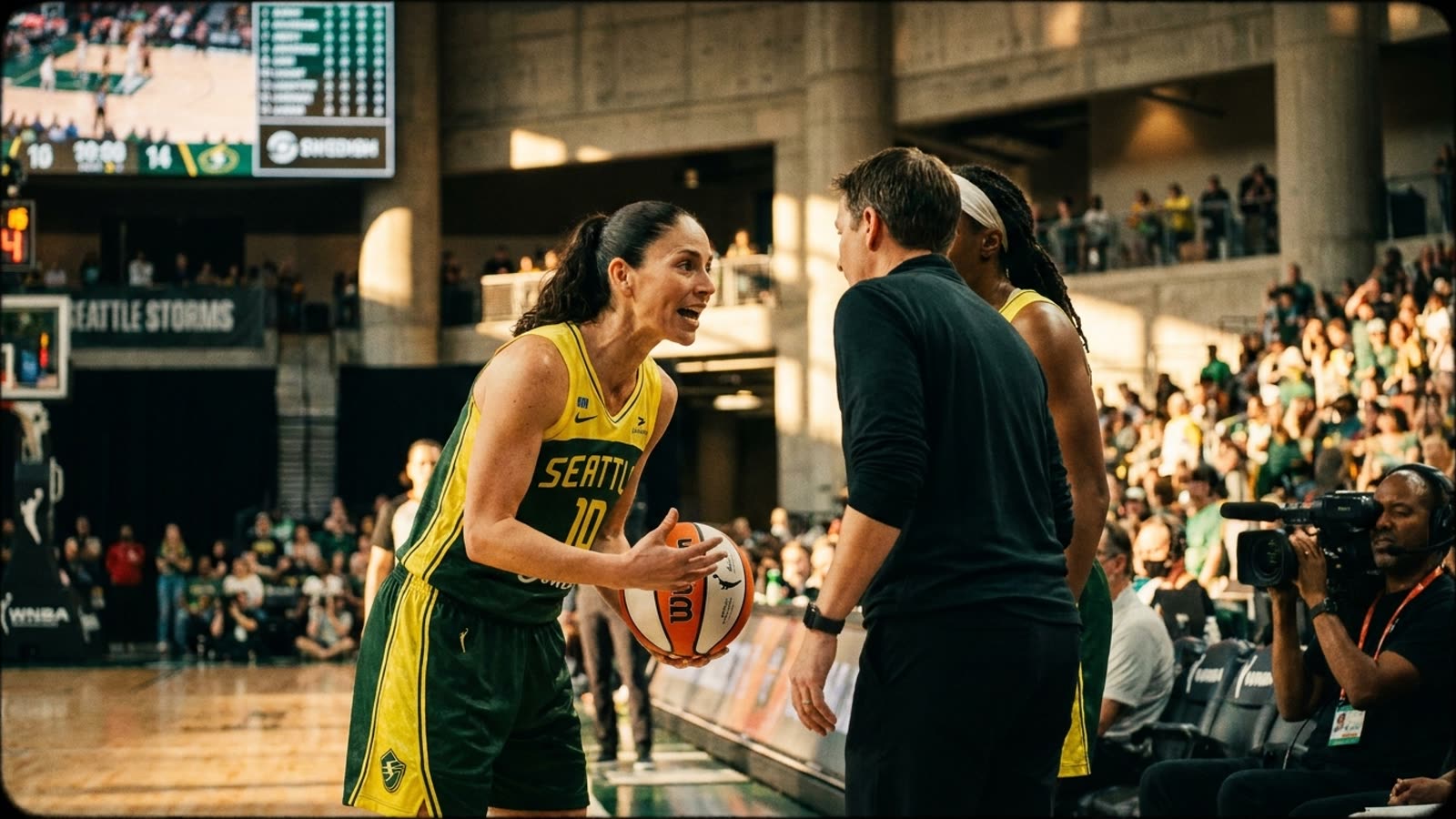
Sue Bird's placement at the top is not controversial, but the margin might be. Four championships, the all-time assists record, and a two-decade mastery of tempo that allowed Seattle's offense to function at whatever pace she deemed appropriate. Bird's genius was never about flash; it was about the pass arriving at the precise moment when the defender's weight had shifted. Diana Taurasi, often Bird's rival, belongs in any top-three conversation—her playmaking was angrier, more improvisational, born from a scorer's understanding of where help would come from. Courtney Vandersloot rounds out the elite tier, her Chicago years producing assist rates that would look absurd if they weren't so consistently repeatable.
The evolutionary middle
The next grouping—Ticha Penicheiro, Lindsay Whalen, Becky Hammon, Alyssa Thomas—represents the position's gradual expansion. Penicheiro was the league's first true no-look savant, a player whose peripheral vision seemed to extend behind her. Whalen combined playmaking with a scorer's aggression that made her impossible to go under screens against. Hammon's late-career transformation into a pure facilitator previewed her coaching mind. Thomas, still active, has redefined what a 6-foot-2 forward can do with the ball, her triple-double seasons suggesting the playmaker archetype no longer requires a point guard's frame.
The modern turn
The final slots belong to players like Skylar Diggins-Smith and Jordin Canada, whose speed-based creation differs fundamentally from Bird's metronomic control. The current generation pushes pace, hunts mismatches in transition, and treats the pick-and-roll as a starting point rather than a destination. Whether this represents progress or simply difference depends on your aesthetic preferences—but it undeniably reflects how the league's spacing and athleticism have evolved.
Our take
Rankings like these are inherently reductive, but they serve a purpose: they force us to articulate what we value. The WNBA's playmaking hierarchy suggests a league that has prized intelligence over athleticism, timing over speed, and—perhaps most distinctively—selflessness as a form of dominance. In an era when basketball discourse often reduces to who can get a bucket, the W's greatest facilitators remind us that making others great is its own kind of greatness.