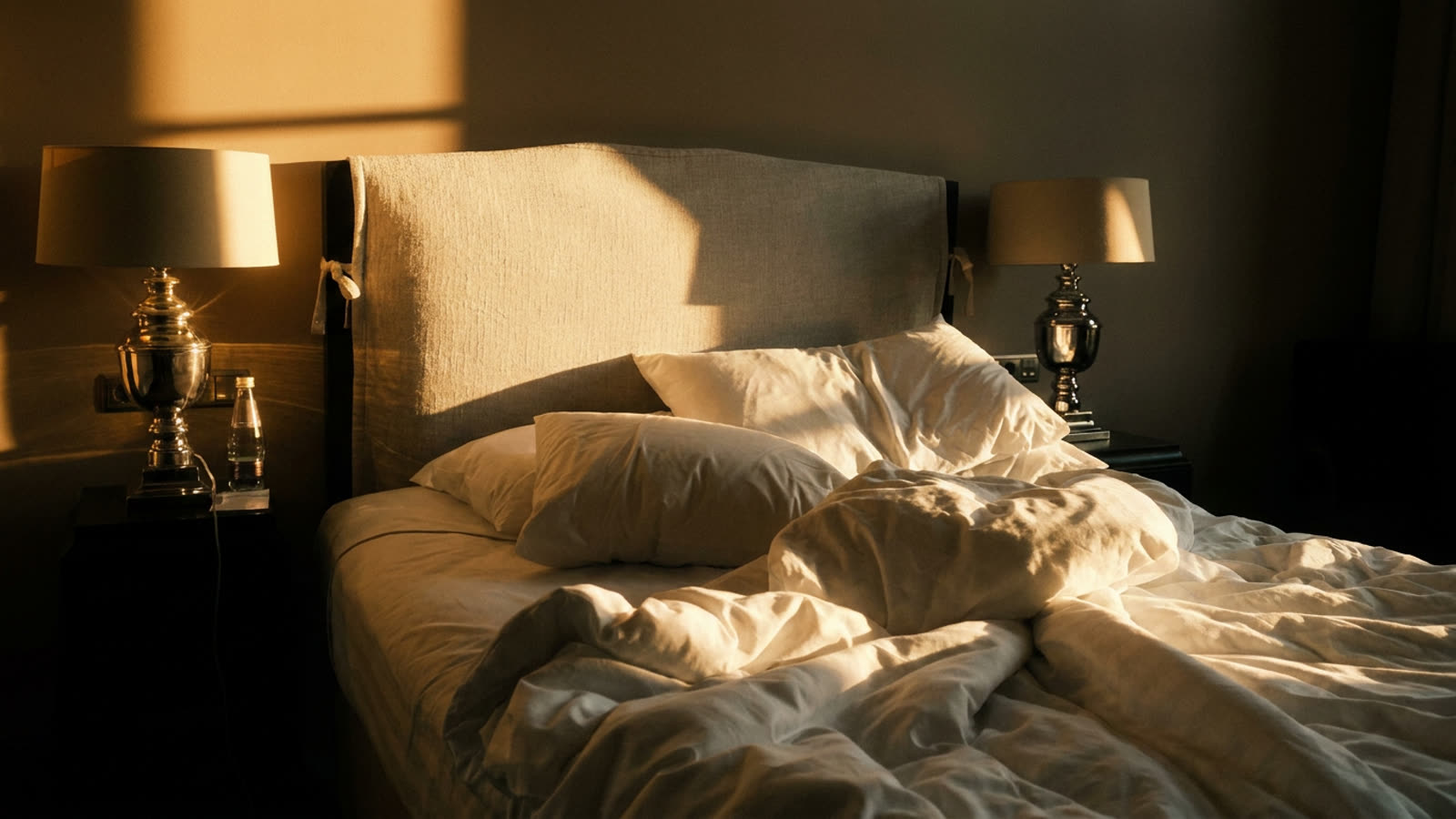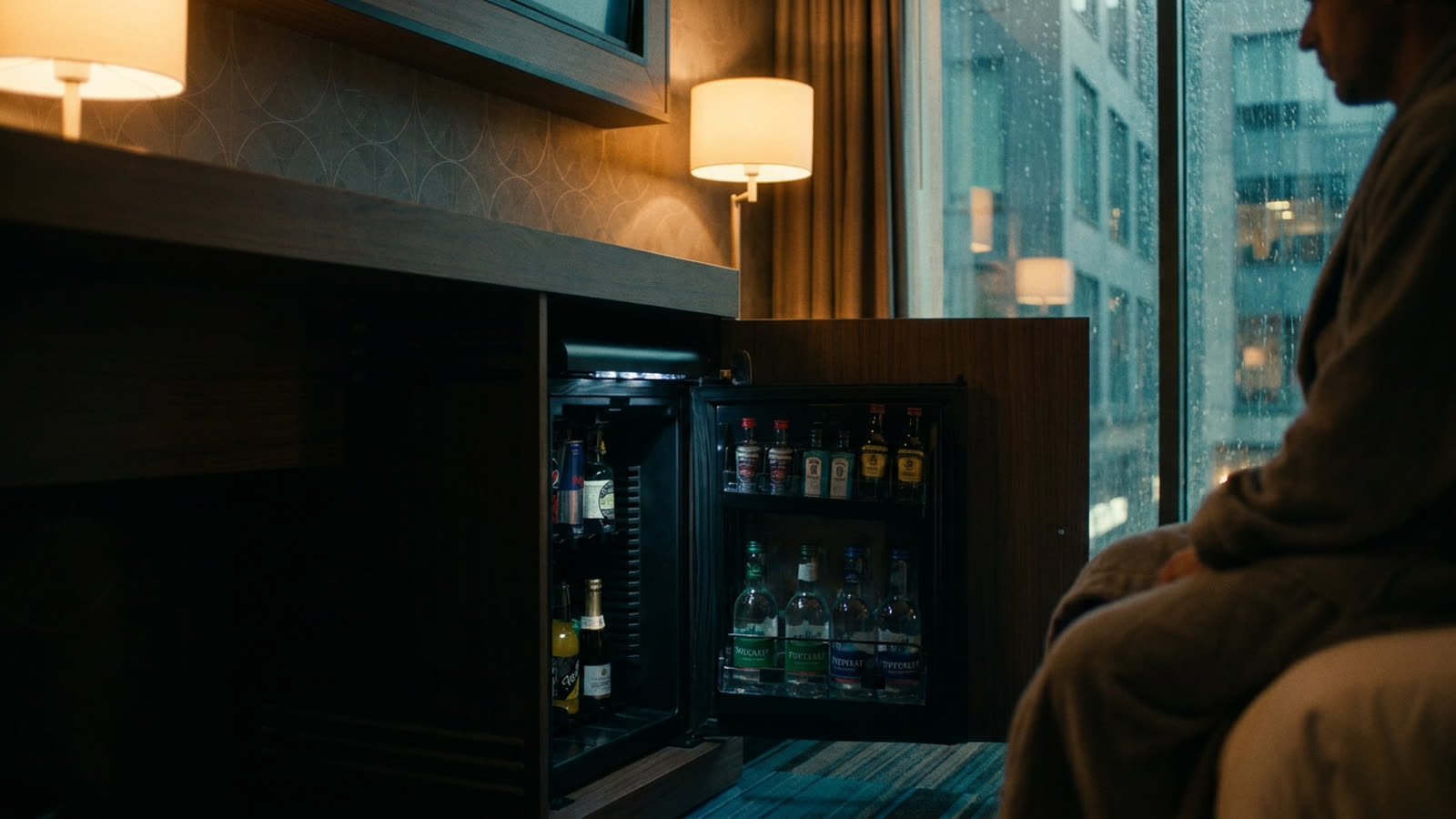
The minibar is an absurdity that refuses to acknowledge its own obsolescence. A cramped refrigerator stocked with seven-dollar candy bars and fifteen-dollar splits of mediocre champagne, monitored by sensors that charge you for merely shifting a Toblerone — it should have vanished alongside hotel pay-per-view and dedicated fax machines. Instead, it persists in virtually every upscale property on earth, a monument to something more interesting than convenience.
The economics make no sense on the surface. Hotels lose money on minibar operations once you factor in restocking labor, spoilage, disputed charges, and the square footage the units consume. Guests overwhelmingly report that they rarely use them. The markup is so aggressive it borders on parody. And yet the minibar endures, because it was never really about selling snacks.
The theater of abundance
What the minibar actually sells is the feeling of being taken care of in advance. The stocked refrigerator communicates that someone anticipated your needs before you arrived, that the room is complete and self-sufficient, that you exist in a bubble where the outside world's logistics cannot touch you. This is the core promise of luxury hospitality: not just comfort, but the absence of friction. The minibar is a prop in that theater.
The items themselves are almost beside the point. The Pringles and the overpriced still water function as totems of preparedness, signaling that the hotel has thought of everything so you don't have to think of anything. Whether you actually eat the cashews is irrelevant to the psychological work the cashews are doing simply by being there.
Why disruption failed
Several hotel chains experimented with removing minibars in the early 2010s, replacing them with empty refrigerators and QR codes linking to delivery apps. Guest satisfaction scores dropped. Not because travelers were desperate for twelve-dollar pistachios, but because the empty fridge felt like a broken promise, a signal that the hotel had outsourced its hospitality to a third party. The room felt incomplete.
The minibar's survival is a lesson in what cannot be optimized away. Certain inefficiencies are load-bearing. They exist not to maximize revenue or utility but to maintain an emotional architecture that guests sense without articulating. The best hoteliers understand this intuitively: hospitality is not a series of transactions but a sustained illusion of effortless care.
Our take
The minibar is a beautiful anachronism precisely because it shouldn't work. It survives on vibes, not value — a reminder that human beings are not rational consumers but creatures who pay premiums for the feeling of being anticipated. The next time you ignore the Toblerone, notice that it did its job anyway.