The Consumer Price Index tells you inflation is tame. Your receipts tell you something else entirely. Both are correct, which is precisely the problem.
This disconnect—call it the inflation perception gap—has become one of the most politically charged phenomena in modern economics. Voters feel gaslit by governments citing benign statistics while their household budgets scream otherwise. Economists grow frustrated explaining methodology to people who trust their own eyes. Neither side is lying, but they're measuring different things.
What the CPI actually captures
The Consumer Price Index tracks a weighted basket of goods and services meant to represent typical urban consumer spending. It's updated periodically, adjusted for quality improvements, and smoothed to avoid seasonal distortions. The methodology is rigorous, transparent, and genuinely useful for macroeconomic analysis.
But it's an average across millions of households with wildly different consumption patterns. A retired homeowner and a young renter experience entirely different inflation rates. Someone who drives forty miles to work feels fuel prices differently than a remote worker. The family with three teenagers notices grocery inflation more acutely than empty nesters.
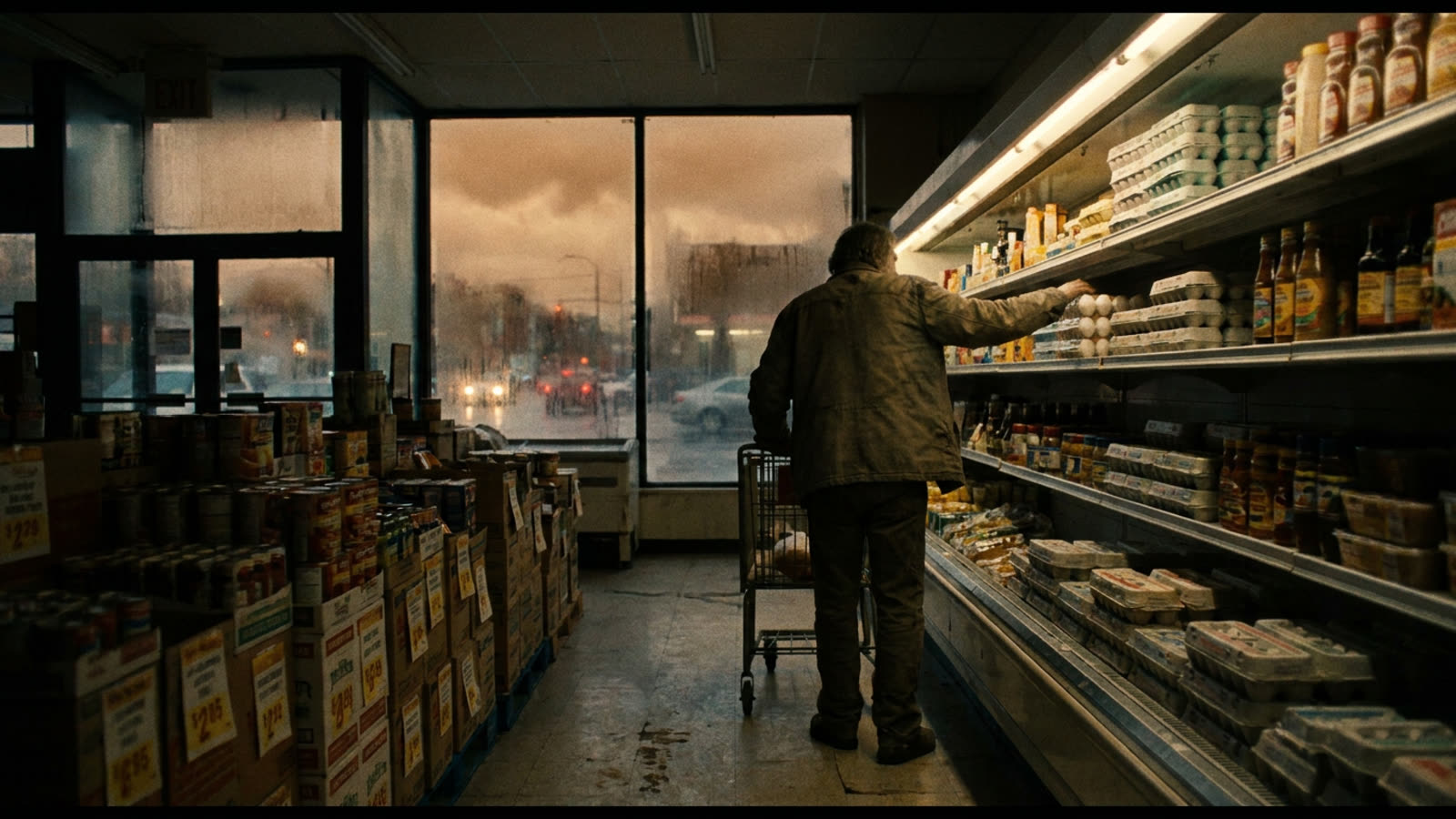
Moreover, the CPI includes categories most people don't purchase monthly—or ever. That new television got cheaper? Wonderful, but you bought one in 2019 and won't replace it for years. Meanwhile, eggs, which you buy weekly, doubled in price during the avian flu outbreak and never fully retreated.
The psychology of price memory
Human brains are terrible inflation calculators. We remember prices from years ago with surprising precision—the coffee that was two dollars, the sandwich that was eight—and compare them to today without adjusting for the passage of time. A 25 percent increase over five years is roughly 4.5 percent annually, well within normal ranges, but it registers as shocking when encountered all at once.
We also weight losses more heavily than gains. Behavioral economists call this loss aversion. When wages rise 4 percent and prices rise 3 percent, we should feel slightly ahead. Instead, we fixate on the price increases and barely notice the wage gains, which arrive gradually through paychecks rather than confronting us at the register.
Frequency matters too. We buy groceries weekly, gasoline regularly, and notice those prices constantly. We pay rent or mortgage monthly and eventually stop registering the amount. Big-ticket items we buy rarely—appliances, furniture, electronics—have actually gotten cheaper in quality-adjusted terms, but we don't experience that deflation viscerally because we're not in the market.
The housing problem
Perhaps no category illustrates the measurement challenge better than shelter. The CPI uses a concept called owners' equivalent rent—essentially asking homeowners what they think their house would rent for. This smooths out housing costs and prevents the index from swinging wildly with real estate markets.
But it also means the CPI can show modest shelter inflation while actual home prices and rents surge in the markets where people are trying to buy or sign new leases. Someone who locked in a mortgage years ago experiences no housing inflation. Someone apartment-hunting in a hot market experiences 20 percent increases. The CPI splits the difference in a way that satisfies neither.
Our take
The inflation perception gap isn't a problem to solve—it's a tension to understand. Official statistics serve legitimate purposes: guiding monetary policy, adjusting contracts, enabling economic comparison across time and place. But they were never designed to validate individual experience, and pretending otherwise breeds cynicism. The more honest framing: your inflation rate is personal, shaped by where you live, what you buy, and when you last locked in major expenses. The CPI tells you about the economy. Your receipts tell you about your economy. Both deserve respect, and neither deserves to be weaponized against the other.