The numbers say you should be fine. Unemployment is low, output is expanding, and the recession that pundits warned about keeps failing to arrive. Yet something gnaws at the national mood—a suspicion that the official story and the lived story have drifted apart. This is not mass delusion. It is the predictable consequence of measuring a twenty-first-century economy with a tool designed for the factories of the nineteen-thirties.
Gross domestic product was never intended to be a happiness index. Simon Kuznets, the economist who developed the national-income accounts that became GDP, warned Congress in 1934 that "the welfare of a nation can scarcely be inferred from a measurement of national income." His caution was ignored almost immediately. After the Second World War, GDP became the supreme yardstick of national success, a single number that could be compared across countries and across decades. Its simplicity was its genius—and, eventually, its flaw.
What GDP captures and what it misses
GDP tallies the market value of goods and services produced within a country's borders. It is brilliant at measuring throughput: more cars built, more haircuts given, more software licenses sold. It is indifferent to distribution. If the economy grows by a trillion dollars and all of that gain accrues to the top one percent, GDP rises just the same. It is also blind to unpaid labor, environmental degradation, and the quality of what is produced. A hospital visit for a chronic illness adds to GDP; so does cleaning up an oil spill. Neither event makes anyone better off in any intuitive sense.
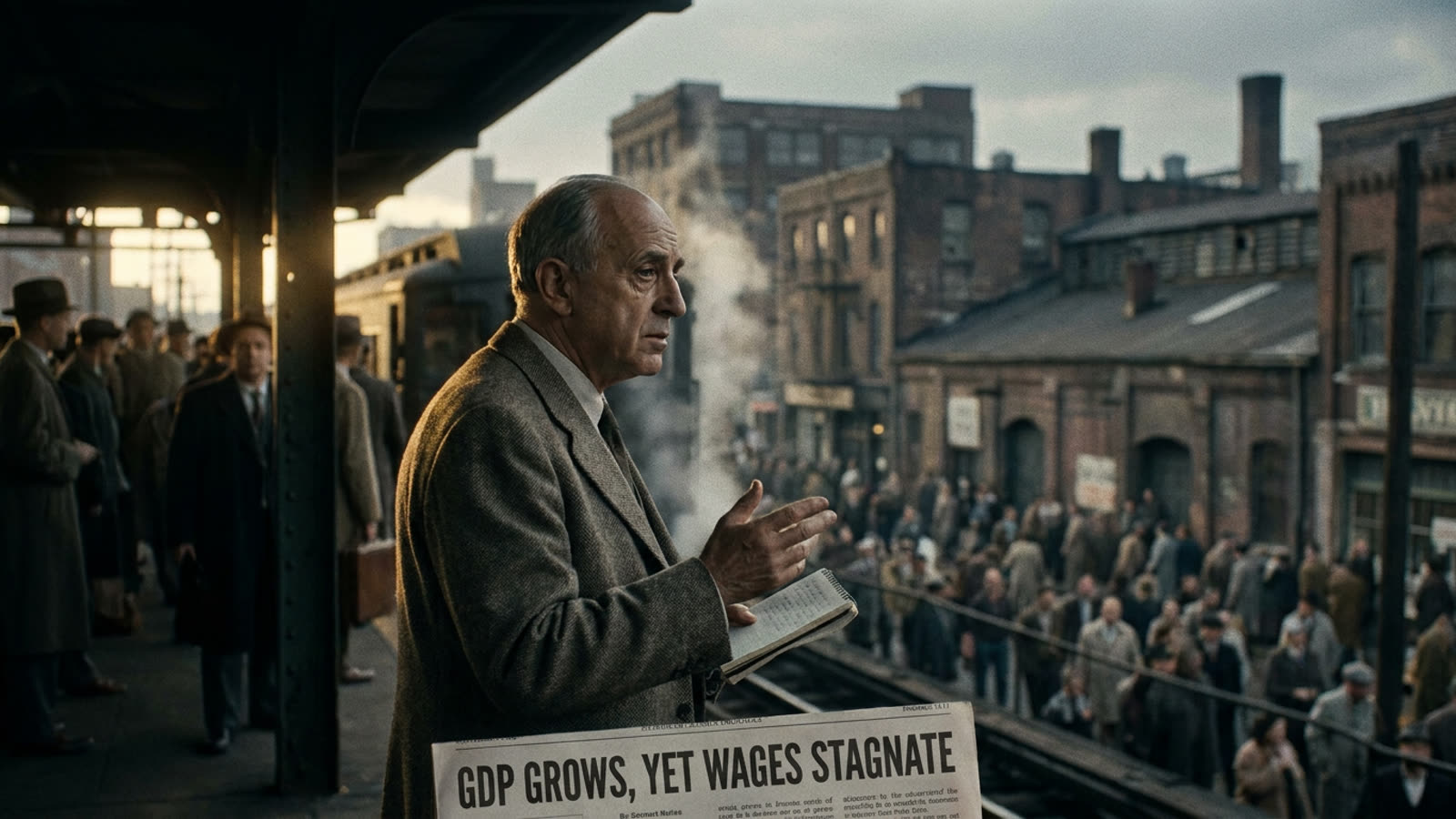
The disconnect sharpens when median wages stagnate while averages climb. A society can post robust GDP growth for years while the typical household treads water, because the metric tracks totals, not midpoints. When housing, healthcare, and education costs rise faster than headline inflation, the gap between statistical prosperity and kitchen-table reality widens further.
The search for alternatives
Economists have proposed supplements for decades. The Human Development Index blends income with life expectancy and education. Bhutan famously tracks Gross National Happiness. The OECD publishes a Better Life Index covering housing, work-life balance, and civic engagement. None has displaced GDP in policy debates, partly because none offers the same crisp, comparable number, and partly because GDP growth remains genuinely correlated with things people want—jobs, tax revenue, geopolitical clout.
The more promising path may be pluralism: treating GDP as one dial on a crowded dashboard rather than the only gauge that matters. Central banks already watch labor-force participation, wage growth, and inflation expectations alongside output. Governments could do the same, publishing a small basket of indicators that together paint a richer picture.
Our take
GDP is not lying; it is simply answering a narrow question. The frustration people feel is real, and it stems from a mismatch between what the statistic measures and what they care about. Retiring GDP is neither practical nor necessary. Demoting it from sole arbiter of national health to one voice among several would be a start. Until then, the vibes will keep diverging from the spreadsheets, and both will be telling the truth.