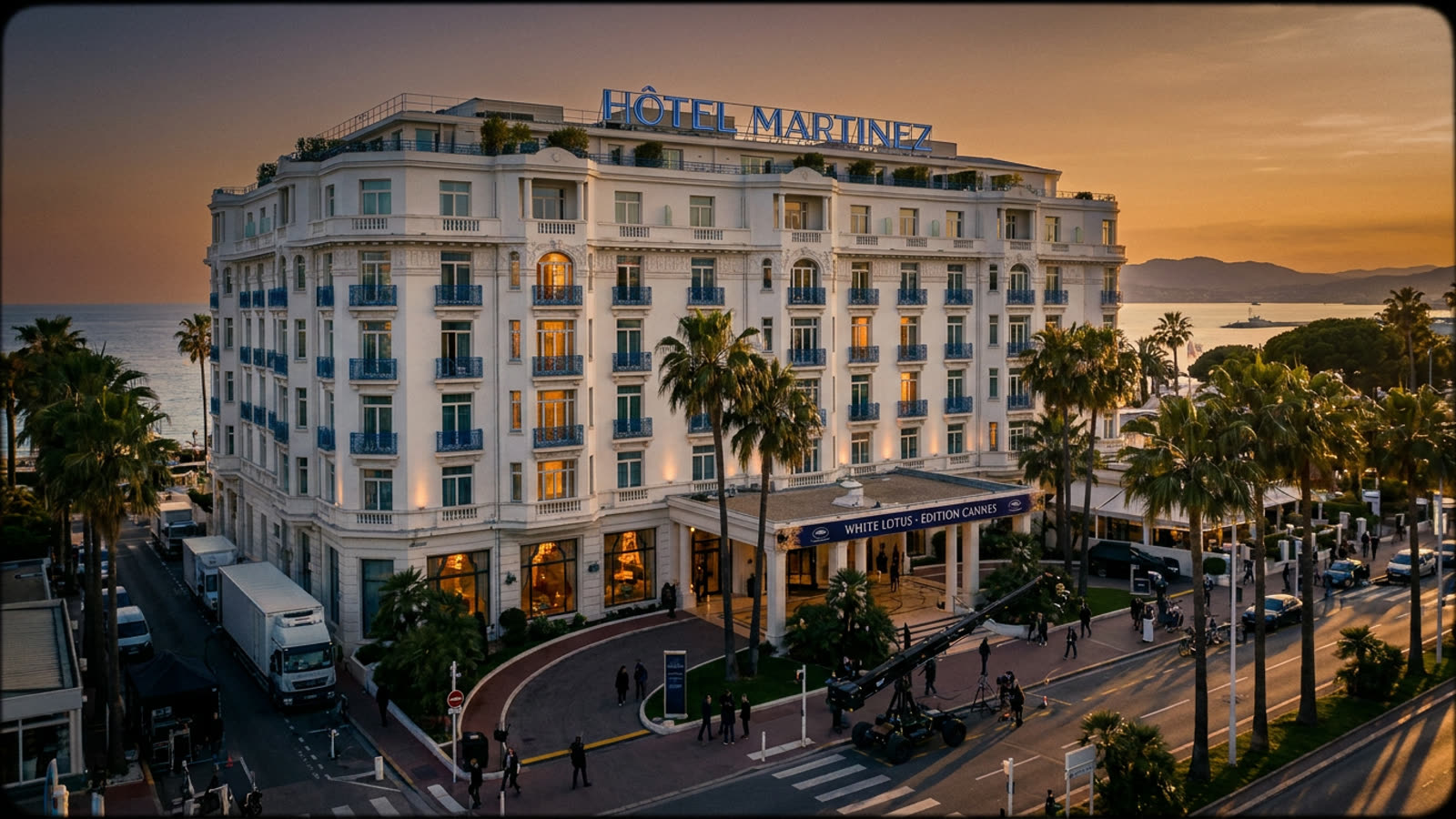
There is a certain poetry in HBO choosing the Hôtel Martinez for the next season of The White Lotus—a show about the grotesque theater of luxury hospitality filming at a property where that theater has been running, unscripted, for nearly a century.
The Martinez, a 1929 Art Deco landmark on the Croisette, has always existed in the liminal space between genuine grandeur and self-aware spectacle. Its tiny elevators force awkward proximity between guests who paid four figures to avoid exactly that. Its poolside loungers bear celebrity name tags during the festival, a practice that manages to be both servile and subtly mocking. The general manager reportedly jokes about fake stars attempting to slip past security—a detail that could have been lifted directly from Mike White's scripts.
The architecture of aspiration
What makes the Martinez ideal for The White Lotus is not merely its photogenic bones, though those are considerable. It is the property's relationship to the Cannes Film Festival itself—two weeks each May when the hotel transforms into a stage set for an industry that sells fantasy while desperately seeking validation. The festival's hierarchies, its credentialing systems, its velvet-rope anxieties, mirror precisely the class dynamics White has spent three seasons dissecting. The Martinez is not playing a role; it is simply being observed.
Life imitates art imitates life
The casting of the hotel raises an interesting question about the show's satirical project. Previous seasons filmed at the Four Seasons Maui and a Sicilian palazzo, properties that existed at a certain remove from the audience's experience. The Martinez, by contrast, is a working hotel that will continue hosting actual wealthy guests while the show airs, guests who will presumably recognize themselves—or pointedly refuse to—in White's caricatures. The feedback loop is dizzying.
Production sources indicate the show is leaning into the festival setting, which suggests we may see the collision of old money, new money, and the peculiar species of cultural capital that circulates at Cannes. The festival has always been a place where billionaires seek proximity to artists and artists seek proximity to financing, each party convinced they are doing the other a favor.
Our take
The Martinez casting is the most conceptually interesting choice the show has made since its Hawaiian debut. Mike White has always understood that luxury hospitality is a form of live performance, with staff as actors and guests as audience members who have paid for the privilege of believing the show is real. At Cannes, where the entire economy runs on the manufacture of prestige, that performance becomes recursive. The White Lotus does not need to satirize the Martinez; it merely needs to film there with the cameras pointed in both directions.