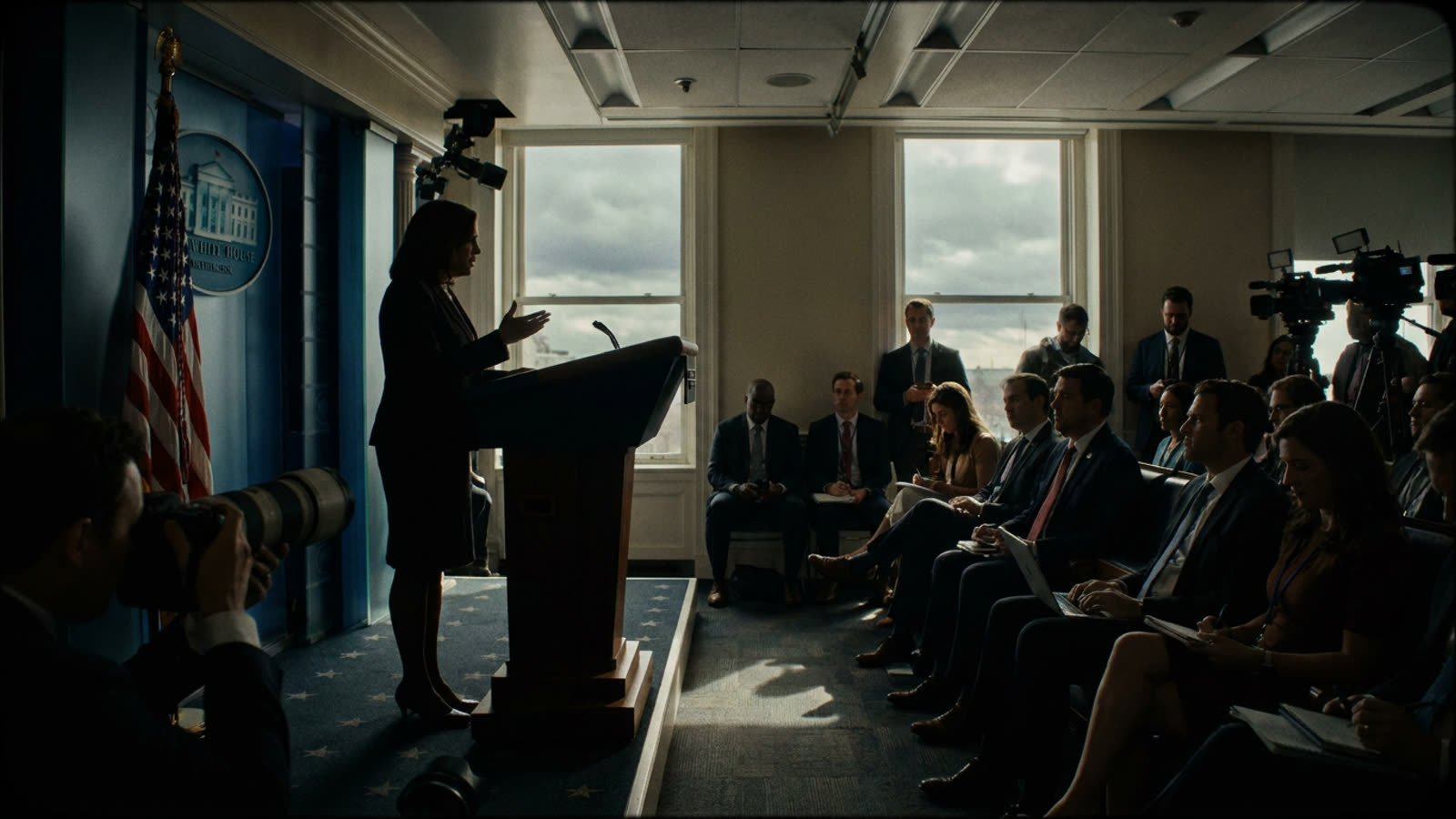
A shooting incident near the White House on Monday evening has prompted a security response at a moment when the executive mansion is simultaneously hosting war planning and preparing for a professional cage fight. The juxtaposition is almost too on-the-nose for the Trump era, but it captures something real about the current American condition: a presidency that operates as permanent spectacle even as it conducts actual military operations.
Details of the shooting remain sparse. Initial reports indicate the incident occurred at or near the White House perimeter, prompting lockdown protocols. No information has been released about casualties, a suspect, or whether the shooting had any connection to the ongoing military conflict with Iran. The Secret Service has not yet issued a formal statement.
The backdrop matters
The shooting arrives during one of the more surreal weeks in recent White House history. American forces are actively engaged in strikes against Iranian launch sites and naval vessels, with Tehran threatening retaliation. Simultaneously, construction crews are assembling a UFC octagon on the South Lawn for a presidential fight night that has drawn criticism from security experts and protocol traditionalists alike. And President Trump announced Monday that he has reached a peace agreement with Iran—a claim that, if true, would represent a dramatic pivot from the strikes conducted just days earlier.
This layering of crises, spectacles, and announcements has become the administration's signature rhythm. The question is whether a security incident—even a minor one—changes the calculation about hosting mass entertainment events on the most protected eighteen acres in America during an active military conflict.
What we don't know
The absence of information is itself notable. In previous administrations, a shooting near the White House would typically produce a rapid sequence of official statements, press briefings, and reassurances. The current information vacuum may reflect the genuine fog of an unfolding situation, or it may reflect an administration that has other priorities tonight. The Iran peace announcement, whatever its substance, is clearly meant to dominate the news cycle.
Security analysts will be watching for any indication that the incident was connected to the Iran conflict—whether as a lone-wolf response to American military action or something more coordinated. The overwhelming likelihood is that it was not, but the mere fact that the question must be asked illustrates the stakes of conducting a shooting war while maintaining an open-invitation posture at the White House.
Our take
The Trump White House has always operated on the theory that normalcy is overrated and that the presidency is most powerful when it is most theatrical. That theory has never been tested against a genuine security crisis occurring during a genuine military crisis occurring during a voluntary spectacle. Monday night may not be that test—the shooting may prove to be minor, unconnected, quickly resolved. But the architecture of risk is now visible in a way it wasn't before. A UFC cage on the South Lawn is a statement about what kind of country America wants to be. A shooting nearby is a reminder of what kind of country it already is.