There was a brief window in men's tennis, roughly 2014 to 2016, when it appeared the Big Three might actually be vulnerable. Roger Federer was aging. Rafael Nadal was injured. Novak Djokovic, though dominant, seemed beatable on his off days. Into that crack stepped Stan Wawrinka, a player who had spent years as Switzerland's other guy, and he won three major titles in the space of 25 months. Then the window slammed shut, the Big Three reasserted control, and Wawrinka returned to being a footnote — except he was never really a footnote at all.
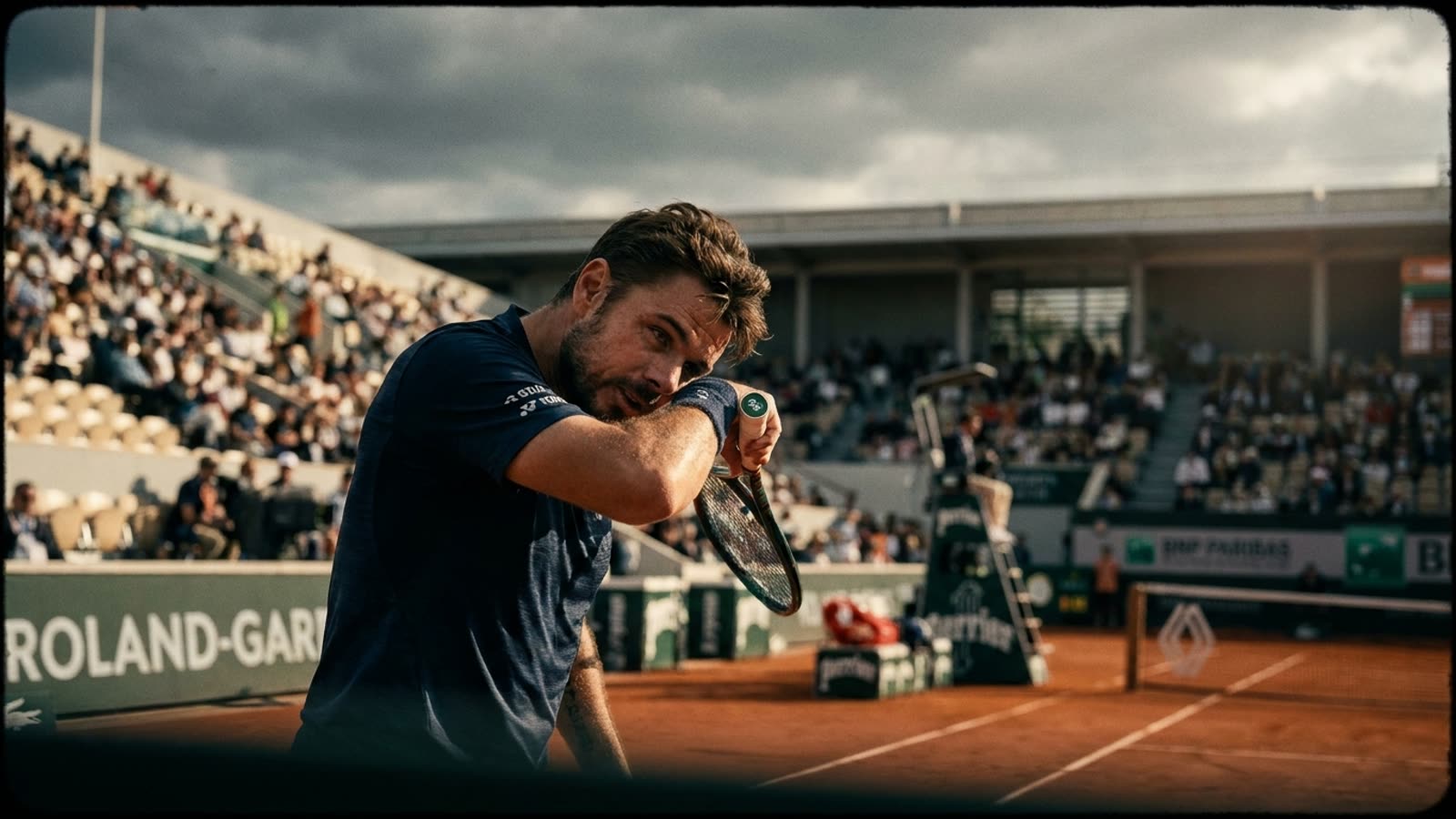
His farewell at Roland Garros this week was quieter than it should have been. At 41, with a body held together by surgical tape and Swiss engineering, Wawrinka lost in the early rounds to a player half his age. The crowd gave him a standing ovation. He waved, he smiled, he walked off. That was it.
The impossible champion
Wawrinka's 2015 French Open title remains one of the most improbable major victories of the modern era. He beat Djokovic in the final — Djokovic, who was in the middle of winning four consecutive majors and looked untouchable. Wawrinka hit through him with a one-handed backhand that seemed to violate physics, and when it was over, Djokovic looked genuinely confused. That same shot had already delivered Wawrinka the 2014 Australian Open and would later claim the 2016 US Open. Three slams, all won against top-two opponents, all won by a player ranked outside the top three.
No one else from his generation managed that. Not Juan Martín del Potro, not Andy Murray in his prime, not anyone. Wawrinka was the proof that the Big Three's dominance, while historic, was not absolute.
What he represented
The tennis tour is now populated by players who grew up watching Wawrinka, but few of them play like him. The one-handed backhand is nearly extinct at the elite level. The willingness to hit through the ball rather than around it — to trade power for risk — has been coached out of most young players. Wawrinka was a throwback even when he was winning majors, and his retirement marks the end of a stylistic lineage that traces back through the sport's history.
He was also, crucially, a player who peaked late. His first major came at 28, an age when most tennis players are already declining. For every prodigy who burns out, there is supposed to be a late bloomer who arrives just in time. Wawrinka was the model.
Our take
The Big Three narrative has always been slightly incomplete. Yes, Federer, Nadal, and Djokovic won nearly everything for two decades. But Wawrinka won the tournaments that mattered when they mattered, against the opponents who mattered, and he did it without their physical gifts or their global fame. He was the answer to the question no one wanted to ask: what if someone just refused to be intimidated? Roland Garros will not see his like again soon. The sport is poorer for it, even if it barely noticed him leaving.