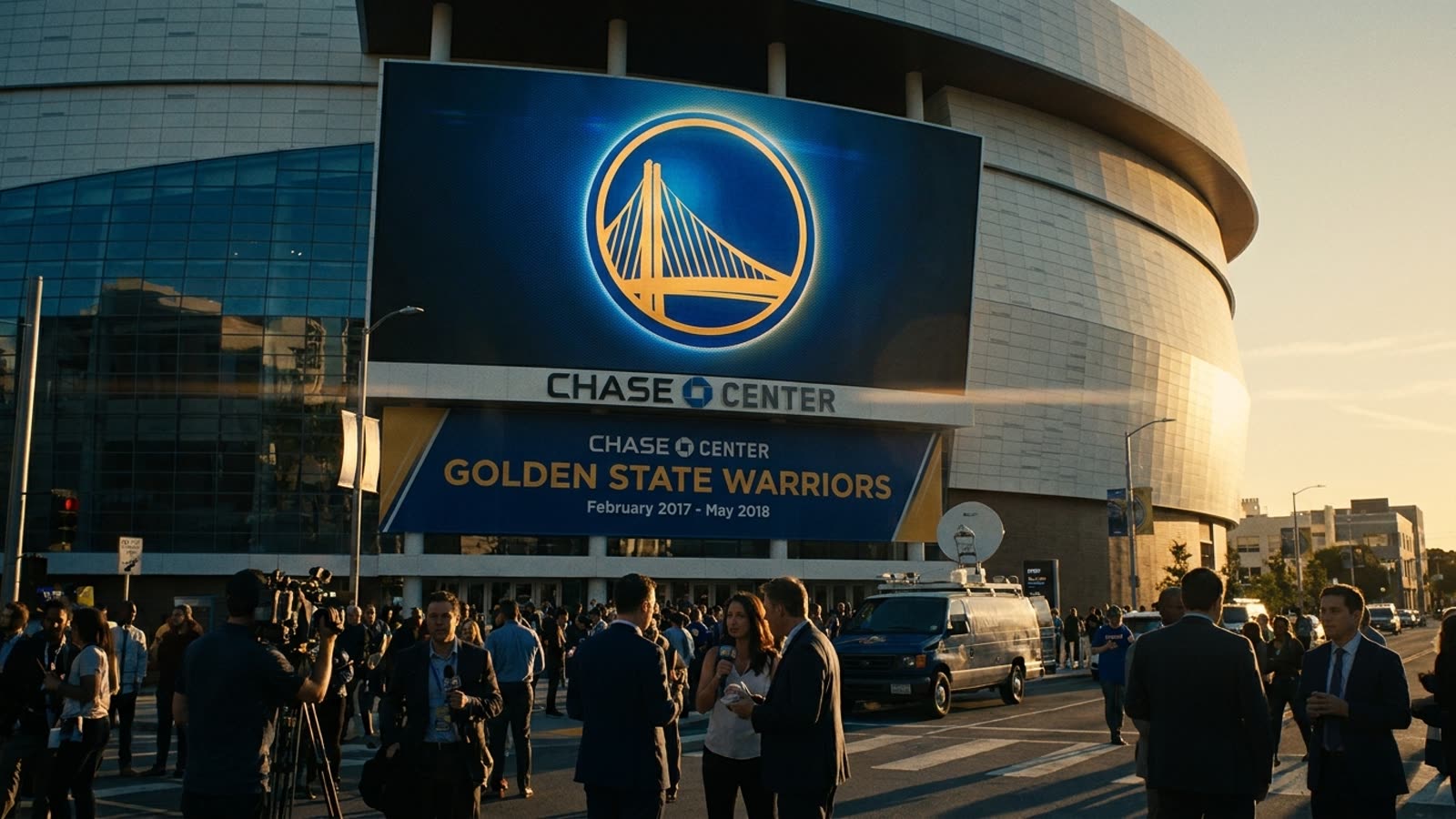
Three years ago, Golden State acquired Kristaps Porzingis believing the 7-foot-3 Latvian could extend Stephen Curry's title window by providing rim protection and floor spacing in a single package. Now, with Porzingis sidelined indefinitely due to an undisclosed health issue and the Warriors exploring trade options, that window hasn't just closed—the house has been demolished.
The timing is brutal. Opening night was Tuesday. Golden State's season is two days old, and already the front office is signaling to the league that it would rather recoup assets than wait on a player whose availability remains a question mark. That's not rebuilding on the fly; that's acknowledging that the fly has long since departed.
The arithmetic of decline
Curry turns 39 in March. Draymond Green, whose defensive instincts remain elite but whose legs increasingly betray him, is 36. Klay Thompson left for Dallas two summers ago, and the Warriors have spent the intervening seasons trying to construct a supporting cast worthy of Curry's remaining prime. They have failed. Last year's first-round exit was not an aberration but a confirmation: this roster, as constructed, cannot compete for championships.
Porzingis was supposed to change that calculus. Instead, he has appeared in just 47 games across two injury-plagued seasons in San Francisco, his body betraying him with the regularity of a Swiss train schedule—except trains actually arrive. The front office's willingness to move him now, before his trade value craters further, is pragmatic. It is also an admission that the Curry-era Warriors are no longer building to win; they are managing decline.
What comes next
The question facing Golden State is whether to pursue a full teardown or attempt one more half-measure. Trading Porzingis for young players and draft picks suggests the former. But Curry's presence—and his stated desire to finish his career in the Bay—complicates any tank. The Warriors may find themselves in the NBA's least enviable position: too good to bottom out, too old to contend, too loyal to trade their icon.
Potential suitors for Porzingis will demand medical clarity before committing significant assets. A team like Miami, perpetually searching for the piece that returns them to contention, might gamble on his upside. Oklahoma City, flush with picks and cap flexibility, could view him as a low-risk flier. But the return is unlikely to transform Golden State's fortunes—damaged goods rarely fetch premium prices.
Our take
Dynasties end not with a single loss but with a thousand small surrenders. The Warriors trading Porzingis two days into the season is one such surrender. It won't be the last. Golden State's front office deserves credit for clear-eyed realism, but realism is cold comfort to fans who watched this team redefine basketball. The Curry era produced four championships, revolutionized offensive spacing, and made the Warriors the most entertaining team of their generation. That era is over. What remains is the long, graceless work of figuring out what comes next.