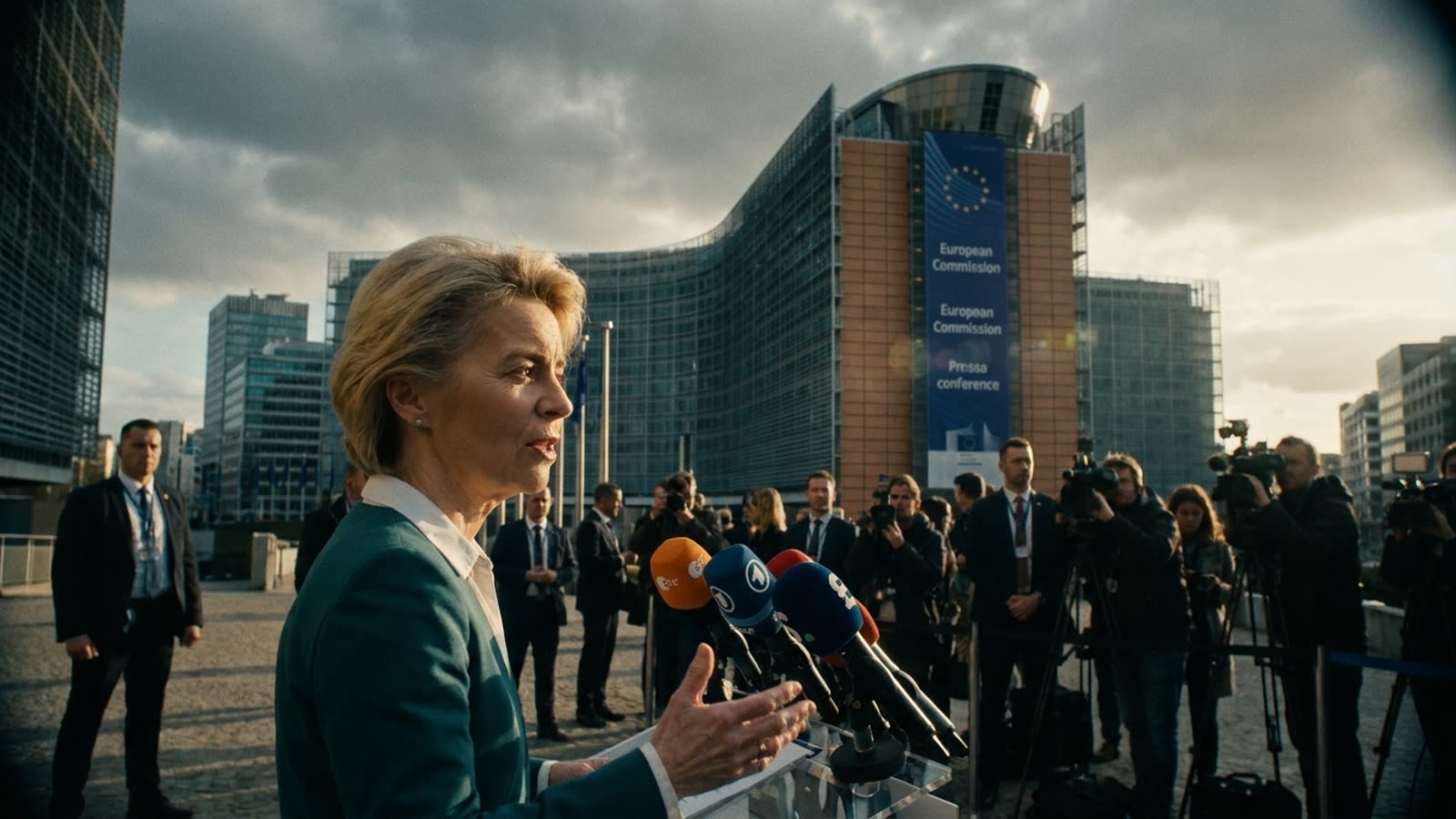
The European Union has spent most of the past four years deferring to Washington on Ukraine. That era may have ended Thursday morning in Brussels, when European Commission President Ursula von der Leyen declared that the bloc would "not lift any sanctions unless Russia stops the war" — a statement that reads less like policy and more like a direct rebuttal to the American president sitting three thousand miles away.
The timing was exquisite. Hours earlier, Donald Trump had called Ukraine's resumed strikes on Russian oil refineries a "disgrace" and described Volodymyr Zelenskyy as "more difficult to deal with than Putin." The so-called energy ceasefire — Trump's signature diplomatic initiative of 2026, which collapsed last week — has become a political liability he is now eager to pin on Kyiv rather than Moscow. Von der Leyen's response was to pretend Washington wasn't in the room.
The Brussels calculation
European leaders gathering for the summit understand that they are operating in a strategic vacuum. The United States, under Trump's second term, has made clear that its interest in Ukrainian sovereignty is transactional at best. Denmark's Prime Minister Mette Frederiksen acknowledged the obvious: the situation is "very difficult" given tensions with Washington, and winter is approaching. But rather than capitulate, the EU appears to be hardening its position.
This is partly self-interest. European energy infrastructure remains vulnerable to Russian pressure, and the sanctions regime — however imperfect — is one of the few levers Brussels controls. Lifting sanctions without a genuine cessation of hostilities would reward Moscow's strategy of outlasting Western resolve. It would also validate Trump's approach, which treats allied solidarity as a cost to be minimized rather than an asset to be preserved.
Zelenskyy's tightrope
The Ukrainian president arrived in Brussels needing European support more than ever, yet constrained by the knowledge that his American benefactor has turned hostile. Trump's public attacks — calling Zelenskyy difficult, blaming Ukraine for the ceasefire's collapse — are designed to shift domestic American opinion ahead of the midterms. They also serve to isolate Kyiv diplomatically, making it harder for Zelenskyy to resist whatever terms Moscow eventually offers.
Von der Leyen's pledge offers Zelenskyy breathing room, but not much. The EU can maintain sanctions, provide economic assistance, and offer rhetorical support. What it cannot do — at least not yet — is replace American military aid or extend a credible security guarantee. Europe remains a supporting actor in a drama whose lead has walked off stage.
Our take
Von der Leyen's statement is significant not because it changes the military balance, but because it signals that Europe is willing to pursue a Russia policy independent of — and potentially opposed to — the United States. This is a threshold moment. For decades, transatlantic unity on security questions was assumed; disagreements were managed privately. Trump has made that impossible. The question now is whether Europe can sustain an independent line through a long winter, rising energy costs, and the relentless pressure of a White House that views allied dissent as betrayal. Brussels has drawn its line. Holding it will be considerably harder.