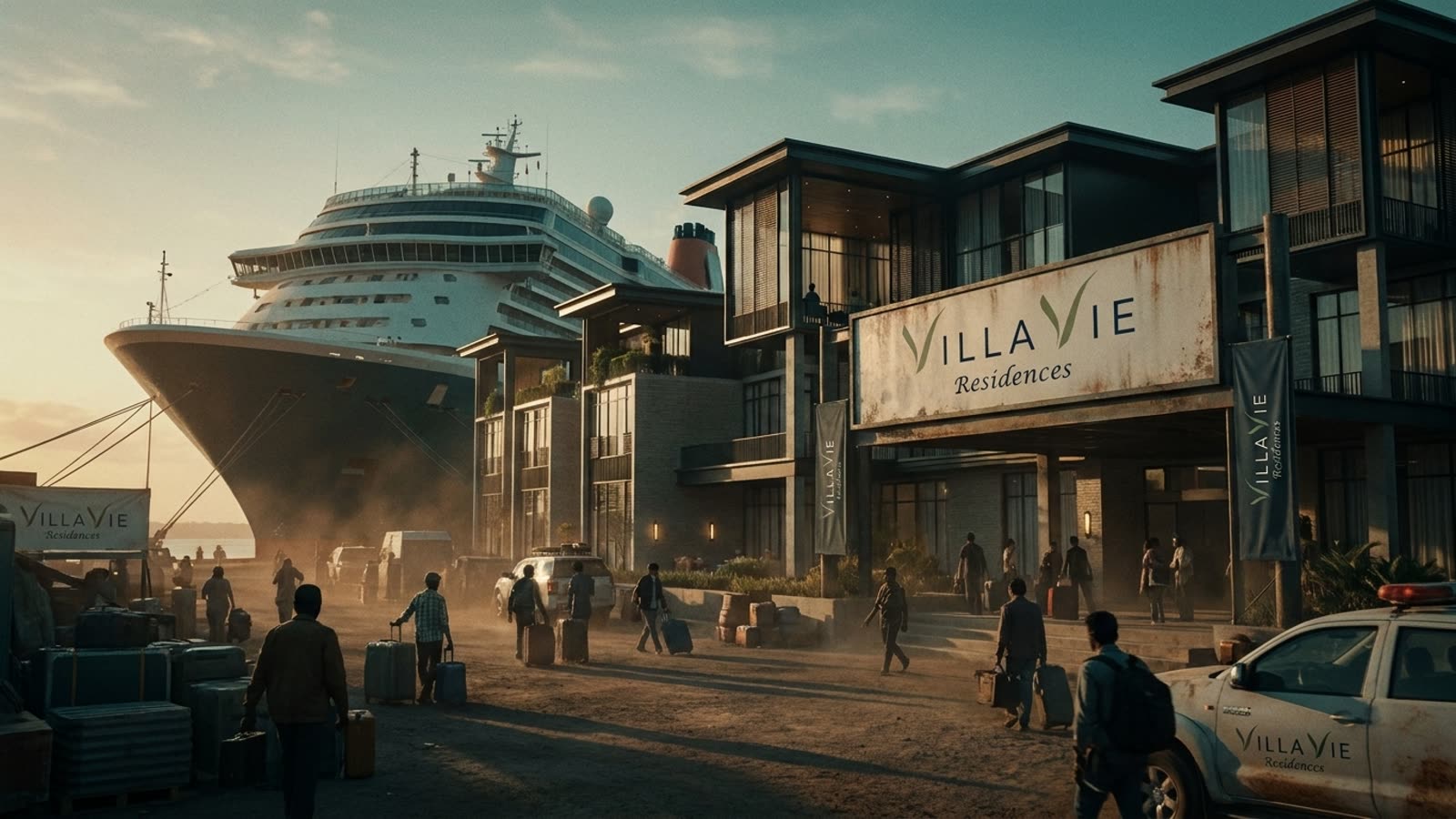
When Villa Vie Residences sold berths on a perpetual cruise around the world, the pitch was irresistible: ditch your mortgage, live at sea, and let someone else worry about inflation. What the brochure failed to mention was that diesel does not care about your lifestyle rebrand.
The Villa Vie Odyssey, a 31-year-old vessel carrying several hundred passengers on what was billed as a three-and-a-half-year circumnavigation, has suspended its voyage in Sihanoukville, Cambodia. The company is now arranging "temporary living arrangements" ashore while it figures out whether the trip can continue at all. The culprit is fuel — specifically, the sustained surge in marine gasoil prices that has made the ship's operating model untenable.
The math that sank the dream
Cruise ships are floating hotels with catastrophic fuel efficiency. A vessel the Odyssey's size burns roughly 150 tonnes of fuel per day at cruising speed. With marine gasoil hovering near $900 per tonne — up from around $600 two years ago — that translates to daily fuel bills north of $130,000. Villa Vie's business model, which charged passengers a one-time cabin purchase plus modest monthly fees, was underwritten by assumptions about energy costs that now look quaint.
The company is not alone in its miscalculation. Carnival, Royal Caribbean, and Norwegian have all warned investors that fuel surcharges may become permanent features of booking. But those giants have hedging programs, newer ships with better efficiency, and balance sheets that can absorb volatility. Villa Vie had a 1993-built vessel, a niche proposition, and apparently no Plan B.
Why oil is staying expensive
The Odyssey's predicament is a microcosm of a broader squeeze. Brent crude has traded above $85 for most of 2026, with periodic spikes above $90 driven by Middle East tensions and OPEC+ discipline. Refining margins for marine fuels have widened further as the shipping industry's transition to low-sulphur fuels tightens supply. Central banks, meanwhile, have kept rates elevated to combat sticky inflation — inflation that energy prices themselves are feeding.
For consumers, this shows up in airfares, grocery bills, and yes, cruise tickets. For businesses built on the assumption that the post-pandemic "experiences economy" would operate in a benign cost environment, it shows up in stranded ships and awkward emails to customers.
Our take
The Villa Vie Odyssey was always a bet that the world would stay cheap and predictable long enough for a floating commune to circle it. That bet has lost. The passengers now arranging hotel rooms in Cambodia are learning what airlines, freight companies, and refiners already know: energy volatility is not a temporary disruption but a structural feature of the 2020s. The dream of escaping terrestrial economics by putting to sea turns out to require a very large fuel budget — and someone willing to pay it.