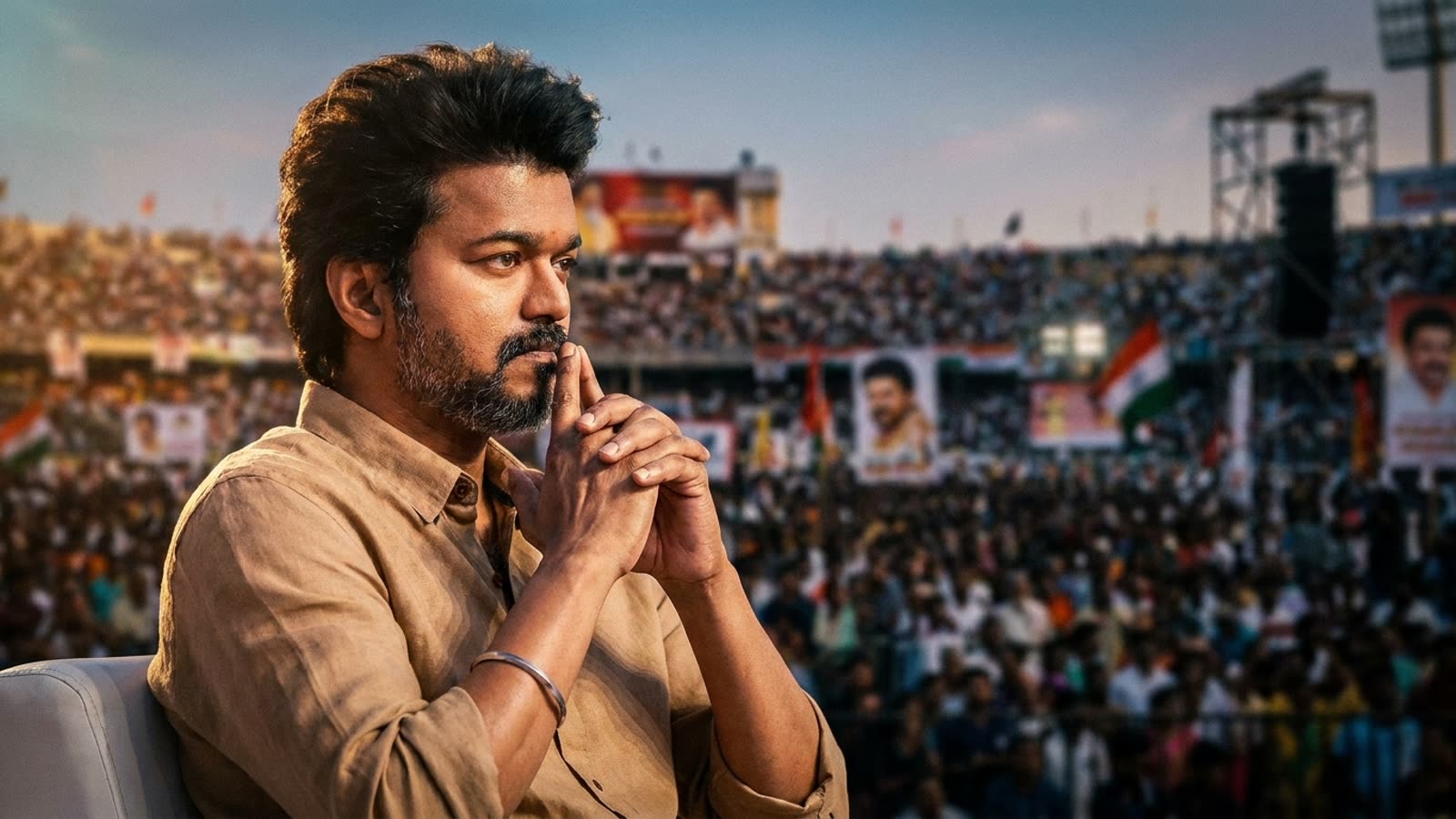
When Joseph Vijay Chandrasekhar took his oath of office at Chennai's Jawaharlal Nehru Indoor Stadium on Sunday morning, he wasn't just accepting a government job—he was completing a transformation that has become uniquely Indian: the metamorphosis of screen deity into elected leader.
Vijay, known to his tens of millions of fans simply by his first name, is one of Tamil cinema's highest-paid actors, a man whose film releases are treated as regional holidays and whose fan clubs operate with the organizational discipline of political parties. Now those clubs have delivered him the chief ministership of Tamil Nadu, a state of 80 million people with an economy larger than Portugal's.
The dynasty breakers
What makes Vijay's victory extraordinary is not that an actor won office—India has seen that before, from N.T. Rama Rao in Andhra Pradesh to the current president of the BJP's Tamil Nadu unit. It is that he broke the stranglehold of the two families that have traded power in the state since the 1960s: the Dravidian parties DMK and AIADMK, each built around its own cinematic patriarchs.
For nearly six decades, Tamil Nadu politics has been a closed loop, with the children and protégés of M. Karunanidhi and M.G. Ramachandran inheriting their movements. Vijay's Tamilaga Vettri Kazhagam party, formed only two years ago, has shattered that inheritance by offering voters something the dynasties could not: a fresh face unburdened by coalition debts and corruption scandals.
The celebrity-industrial complex
Vijay's ascent also reflects a broader truth about Indian democracy: in a country where literacy rates vary wildly and where political advertising is heavily regulated, name recognition is the scarcest resource. A film star arrives pre-famous, with an emotional bond to voters that no amount of campaign spending can replicate.
His swearing-in, held in a stadium rather than a government hall, was itself a piece of stagecraft—an echo of his film premieres, complete with roaring crowds and heavy security. The message was unmistakable: governance will be conducted as spectacle, and spectacle will be conducted as governance.
Our take
Vijay's election is neither a warning nor a miracle; it is simply the logical endpoint of a system that rewards visibility above all else. Whether he governs well is an open question—his policy platform remains deliberately vague, heavy on anti-corruption rhetoric and light on fiscal specifics. But his victory should remind observers everywhere that democracy is, at bottom, a popularity contest, and no one understands popularity better than a man who has spent three decades learning to hold a camera's gaze.