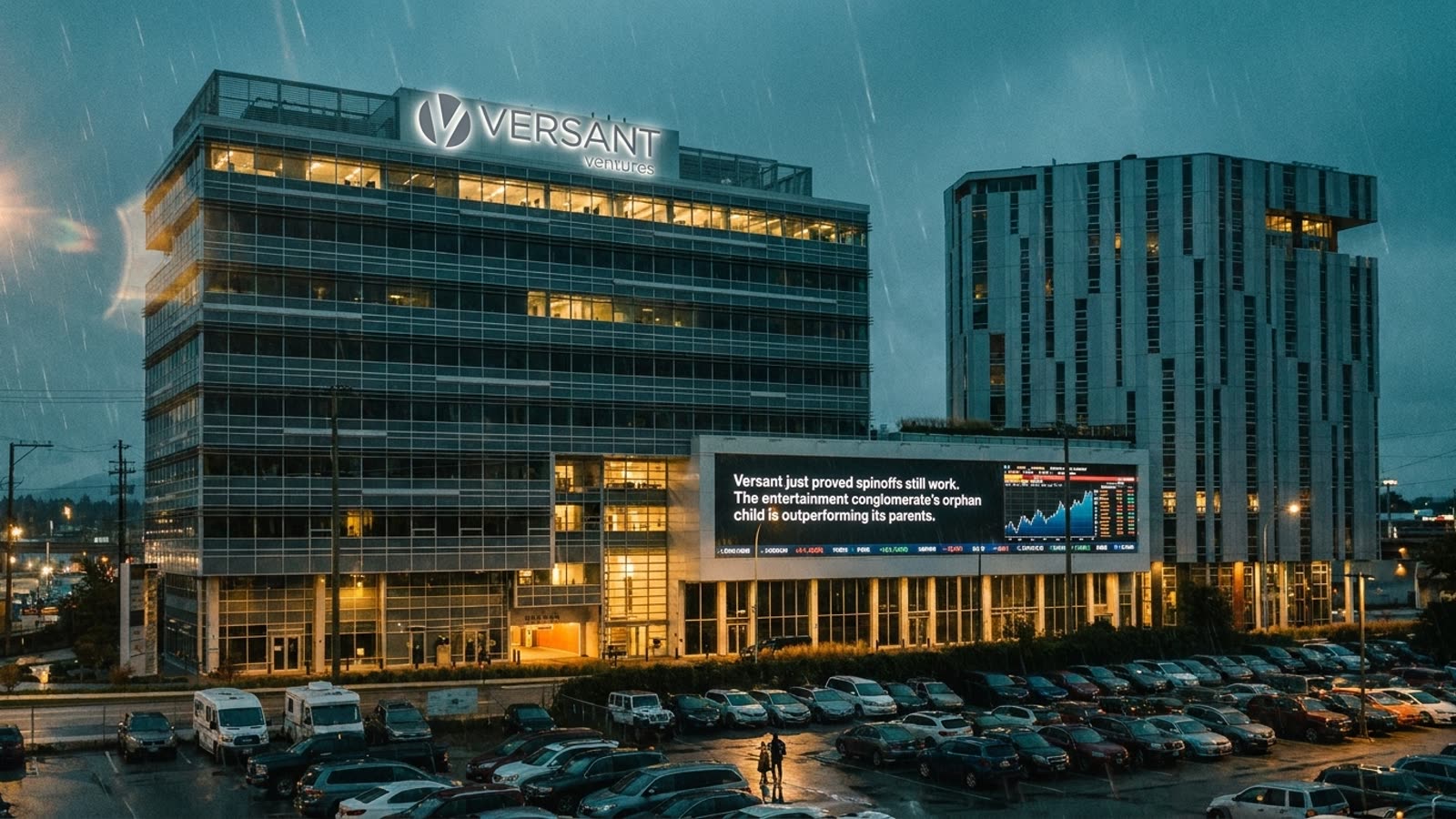
When legacy media companies began frantically spinning off their less-glamorous divisions over the past two years, the prevailing wisdom was that these orphaned units were being sent to die quietly while their parents chased streaming glory. Versant, the ticketing-and-digital-services company carved out of a major entertainment conglomerate, just delivered a Q3 earnings report that suggests the conventional wisdom was backwards.
The company posted $1.59 billion in revenue, beating analyst estimates and marking its strongest quarter since gaining independence. The performance was driven by expansion of its Fandango ticketing platform and the continued growth of MS NOW, its enterprise streaming infrastructure service that has quietly become essential plumbing for media companies that lack the technical chops to build their own backends.
The anti-streaming play
Versant's thesis is counterintuitive in an era when every media company wants to own the entire customer relationship. Rather than competing for eyeballs, Versant has positioned itself as the arms dealer in the streaming wars — providing ticketing, discovery, and backend services to competitors who would rather not build these capabilities themselves. It's the picks-and-shovels play applied to entertainment, and this quarter suggests it's working.
Fandango, long dismissed as a relic of the theatrical exhibition era, has found renewed relevance as studios have recommitted to theatrical windows. The platform's integration with streaming services — allowing users to see where films migrate after their theatrical runs — has made it unexpectedly sticky with younger audiences who treat it as a discovery tool rather than merely a ticket-purchasing utility.
MS NOW's quiet dominance
The more interesting story is MS NOW, the streaming infrastructure business that most consumers have never heard of but that powers a surprising number of second-tier streaming services. As the streaming landscape has consolidated around a handful of giants, smaller players have discovered that building and maintaining streaming technology is ruinously expensive. MS NOW offers them an alternative: rent the infrastructure, focus on content.
This quarter's expansion suggests Versant is signing new clients at an accelerating pace. The company declined to name specific partners, but industry analysts believe several regional sports networks and international broadcasters have recently joined the platform.
Our take
Versant's success is a rebuke to the vertically-integrated streaming model that has consumed hundreds of billions of dollars over the past decade. Sometimes the boring, infrastructure-focused business is the smart bet. The company won't inspire breathless coverage or anxious board meetings at competitors, but it might just be profitable — which is more than most streaming services can say. In an industry obsessed with owning everything, Versant has discovered there's money in owning nothing but the pipes.