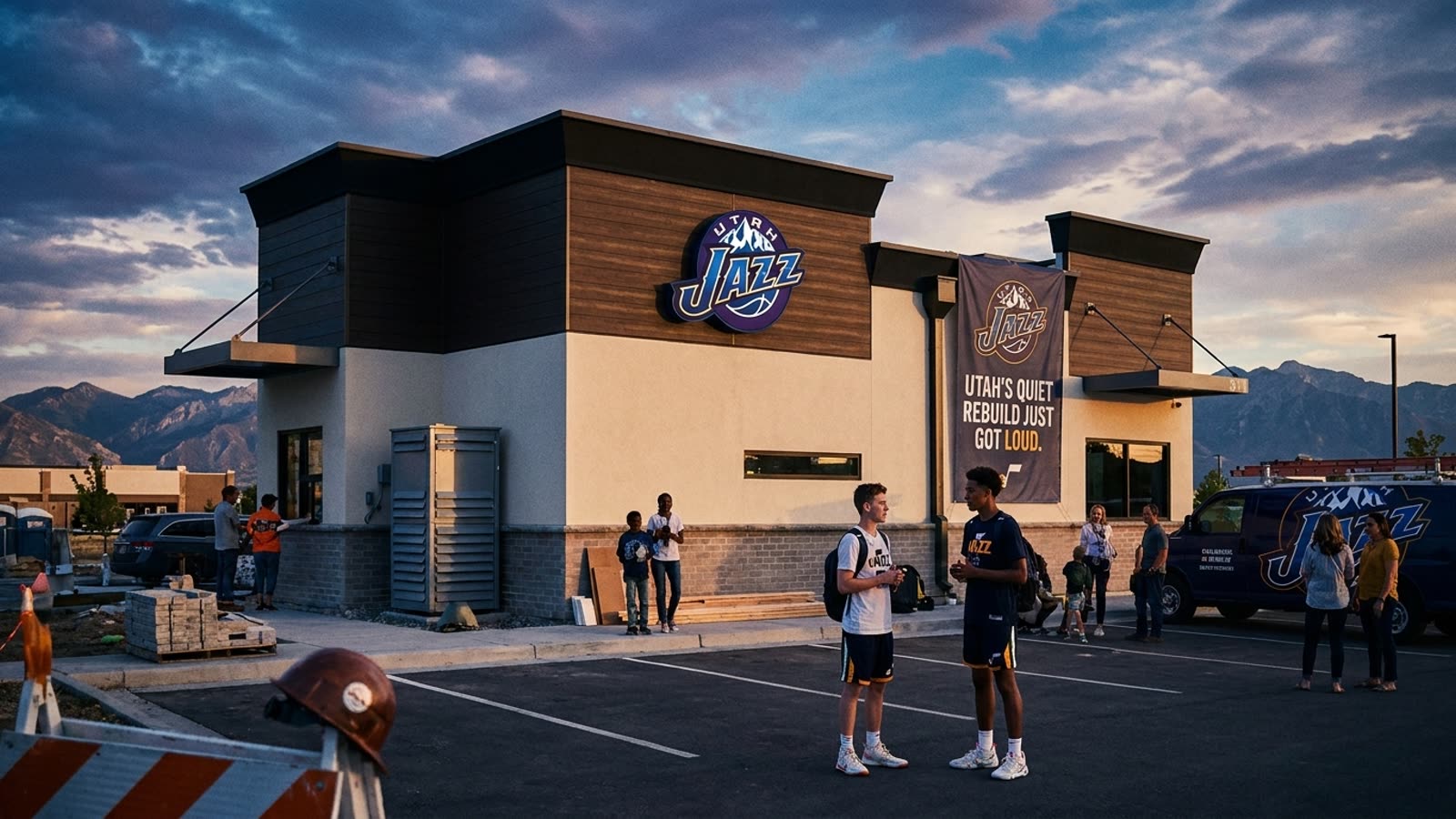
The Utah Jazz have spent two years accumulating draft picks like a doomsday prepper stockpiling canned goods. Now, finally, the pantry is yielding something edible.
In summer league play and early free agency workouts, guard prospects Peterson and Keyonte George have emerged as the most cohesive young backcourt pairing outside of Oklahoma City's established duo. For a franchise that traded away Donovan Mitchell, Rudy Gobert, and seemingly every player with name recognition, this is the first tangible evidence that general manager Danny Ainge's asset-hoarding strategy might actually produce a basketball team rather than just a spreadsheet.
The Peterson revelation
Utah's lottery selection has exceeded the modest expectations that accompanied his draft position. His court vision—the kind that anticipates plays two passes ahead—has drawn comparisons to young Chris Paul, though such parallels are premature and probably unfair to everyone involved. What matters is simpler: he makes the players around him better, a quality that cannot be taught and rarely appears in players his age.
His defensive positioning suggests either excellent coaching or preternatural instincts, possibly both. In an era when young guards often treat defense as optional, Peterson's commitment to the less glamorous end stands out.
George's second-year leap
Keyonte George's rookie campaign was the standard mixture of brilliance and chaos that accompanies talented young scorers. His summer work suggests the chaos is receding. His shot selection has improved markedly—fewer contested step-backs, more attacks at the rim when the defense collapses. The scoring will always be there; the question was whether the decision-making would catch up.
Early indications are encouraging. George has reportedly spent significant time studying film with the coaching staff, identifying the moments when his aggression helps versus when it hurts. The Jazz have been patient with his development, and that patience appears to be paying dividends.
The Ainge timeline
Utah still possesses a war chest of future draft picks, including multiple first-rounders from the Cleveland and Minnesota trades. The conventional wisdom held that the Jazz were years away from relevance, content to lose while accumulating assets. Peterson and George complicate that narrative.
If this backcourt develops as the summer suggests it might, Utah could accelerate its timeline considerably. The Western Conference remains brutal, but a competent young core changes the calculus around those future picks. Suddenly they become trade chips for established talent rather than lottery tickets for more prospects.
Our take
The Jazz have been the NBA's most boring good story for two years—a rebuild executed with ruthless efficiency but zero romance. Peterson and George provide the romance. Two young guards who complement each other's games, who seem to genuinely enjoy playing together, who might form the foundation of something meaningful in Salt Lake City. It is far too early to declare the rebuild a success. But for the first time, success looks like a plausible outcome rather than a theoretical exercise.