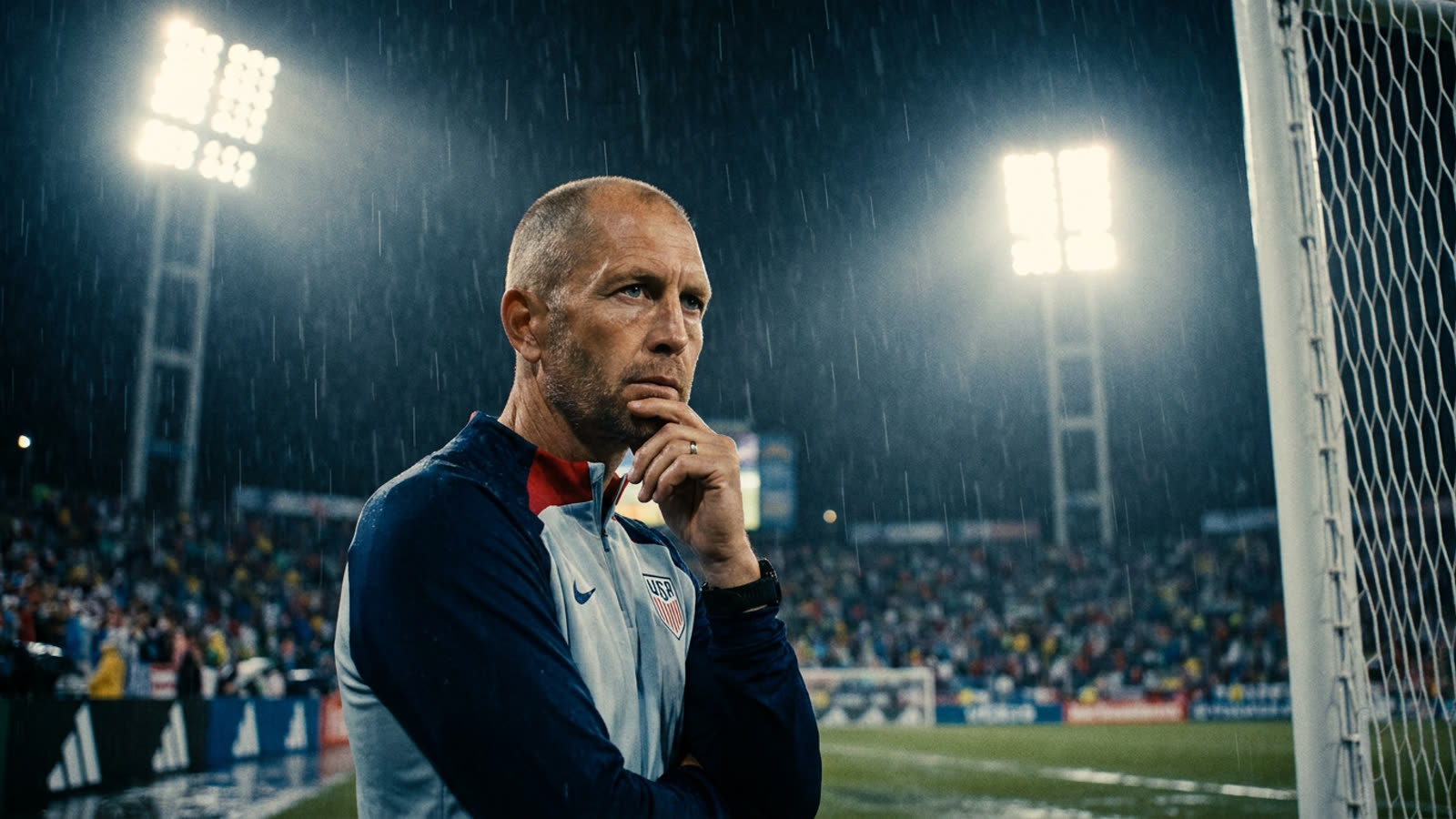
The United States men's national team has done something it rarely manages at World Cups: it has created expectations. After a group stage that saw them top their bracket with seven points, Gregg Berhalter now confronts the paradox that only successful tournament managers face—whether to rotate a squad that is clicking or to preserve the legs that got them here.
This is not a hypothetical coaching-manual exercise. With the round of 16 looming and temperatures across the American host cities pushing into the high 80s, the physical toll of three group matches in nine days is measurable. Christian Pulisic has logged the most minutes of any USMNT attacker. Weston McKennie's GPS data reportedly shows declining sprint counts in each successive match. The bench, meanwhile, is restless: Gio Reyna has barely featured, and Folarin Balogun has watched from the sideline as Ricardo Pepi has seized the striker role.
The case for continuity
Tournament football rewards cohesion over freshness. The combinations between Pulisic and McKennie, the understanding between Tyler Adams and Yunus Musah in the double pivot—these are not easily replicated by inserting substitutes who have trained together but not bled together under knockout pressure. Spain's 2010 World Cup win was built on an almost unchanged XI. Argentina rode the same core through Qatar in 2022. The USMNT's current chemistry, forged in the cauldron of a home tournament, is an asset that cannot be rested and then summoned back on demand.
Berhalter's system also depends on pressing intensity, which requires players who know exactly when to trigger and where to cover. A rotated lineup might preserve hamstrings but sacrifice the collective intelligence that has allowed the Americans to win the ball higher than any other team in the tournament.
The case for rotation
But there is a counter-logic, and it is written in the injury reports of every World Cup since 1998. Players who start all three group matches and then play 120 minutes in a round-of-16 thriller are statistically more likely to suffer soft-tissue injuries in the quarterfinal. The USMNT's depth is genuine: Reyna offers creativity Pulisic cannot, Balogun brings aerial presence Pepi lacks, and Johnny Cardoso can replicate Adams's screening role with fresher lungs.
Moreover, the knockout opponent—likely a European side that has been rotating more freely—will arrive with reserves of energy the Americans may not have. A World Cup is a seven-match marathon, not a three-match sprint. Berhalter has preached squad depth for four years; refusing to use it now would be a betrayal of his own philosophy.
Our take
Berhalter should split the difference, but lean toward continuity. Rest one starter per line—perhaps Pulisic, perhaps Adams—but keep the spine intact. The USMNT has never reached a World Cup semifinal; the path there runs through trust, not spreadsheets. Fresh legs mean nothing if the players wearing them do not know how to win together.