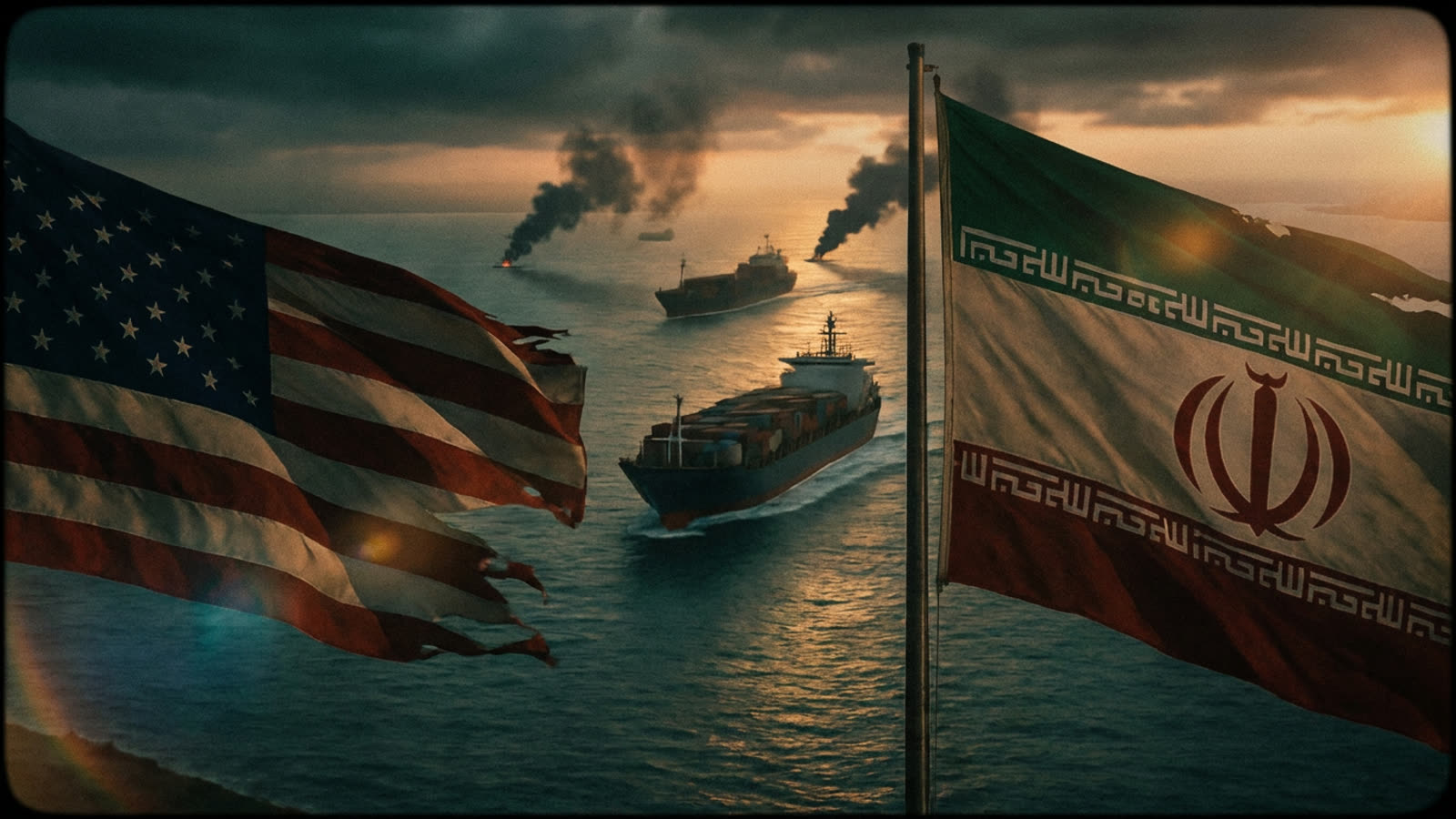
The ceasefire between the United States and Iran was never designed to last. It was designed to buy time—for Washington to manage its other crises, for Tehran to test the boundaries of American patience. Three consecutive days of military action in and around the Strait of Hormuz have now revealed what both governments understood from the start: this was a tactical intermission, not a strategic settlement.
The latest flare-up involves Iranian-backed forces, commercial shipping, and the narrow waterway through which roughly one-fifth of the world's daily oil consumption passes. The details remain contested—they always are in proxy conflicts—but the pattern is unmistakable. Iran is probing, and the United States is responding with calibrated force that stops short of escalation but does nothing to restore deterrence.
Why the Strait matters more than the headlines suggest
The Strait of Hormuz is twenty-one miles wide at its narrowest point. Every day, tankers carrying approximately seventeen million barrels of crude oil navigate its shipping lanes. When tensions spike, insurance premiums for vessels transiting the Gulf can double overnight. Energy traders price in risk before a single missile is fired.
This is the leverage Iran has always possessed and the vulnerability the United States has never solved. American naval superiority in the region is overwhelming on paper, but the geography favors asymmetric harassment—fast boats, drones, mines, and the threat of closure that need not be executed to be effective. Tehran does not need to win a naval engagement. It needs only to make the cost of confrontation unacceptable.
The ceasefire's design flaw
The agreement reached earlier this year was deliberately ambiguous on the question of Iranian proxies. Washington insisted that Tehran must restrain its allied militias across the region. Tehran insisted it could not control groups that operate with their own command structures and grievances. Both sides knew this was a fiction that allowed the deal to be signed.
What we are witnessing now is the inevitable consequence of that ambiguity. Iranian-aligned forces act. Iran disclaims responsibility. The United States retaliates against targets it can plausibly connect to the provocation. And the cycle continues, each iteration eroding whatever confidence the ceasefire was meant to build.
The Biden administration's successors inherited this framework and have shown no appetite for renegotiating its terms. The political cost of appearing weak on Iran remains higher than the cost of managing a slow-motion deterioration.
Our take
Ceasefires in the Middle East are not peace agreements; they are breathing exercises between rounds. The current US-Iran arrangement was always going to be tested, and the Strait of Hormuz was always going to be the testing ground. What matters now is whether Washington has a theory of escalation management or is simply improvising. Three days of strikes suggest the latter. Markets have not panicked yet, but markets are often the last to notice when a pause becomes a prelude.