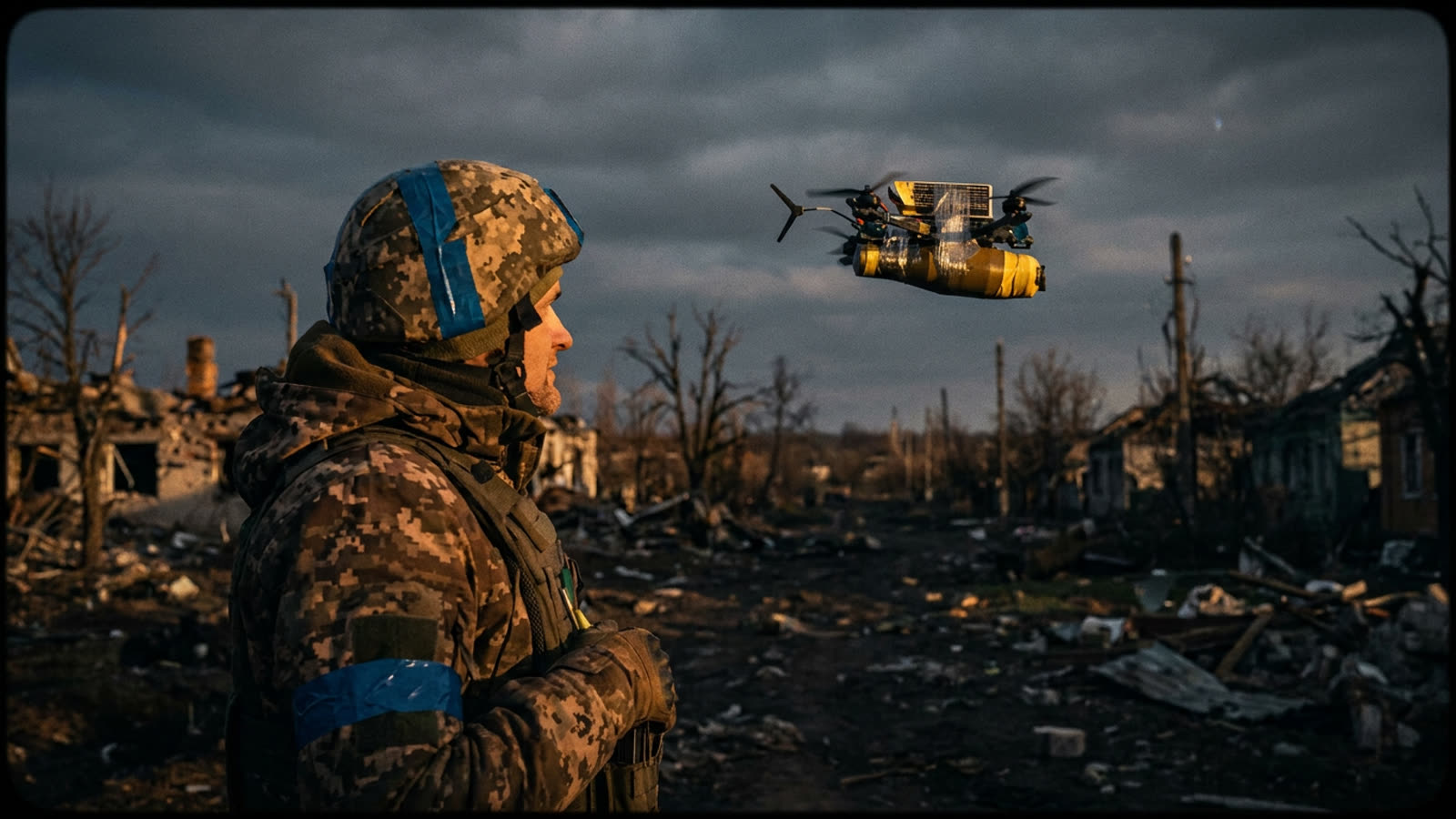
The most unnerving weapon on the Ukrainian battlefield makes almost no sound. Unlike the artillery barrages that have defined this war's brutal rhythm, Ukraine's new generation of autonomous drones—what troops on both sides have taken to calling 'killer robots'—hunt Russian positions with algorithmic patience, striking before their targets hear them coming. The psychological toll, according to frontline reports, is becoming as significant as the kinetic damage.
Nearly three and a half years into a war that has cycled through phases of trench stalemate, missile terror, and grinding attrition, Ukraine appears to have found an asymmetric edge that money alone cannot easily counter. These are not the commercial quadcopters jury-rigged with grenades that defined the war's early improvisation. The latest systems incorporate machine vision, autonomous target recognition, and loitering capabilities that allow a single operator to manage multiple platforms simultaneously.
The economics of fear
The calculus is grimly elegant. A sophisticated autonomous drone costs a fraction of the armored vehicles and trained infantry it can neutralize. More importantly, the psychological burden falls disproportionately on the defending force. Russian soldiers report that the drones' near-silent approach—combined with their apparent ability to 'decide' when to strike—has transformed routine patrol and resupply operations into exercises in dread. Sleep deprivation and morale collapse follow.
Moscow has responded with electronic warfare and shotgun-armed counter-drone teams, but the adaptation cycle favors the attacker. Each Russian countermeasure prompts a Ukrainian software update; each update arrives faster than new Russian hardware can be fielded. The innovation gap, once measured in months, now appears to be widening.
Precedent and proliferation
Defense ministries from Taipei to Tallinn are watching closely. If relatively inexpensive autonomous systems can impose outsized costs on a conventional military power, the implications for Pacific contingencies and NATO's eastern flank are profound. The Pentagon's Replicator initiative—aimed at fielding thousands of low-cost autonomous platforms—reflects Washington's recognition that mass may matter more than exquisite capability in the next major conflict.
Yet proliferation cuts both ways. The same technology that helps Ukraine defend its sovereignty could, within years, be available to non-state actors and revisionist powers with fewer scruples about targeting protocols. The Geneva Conventions were not drafted with algorithms in mind.
Our take
Ukraine's drone campaign is a case study in necessity as the mother of invention—and a preview of warfare's unsettling future. The 'silent death' that now stalks Russian infantry will eventually stalk everyone's infantry, including America's. Washington should be accelerating not just production but the legal and ethical frameworks that will govern autonomous lethality. The robots are already here; the rules are not.