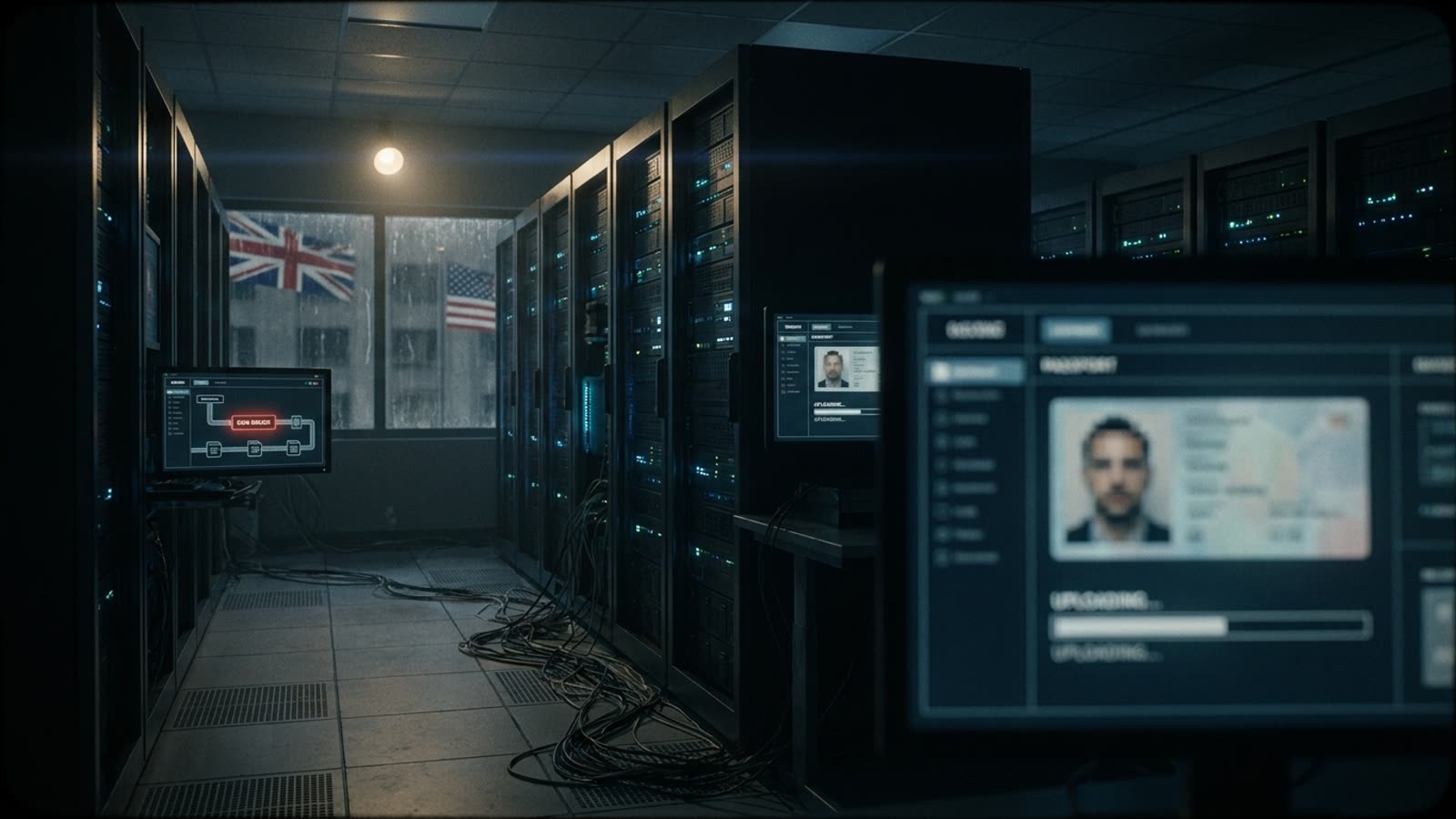
The UK Home Office has been inadvertently publishing thousands of visa applicants' passport scans and selfies to the open internet — and despite being notified, the leak remains unfixed. The breach is not merely an embarrassment for British immigration authorities; it is a warning shot across the bow of every government and corporation betting big on AI-powered identity verification.
The exposed data represents exactly the kind of biometric goldmine that makes identity fraud trivially easy: high-resolution passport photographs paired with the selfies applicants submit to prove they are who they claim to be. In the wrong hands, this combination is sufficient to defeat most facial-recognition systems, open bank accounts, or create convincing synthetic identities for everything from loan fraud to border crossings.
The infrastructure problem nobody wants to discuss
Governments worldwide are sprinting to digitise immigration and identity systems, often outsourcing critical components to third-party vendors whose security practices receive cursory oversight at best. The UK portal breach follows a depressingly familiar pattern: a misconfigured cloud bucket, an exposed API endpoint, or a forgotten test server left connected to production databases. The specific technical failure matters less than the systemic reality — these systems are being built faster than they can be secured.
The AI identity-verification market, projected to exceed $20 billion globally within the next few years, depends on the assumption that biometric data can be collected, stored, and processed safely. Every major tech platform, from Apple to Meta, now uses facial recognition for authentication. Banks, airports, and employers increasingly require selfie-based verification. The UK leak demonstrates that the weakest link is rarely the algorithm — it is the mundane infrastructure surrounding it.
Why the Home Office's silence is telling
Perhaps most troubling is the reported non-response. Security researchers who discovered the exposure claim they notified the Home Office and received no meaningful action. This institutional paralysis — whether born of bureaucratic inertia, technical incompetence, or simply hoping the problem disappears — is endemic to large organisations handling sensitive data. It suggests that even when breaches are discovered, remediation timelines stretch into months while exposed data remains accessible.
For the thousands of visa applicants whose documents are now circulating, the damage is irreversible. Unlike a password, you cannot reset your face. Unlike a credit card, you cannot cancel your passport photograph. The biometric data exposed in this breach will remain useful to fraudsters for decades.
Our take
The rush to AI-powered identity systems has outpaced the security infrastructure required to support them. Governments and corporations have treated biometric data as just another category of personal information, subject to the same lackadaisical protections as email addresses and phone numbers. The UK breach should disabuse them of that notion. When your face becomes your password, a data leak becomes a lifelong vulnerability. The industry needs to confront an uncomfortable truth: the most sophisticated facial-recognition algorithm is worthless if the underlying data pipeline leaks like a sieve.