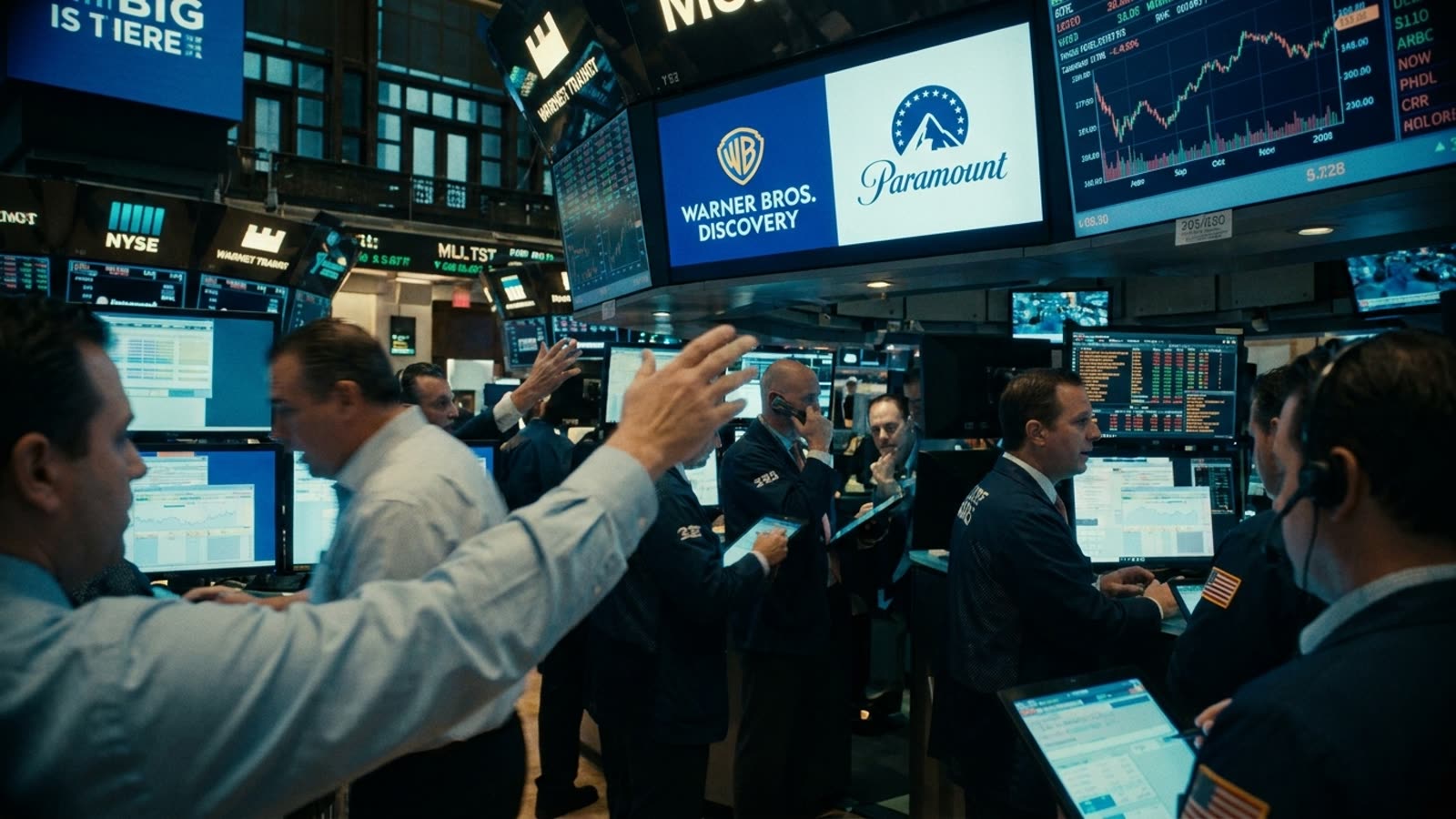
The American stock market has entered territory that would have seemed hallucinatory a decade ago. A single company can now debut on a public exchange and, within hours, command a valuation exceeding two trillion dollars — more than the annual economic output of Italy, Brazil, or Canada. The mechanics of how this happened matter less than what it reveals: a financial system so flush with liquidity, so starved for growth stories, and so conditioned to chase momentum that the normal gravitational forces of valuation have been temporarily suspended.
This is not an argument that any particular company is overvalued. It is an observation that the market's collective willingness to assign such valuations on day one, before a single quarterly report as a public company, represents a phase change in investor psychology. The last time we saw comparable enthusiasm for transformational technology stories, the subsequent correction erased trillions in paper wealth and took nearly fifteen years to fully recover in inflation-adjusted terms.
The liquidity backdrop
The conditions enabling this moment have been building for years. Central banks, despite recent tightening cycles, have left the financial system with vastly more liquidity than existed before the 2008 crisis. Private equity and venture capital have spent the past decade bidding up pre-IPO valuations, meaning companies arrive on public markets already priced for perfection. Retail investors, armed with zero-commission trading apps and fractional shares, can now participate in frenzies that once required institutional access. The result is a market where demand for exciting stories consistently outstrips supply, and where the opening-day pop has become almost mandatory for any high-profile listing.
What history suggests
Market historians will note uncomfortable parallels. The late 1990s saw technology companies achieve valuations that assumed decades of flawless execution. The 2021 SPAC boom produced hundreds of companies that traded on narrative rather than fundamentals, most of which have since collapsed. The pattern is consistent: periods of easy money and technological optimism produce valuations that assume the future has already arrived, followed by painful recalibrations when it turns out the future still requires building.
None of this means a correction is imminent. Markets can remain irrational longer than skeptics can remain solvent, as the saying goes. But the sheer scale of recent listings — and the enthusiasm with which they have been received — suggests that the marginal buyer is no longer making careful calculations about discounted cash flows. They are making bets on continued momentum, which works until it doesn't.
Our take
When a single IPO can move more capital than most countries generate in a year, we are no longer in a market that rewards patient analysis. We are in a market that rewards narrative capture and timing. That can be enormously profitable for those who get out before the music stops. For everyone else, the current euphoria is worth watching with the same detached interest one might bring to a particularly elaborate fireworks display: beautiful, transient, and best observed from a safe distance.