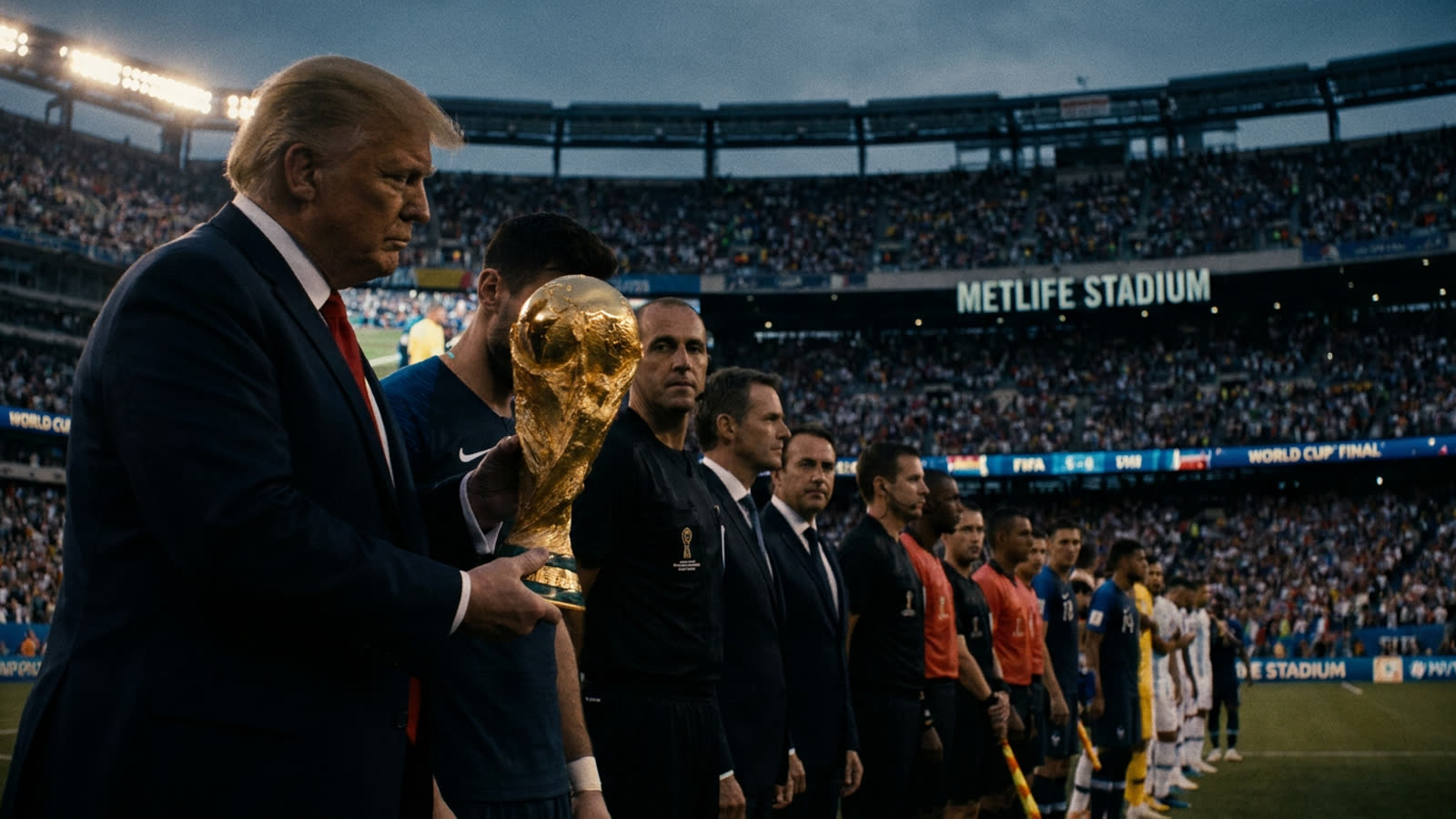
The 2026 World Cup has delivered spectacular football, record crowds, and the usual quota of refereeing controversies. But its most fraught ninety seconds may come after the final whistle, when President Donald Trump hands the trophy to the winning captain at MetLife Stadium in East Rutherford, New Jersey.
FIFA protocol dictates that the host nation's head of state presents the trophy. The tradition is sacrosanct: Angela Merkel beamed as she handed the cup to Philipp Lahm in 2014; Emmanuel Macron embraced Hugo Lloris in Moscow four years later. The ceremony is meant to be a moment of uncomplicated national pride, a handshake that transcends politics. In 2026, that premise faces its sternest test.
The protocol problem
Trump's relationship with international football is, to put it diplomatically, limited. His administration's 2018 lobbying helped secure the tri-nation bid, but his subsequent comments about FIFA, immigration, and several participating nations have created a diplomatic minefield. Should France reach the final, the handshake would occur against the backdrop of tariff disputes and Trump's pointed remarks about Paris. A Mexico final would be even more charged, given the president's border rhetoric and the fact that Mexican fans have been among the tournament's most visible supporters on American soil.
FIFA sources indicate the organization has quietly explored whether a co-host head of state—Canada's Mark Carney or Mexico's Claudia Sheinbaum—might share presentation duties, but protocol offers no precedent for such an arrangement when the final is held in a single country. The trophy goes from one pair of hands to another. There is no workaround.
What the players might do
Athletes have grown increasingly comfortable with political gestures, and a World Cup final offers the largest possible stage. The winning captain could decline the handshake, offer a perfunctory nod, or use the moment to make a statement. Any of these choices would overshadow the match itself. Conversely, a warm embrace would draw criticism from those who view such a gesture as legitimizing policies they oppose.
FIFA's regulations prohibit political statements on the pitch, but the trophy ceremony exists in a gray zone—technically off the field of play, yet broadcast to billions. The governing body has no clear enforcement mechanism for a captain who chooses to speak or gesture during the handoff.
Our take
FIFA wanted an American World Cup for the revenue, the stadiums, and the time zones. It got all three, plus the most polarizing host-nation leader in the tournament's modern history. The trophy ceremony will last perhaps two minutes. It may define how this World Cup is remembered for decades. That is not a commentary on football; it is a commentary on the era.