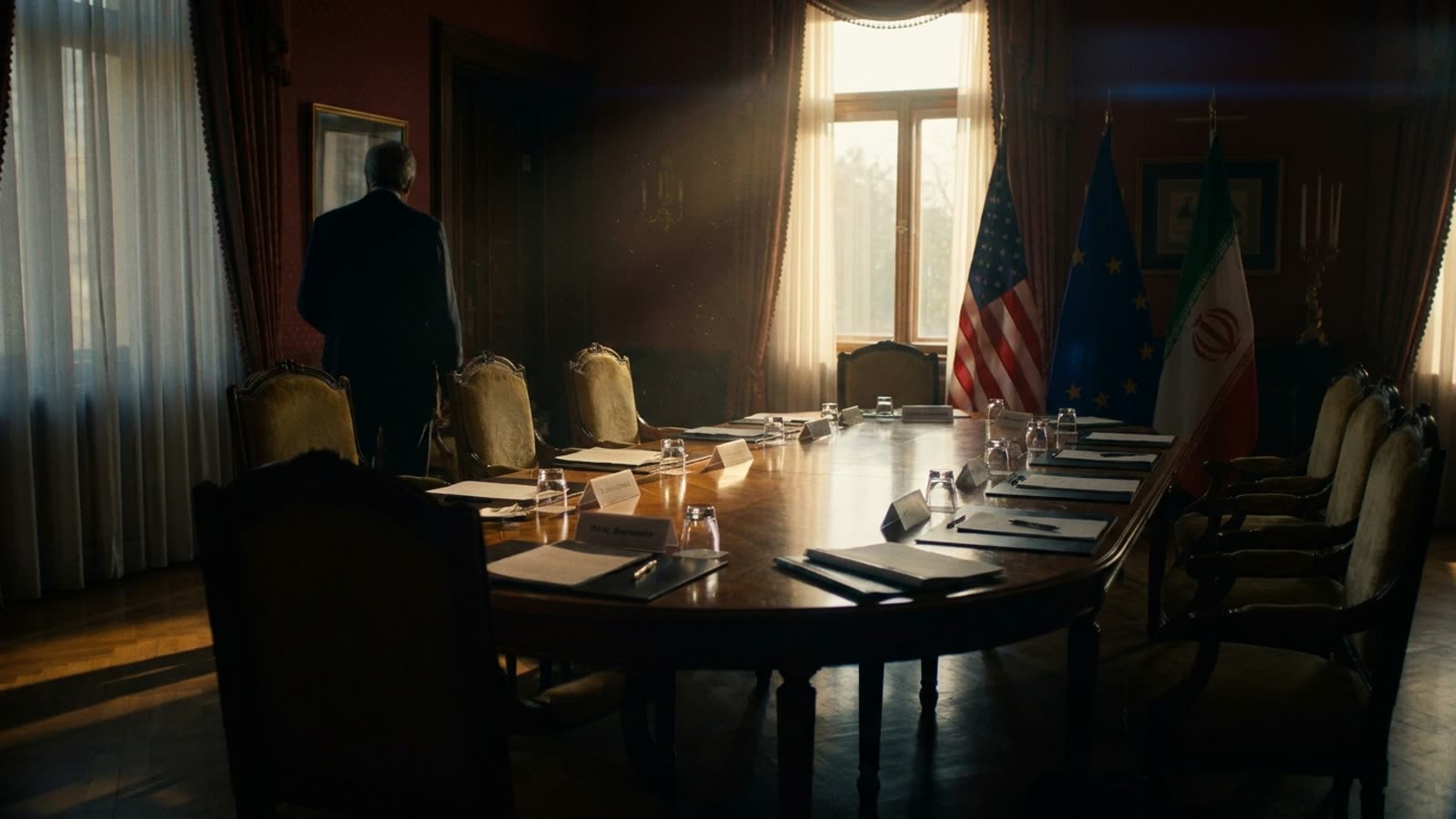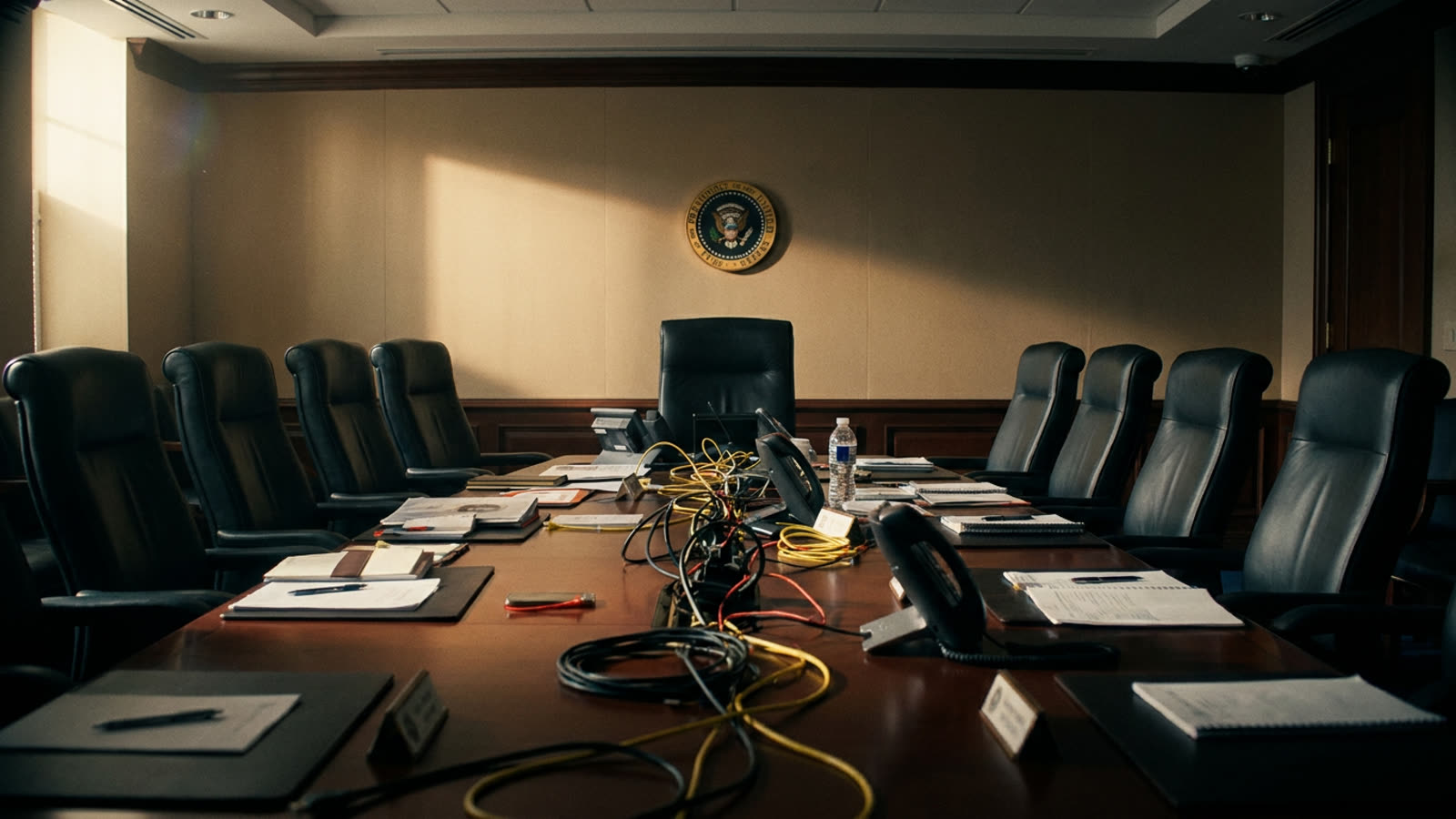
The president who built a political brand on tearing up the Iran nuclear deal is now closeted in the Situation Room, weighing whether to approve a framework agreement that his own negotiators have already initialed. The irony is almost too neat: Donald Trump, the man who withdrew from the JCPOA in 2018 and ordered the killing of Qassem Soleimani in 2020, must now decide if he wants to be remembered as the architect of a new diplomatic accommodation with Tehran—or the president who walked away twice.
The reported framework extends the existing ceasefire and establishes parameters for broader talks on Iran's nuclear program, regional proxies, and sanctions relief. For Trump, the political calculus is treacherous. His base views any deal with Iran as capitulation; his generals reportedly favor the stability a framework would provide; and the Gulf allies who bankrolled his first campaign are split between those who want permanent confrontation and those exhausted by years of shadow war.
The narrowing corridor
What makes this moment different from previous Trump-era Iran crises is the absence of easy exits. The ceasefire that has held since earlier this year created facts on the ground—shipping lanes reopened, oil prices stabilized, regional tensions cooled. Walking away now means owning the chaos that follows. The president's room to maneuver has shrunk precisely because his administration's own diplomacy succeeded in reaching this point.
Israeli officials have made their displeasure known through the usual channels, with some characterizing the emerging deal as abandonment. But Netanyahu's government, consumed by its own domestic crises, lacks the leverage it once wielded over Washington. The Abraham Accords coalition that Trump prizes has quietly signaled that regional stability matters more than ideological purity on Iran.
The construction president's dilemma
Trump has spent his second term emphasizing his identity as a builder—of walls, of deals, of monuments to his own legacy. The Iran framework offers him something to build rather than merely destroy. Yet accepting it requires him to implicitly acknowledge that maximum pressure, his first-term strategy, failed to produce regime change or capitulation. The deal on the table is not surrender by Tehran; it is compromise, the very concept Trump has spent decades claiming to master while rarely practicing.
The Situation Room tableau—the president surrounded by advisers, maps on screens, the weight of decision—is familiar from countless administrations. What distinguishes this moment is that Trump genuinely appears undecided. His public statements have oscillated between bellicosity and hints of dealmaking. The man who prizes unpredictability has, for once, achieved it authentically.
Our take
Trump will likely approve some version of the framework, not because he has converted to diplomacy but because he recognizes a good exit when he sees one. The deal allows him to claim credit for ending a conflict his predecessors could not resolve, while the details—sanctions timelines, verification mechanisms, the fate of enriched uranium—can be haggled over for years. He gets the photo op; the hard work falls to whoever comes next. It is, in its way, the most Trumpian outcome imaginable: declare victory, sign the paper, move on to the next show.