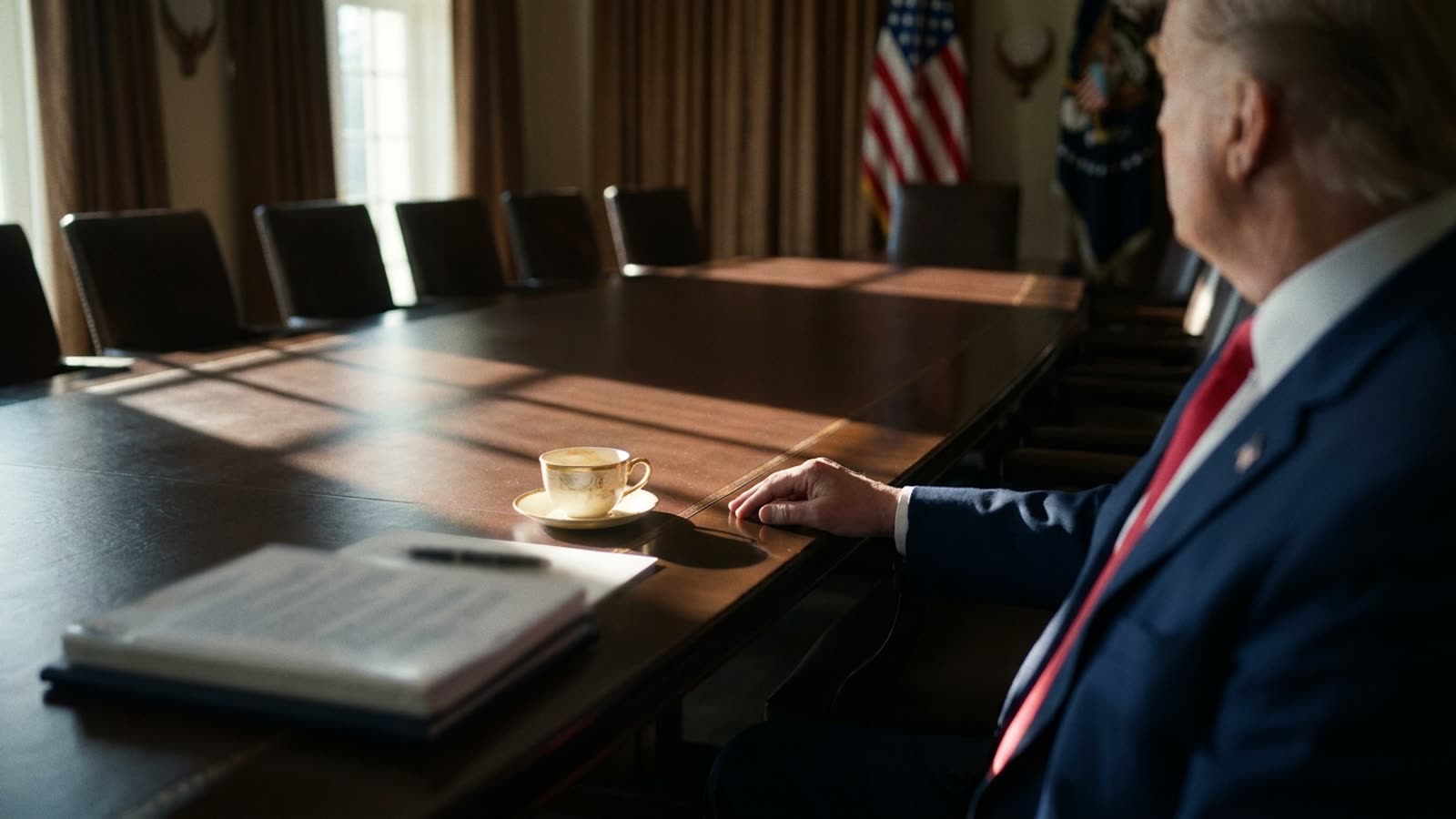
The Iran war was supposed to be over by now. When President Trump ordered strikes against Iranian nuclear facilities in late February, the administration promised a contained operation that would neutralize Tehran's atomic ambitions within weeks. Three months later, American forces remain engaged across multiple theaters, oil prices have spiked forty percent, and the president who built his brand on dealmaking has been forced to accept terms he would have rejected in January.
The peace agreement announced Friday—in which Iran reportedly agrees to surrender its enriched uranium stockpile in exchange for sanctions relief and security guarantees—is being sold as vindication. It is, more accurately, an acknowledgment that the war's costs have become politically unbearable.
The arithmetic of attrition
The conflict's trajectory defied every optimistic Pentagon briefing. Iranian proxy networks proved more resilient than anticipated, launching sustained attacks on American positions in Iraq and disrupting shipping lanes in the Strait of Hormuz. The economic blowback—felt most acutely at American gas pumps—has cratered the president's approval ratings to historic lows for a wartime commander. Republican senators who initially rallied behind the strikes are now openly questioning the strategy, with several demanding congressional authorization for continued operations.
The administration's domestic agenda has stalled entirely. The legislative priorities Trump outlined in January—tax cuts, immigration reform, infrastructure spending—have been crowded out by war appropriations and crisis management. The political capital that typically accrues to wartime presidents has instead evaporated.
A deal born of necessity
The agreement's terms, while still being finalized, suggest significant American concessions. Iran retains its ballistic missile program. The security guarantees reportedly include commitments that would constrain future American military options in the region. Gulf allies who urged restraint from the start are now positioned as essential mediators rather than grateful beneficiaries of American protection.
Trump's framing of the deal as a historic achievement follows a familiar playbook: declare victory regardless of the scoreboard. But the administration's eagerness to reach any agreement—reportedly overruling Pentagon officials who wanted continued pressure—betrays the underlying calculus. The midterm elections are eighteen months away, and the current trajectory points toward a Republican bloodbath.
Our take
Trump's Iran gambit may ultimately achieve its stated objective of preventing a nuclear-armed Tehran, though at costs that dwarf what diplomacy might have accomplished. The larger lesson is one this president seems congenitally incapable of learning: wars are easier to start than to end, and the dealmaker's instinct to declare victory and move on does not translate well to conflicts where the other side has agency. The peace, if it holds, will be remembered not as Trump's triumph but as his most expensive education.