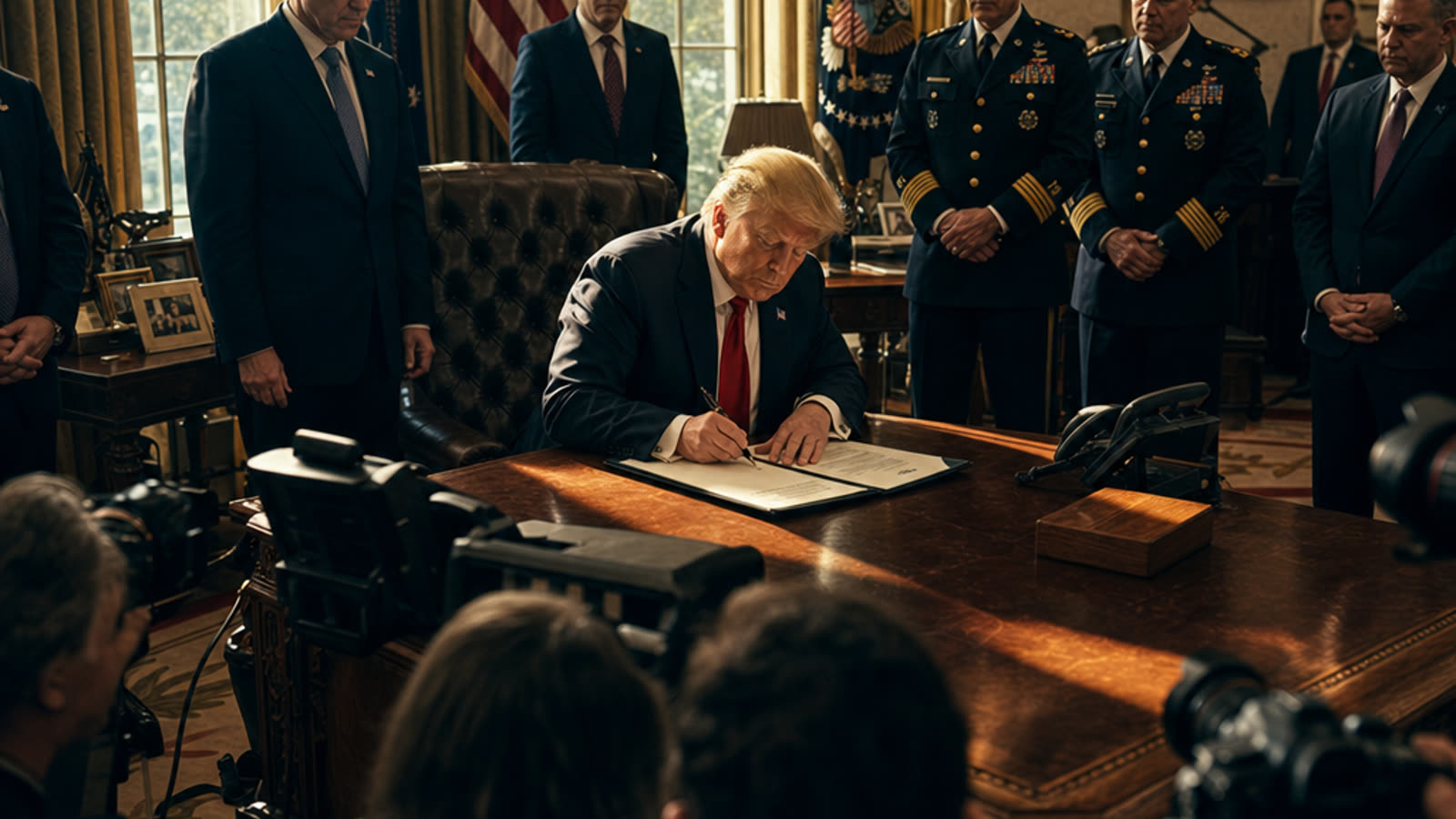
The Iran war lasted weeks; replenishing the arsenal will take years. President Trump's invocation of the Defense Production Act on Tuesday represents an extraordinary admission that the spring campaign against Tehran burned through precision munitions, missile interceptors, and drone components at a rate that outstripped the defense industrial base's ability to keep pace. The order compels manufacturers to prioritize Pentagon contracts and authorizes federal loans to expand production lines — tools last deployed at this scale during the Korean War.
The move arrives as Trump closes out the G7 summit in France, where he simultaneously declared the Iran deal a triumph and warned that bombing could resume if Tehran fails to comply. The juxtaposition is telling: even as the administration celebrates a ceasefire, it is scrambling to ensure the military could sustain another campaign if diplomacy collapses.
The stockpile problem
Defense analysts have warned for months that America's inventories of key systems — particularly Tomahawk cruise missiles, JDAM guidance kits, and Patriot interceptors — were dangerously low before the Iran conflict began. The Ukraine war had already drawn down reserves, and the rapid tempo of strikes on Iranian air defenses, nuclear facilities, and Revolutionary Guard installations accelerated the depletion. Pentagon officials have declined to specify current inventory levels, citing operational security, but procurement documents suggest orders for certain munitions now carry lead times stretching into 2028.
The Defense Production Act gives the executive branch sweeping authority to redirect industrial capacity, but it cannot conjure factory floors or trained workers overnight. Raytheon, Lockheed Martin, and other prime contractors have been lobbying for multi-year funding commitments to justify capital investments; Tuesday's order provides legal authority but not the appropriations that would make expansion economically rational for shareholders.
Political timing
The announcement's timing — buried beneath G7 coverage and World Cup headlines — suggests the White House understands the optics. Invoking emergency powers to rebuild weapons stocks undermines the narrative of a clean, decisive victory. It also hands Democrats a talking point: the administration is simultaneously claiming the Iran campaign was a strategic masterstroke and admitting the military is now less prepared for the next crisis than it was before.
Republican hawks, meanwhile, see vindication. Senators who pushed for higher defense spending throughout the Biden years are already citing the order as proof that the post-Cold War "peace dividend" hollowed out American hard power. Expect supplemental appropriations requests before the August recess.
Our take
Wars are easier to start than to pay for, and the invoice always arrives after the victory parade. Trump's Defense Production Act order is the first honest accounting of what the Iran campaign cost in materiel — and it suggests the answer is "more than anyone wanted to admit." The administration deserves credit for acting before the next crisis exposes the gap, but the episode is a reminder that military primacy is not a birthright. It is an industrial policy, and America has been coasting on Cold War infrastructure for decades. The bill is now due.