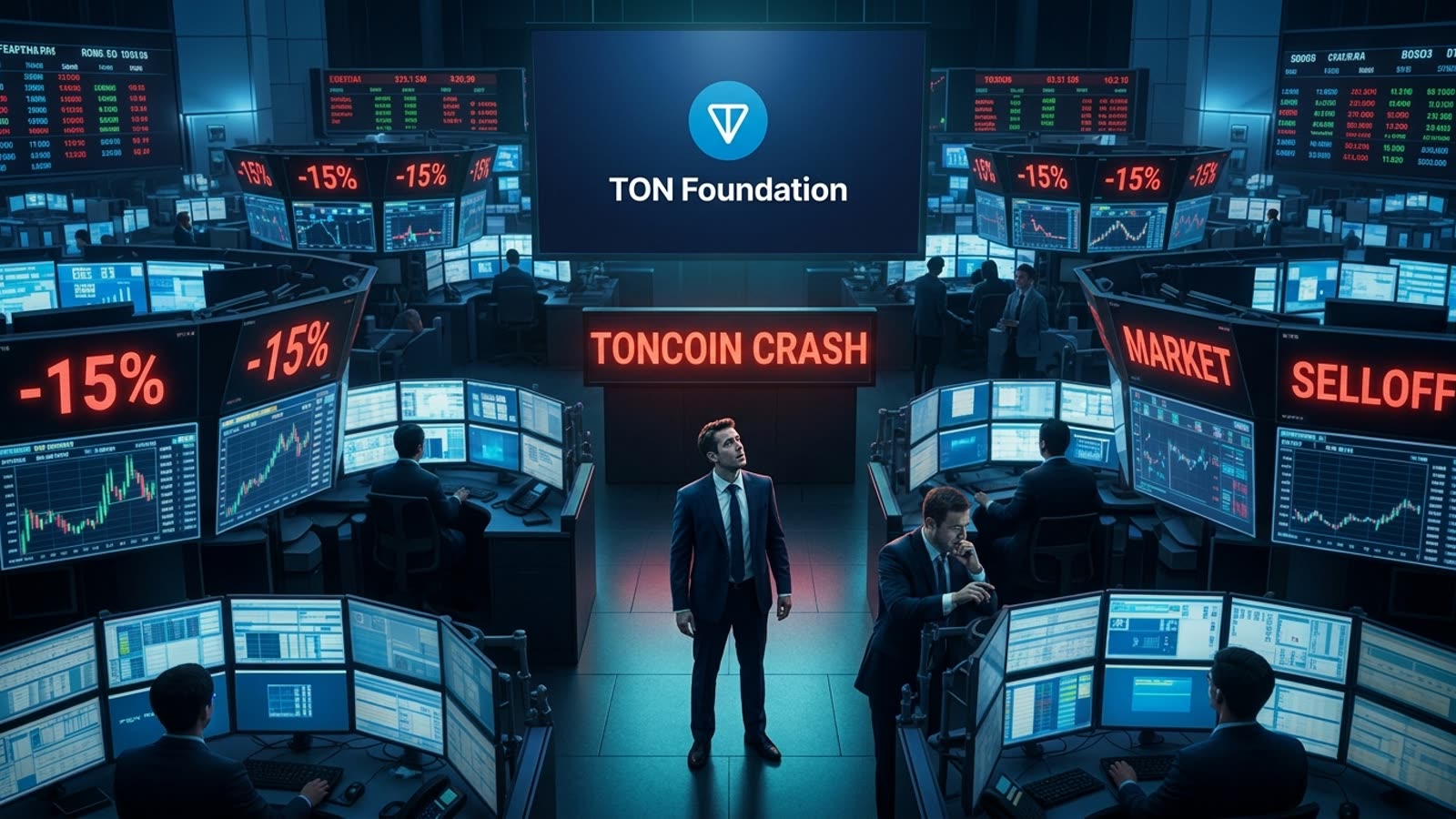
The Open Network was supposed to be different. Unlike the laboratory experiments that populate most of crypto, Toncoin had something no other blockchain could claim: direct integration with Telegram, a messaging platform with nearly a billion monthly users. That distribution advantage was meant to solve crypto's perpetual chicken-and-egg problem. Instead, TON is trading at $1.49, down more than 15% in twenty-four hours and continuing a slide that has erased the bulk of its 2024 gains.
The thesis was elegant. Telegram would embed wallet functionality directly into its interface, allowing users to send crypto as easily as stickers. Mini-apps would proliferate, creating an ecosystem of games, payments, and decentralized services accessible to people who had never heard of MetaMask. The blockchain would scale where Ethereum could not, processing millions of transactions without the gas-fee agony that has plagued competitors.
The adoption that wasn't
Telegram did launch its wallet features. Users can indeed send TON within chats. But the gulf between technical capability and actual behavior has proven vast. Most Telegram users opened the wallet once, if at all, then returned to their group chats about football and politics. The mini-app ecosystem produced a handful of viral games—Notcoin briefly captured attention—but failed to generate the sustained economic activity that would justify TON's valuation. Transaction volumes remain a rounding error compared to the platform's user base.
The problem is not unique to TON. Every blockchain that has tried to piggyback on an existing platform's distribution has discovered the same uncomfortable truth: people do not want financial infrastructure embedded in their social apps. They want their social apps to remain social. The friction of crypto—seed phrases, transaction confirmations, the ever-present fear of irreversible mistakes—does not disappear simply because the wallet lives inside a familiar interface.
Durov's legal shadow
Pavel Durov's August 2024 arrest in France on charges related to Telegram's content moderation practices cast a long shadow over the project. While Durov was eventually released and the charges remain unresolved, the episode reminded investors that TON's fortunes are unusually dependent on a single individual operating in legal gray zones across multiple jurisdictions. The blockchain's governance remains opaque, its roadmap subject to the whims of a founder who has demonstrated a talent for antagonizing authorities.
The broader crypto selloff has not helped. Bitcoin's weakness has dragged the entire market lower, and tokens with idiosyncratic risk profiles like TON tend to suffer disproportionately when sentiment sours. Leveraged positions have been liquidated. Retail holders who bought the Telegram dream are capitulating.
Our take
Toncoin's premise was always more compelling as a pitch deck than as a product. Distribution is necessary but not sufficient; you still need a reason for people to use the thing you are distributing. Telegram users have that reason for messaging. They have never had it for cryptocurrency. TON may recover—crypto has a habit of resurrecting the dead—but the vision of a billion-user blockchain onboarded through a chat app looks increasingly like a fantasy that confused proximity with demand.