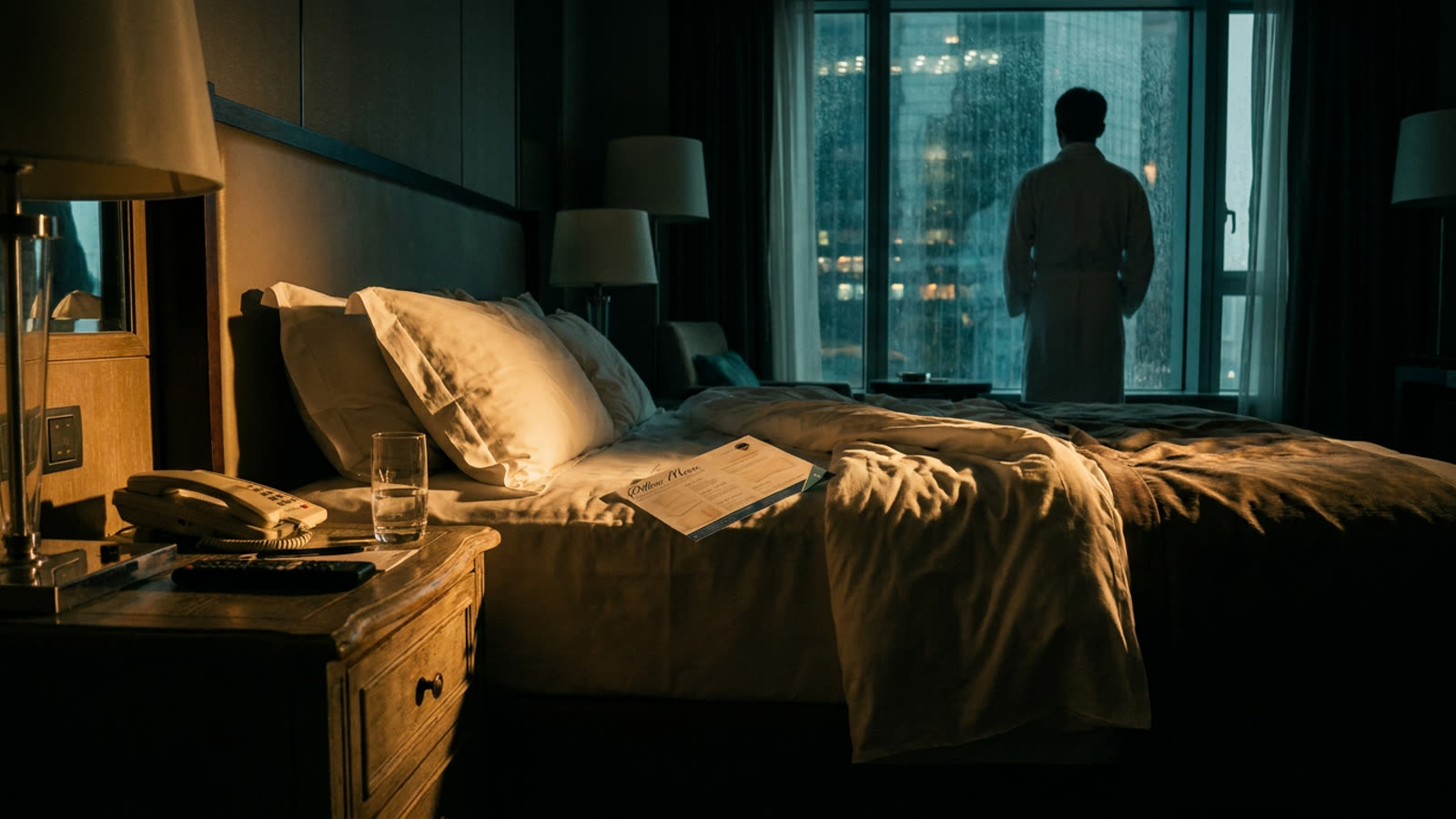
Somewhere in the early 2000s, upscale hotels decided that sleep required curation. The pillow menu emerged — a laminated card offering buckwheat hulls, memory foam, hypoallergenic down alternatives, and something called a "body pillow" that no business traveler has ever requested with a straight face. It was meant to signal attentiveness. Instead, it became a case study in how the hospitality industry confuses abundance with care.
The premise seems reasonable enough. People have different necks, different sleeping positions, different allergies. Why not let them choose? But the pillow menu was never really about sleep science. It was about the appearance of bespoke service — a way for hotels to suggest that every guest's needs were anticipated without actually anticipating any of them. The menu outsources personalization to the customer, then congratulates itself for offering options.
The economics of perceived luxury
Luxury hospitality operates on a simple principle: the more choices presented, the more premium the experience feels. This works beautifully for wine lists and spa treatments, where selection genuinely matters and expertise guides the decision. It works less well for pillows, where most guests have neither the vocabulary nor the inclination to articulate their cervical preferences. The pillow menu exists in a strange limbo — too elaborate to ignore entirely, too trivial to engage with seriously.
Hotels know this. Industry surveys consistently show that pillow menu usage hovers in the single digits, yet the amenity persists because removing it would feel like a downgrade. The menu has become a signifier rather than a service, a checkbox on the luxury amenity list that guests expect to see whether or not they use it. It is hospitality as performance art.
Choice fatigue meets sleep deprivation
The broader phenomenon here is what behavioral economists call the paradox of choice. More options do not necessarily produce more satisfaction; often they produce paralysis, regret, and the nagging sense that you picked wrong. The pillow menu arrives precisely when guests are least equipped to make decisions — exhausted from travel, unfamiliar with the options, and fundamentally uncertain what they even want. Most people grab whatever is already on the bed and hope for the best.
This is not a failure of the guest. It is a failure of design. Genuine hospitality would mean a housekeeping staff trained to notice that a guest sleeps on their side, or a turndown service that asks one simple question rather than presenting a taxonomy of fill materials. The menu substitutes a document for a relationship, which is cheaper and more scalable but considerably less hospitable.
Our take
The pillow menu is harmless, even charming in its absurdity. But it represents a broader confusion in the service industry between offering choices and providing care. Real luxury is not a laminated card with twelve options — it is someone who notices you need a firmer pillow and brings one without being asked. The menu survives because it costs hotels almost nothing and signals effort to guests who never use it. That is not hospitality. That is theater, and the audience is mostly asleep.