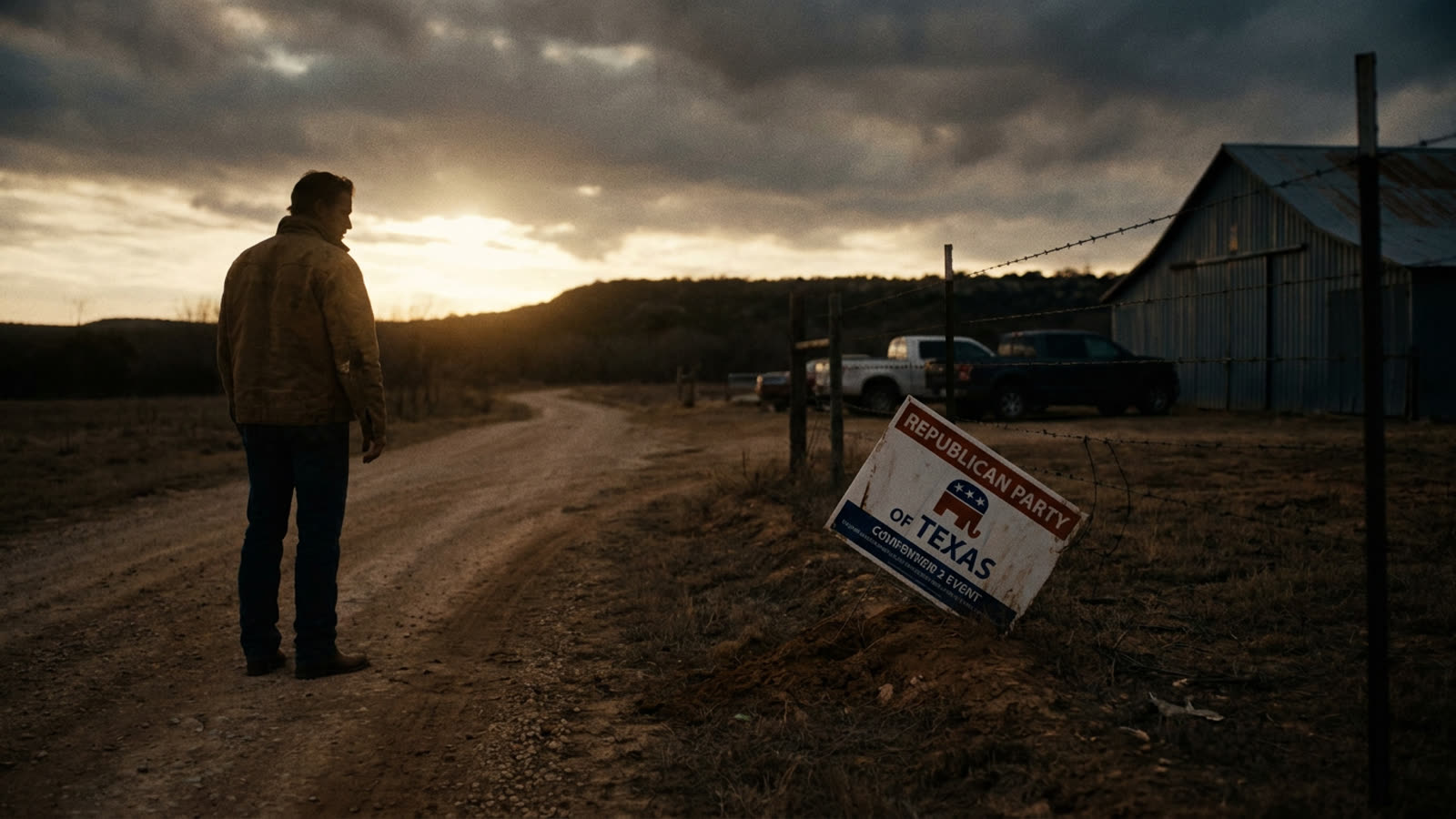
For decades, Texas was the load-bearing wall of Republican presidential math — 40 electoral votes delivered with the reliability of a direct deposit. Now GOP operatives are publicly fretting over whether their own nominee will bother to defend it, and the anxiety itself is the story.
The numbers explain the nerves. Recent polling shows Trump's margin in Texas compressed to low single digits, a state he carried by nearly six points in 2024 and nine in 2020. Democratic voter registration in the state's booming metropolitan corridors continues to outpace Republican gains in rural counties, a demographic tide that party strategists have warned about for a decade while doing remarkably little to address it.
The war chest question
Trump's campaign reportedly sits on approximately $350 million in available funds — a formidable sum that nonetheless cannot stretch everywhere. The calculus is brutal: every dollar spent defending Texas is a dollar not spent flipping Michigan or Wisconsin. Campaign finance disclosures show minimal Trump spending in Texas through May, a silence that has prompted increasingly public complaints from state party officials who feel abandoned.
The irony is acute. Texas Republicans spent years cultivating an image of rugged self-sufficiency, mocking coastal states for their dependence on federal largesse while quietly accepting more disaster relief funds than any state in the union. Now they want the national party to bail them out of a demographic problem of their own making.
Why Texas matters beyond Texas
If Texas genuinely becomes competitive, it reshapes not just one election but the entire architecture of American politics. Democrats could afford to lose Pennsylvania and still win the presidency. Republicans would need to defend a state that requires expensive media buys across multiple distinct markets — Dallas, Houston, San Antonio, Austin — each with different political compositions and media costs that dwarf those of swing states like Nevada or Arizona.
The state's down-ballot implications are equally significant. A genuine presidential contest would boost Democratic turnout in races for the state legislature, potentially threatening the GOP supermajority that has enabled aggressive gerrymandering and restrictive voting laws. Republican state legislators understand this, which explains why their pleas for Trump campaign spending have grown so urgent.
Our take
The spectacle of Texas Republicans begging for help from a nominee they've spent years enabling reveals a party that has confused dominance with durability. They gerrymandered themselves into complacency, assuming demographic destiny would wait for them to get around to addressing it. Trump, characteristically, will spend where his instincts tell him, not where party strategists advise. If Texas falls — or even comes close — the recriminations will be spectacular, and entirely deserved.