The artificial intelligence industry has perfected the art of the immaculate product launch: a chatbot materializes, fully formed, as if conjured from pure mathematics and good intentions. The infrastructure behind it—the cobalt mines, the underwater cables, the content-moderation sweatshops—remains conveniently invisible, like the kitchen of a three-star restaurant.
Belgian director Jannes Callens's documentary "The Technological Sublime," premiering this week at the Taiwan Creative Content Fest, methodically dismantles that illusion. The film follows the physical supply chain of AI systems from rare-earth extraction in the Democratic Republic of Congo through semiconductor fabrication in Taiwan to the data-labeling operations in Nairobi where workers earning a few dollars per hour teach machines to recognize hate speech by reading it all day.
The labor behind the magic
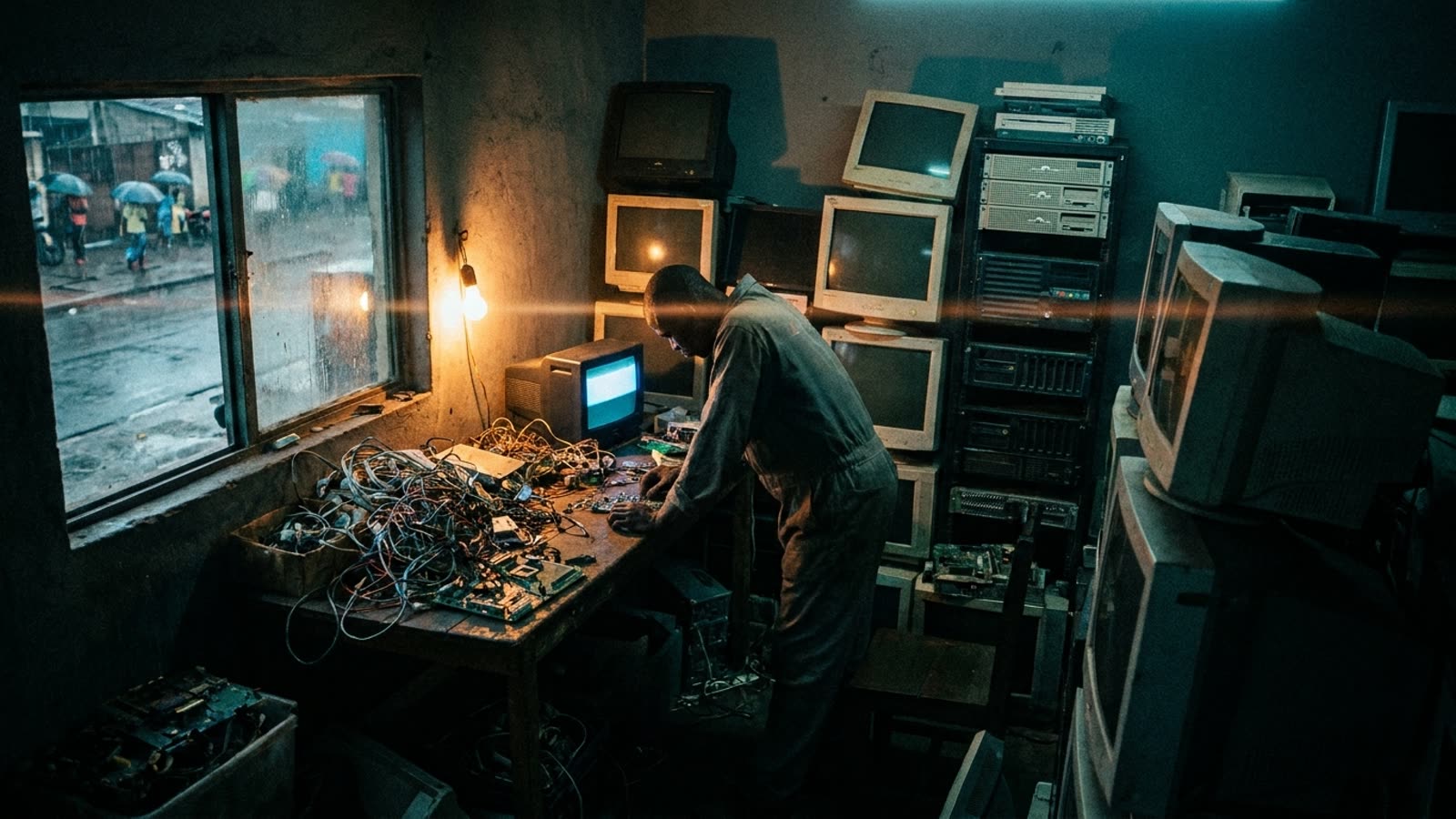
Callens's most damning footage comes from Kenya, where a generation of young, educated workers has become the invisible workforce of the AI boom. These are not the stereotypical factory laborers of previous technological revolutions but English-speaking university graduates who spend their shifts annotating images, flagging violent content, and correcting the grammar of chatbot responses. The work is cognitively demanding, often psychologically damaging, and pays a fraction of what equivalent labor would cost in San Francisco.
The documentary draws explicit parallels to colonial extraction patterns—raw materials and cheap labor flowing outward, finished products and profits flowing back to wealthy nations. It is not a subtle argument, but Callens marshals enough evidence to make it stick.
The environmental ledger
The film's second thread concerns water and energy. Data centers consume staggering quantities of both, and Callens visits facilities in Arizona and Ireland where local communities have begun pushing back against the industry's expansion. One sequence juxtaposes a parched Arizona aquifer with promotional materials from a major cloud provider touting its "sustainability commitments."
The timing is pointed. This week's market correction erased roughly $3.2 trillion from tech valuations, driven partly by investor anxiety that AI's costs—computational, regulatory, reputational—may be catching up with its promises. Callens's documentary suggests those costs were always there; the market is simply beginning to notice.
Our take
Documentaries like this one rarely change corporate behavior directly, but they do shift the rhetorical terrain. It becomes harder to describe AI as "weightless" or "clean" once audiences have seen the quartz mines and the content-moderation cubicles. The industry's preferred narrative—that intelligence can be manufactured without exploitation—is a story, and Callens is telling a different one. Whether investors, regulators, or consumers choose to listen is another matter, but the excuse of ignorance is now officially unavailable.