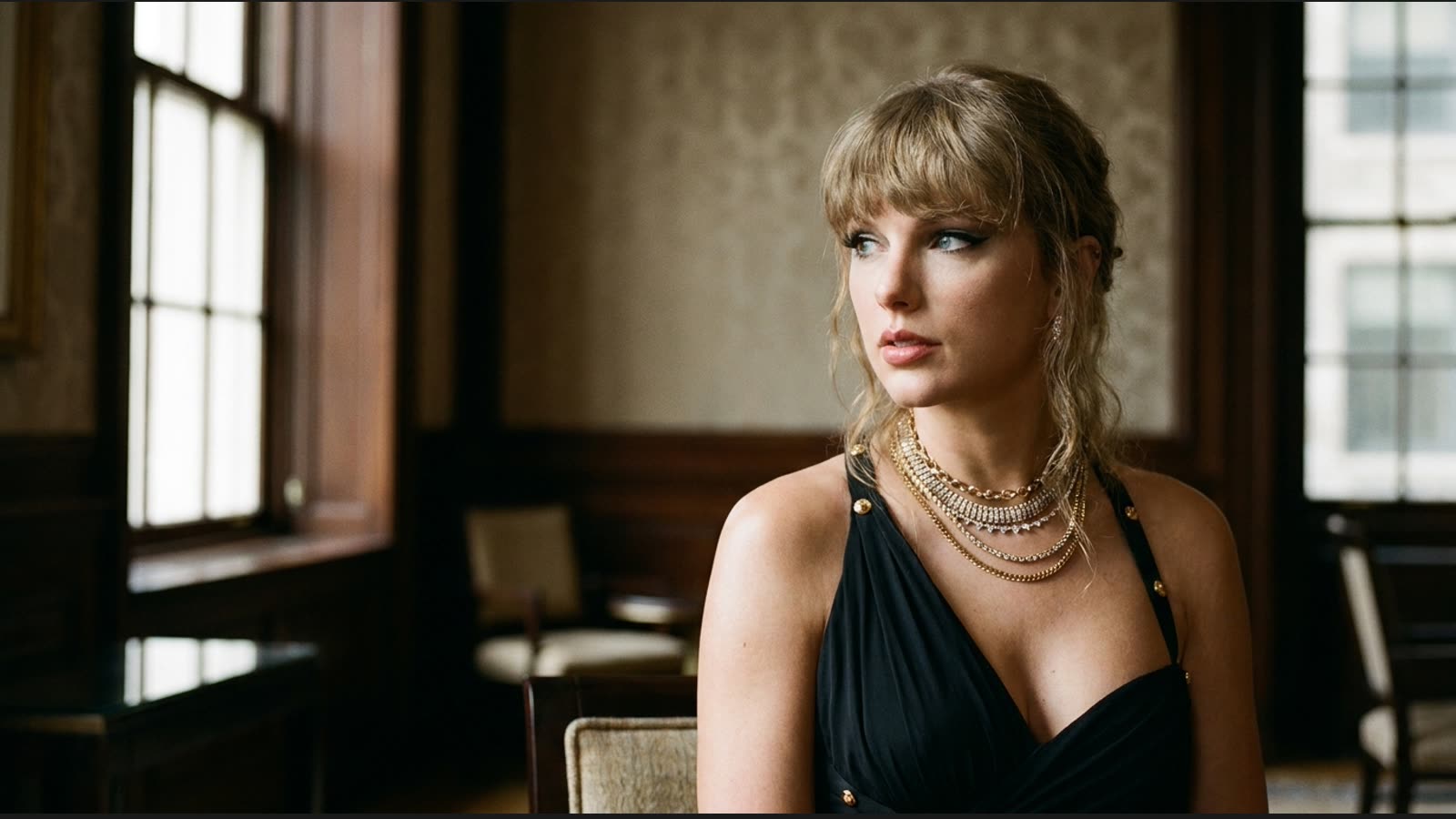
When the Met Gala lights went up on the first Monday in May, one face was conspicuously missing from the top of the staircase. Taylor Swift — the most-photographed woman in music, arguably the most-searched name on the internet in any given quarter — was not in attendance. The absence did not simply create a hole in the evening's celebrity grid; it reshaped the conversation around the event itself.
Within minutes of the carpet opening, social platforms filled not with praise for the designs on display, but with one question: where was Swift? Fan forums parsed her recent Nashville schedule. Tabloids floated studio-session theories. A few outlets speculated about Travis Kelce's NFL off-season commitments. The resulting vacuum was loud in a different register — an event so large in the cultural imagination it distorted everything around it even in its absence.
The center of gravity problem
The modern Met Gala has always been a convergence point: designers, actors, athletes, and musicians performing high fashion for hundreds of millions. But over the past half decade, the gala's center of gravity has shifted. Where once a dozen A-listers shared the spotlight roughly equally, the attention economy now disproportionately rewards whichever figure already commands the most attention. Swift has been that figure for years. When she attends, every dress is discussed in relation to hers. When she does not, the entire evening is framed by her non-appearance.
This year's theme — 20th-century tailoring and the architecture of power dressing — was a genuine critical success. Zendaya delivered one of the night's most technically ambitious looks. Rihanna made a surprise late entrance. Dua Lipa appeared in archival Mugler. And yet, by Tuesday morning, the most-discussed fashion story on Twitter and TikTok was not any of them. It was a two-word search query: Taylor Swift.
What her absence revealed
The reaction functioned as an accidental stress test for the celebrity ecosystem. When the biggest star in the world does not show up, do the others rise to fill the void? The answer, in 2026, appears to be no. The algorithms that drive cultural attention reward concentration, and concentration begets concentration. Swift's fan base does not simply celebrate her wins — it processes her every choice as a signal, and her non-attendance was read by many as deliberate. Her team issued no statement, which is itself a kind of message.
Our take
Taylor Swift's non-attendance at the 2026 Met Gala is not about Taylor Swift. It is about a cultural economy that can no longer distribute attention evenly among the talented people in the room. That is either a triumph of a singularly gifted artist commanding her moment, or a warning sign for every institution — fashion, film, music, sports — whose events now live or die by the presence of one person.