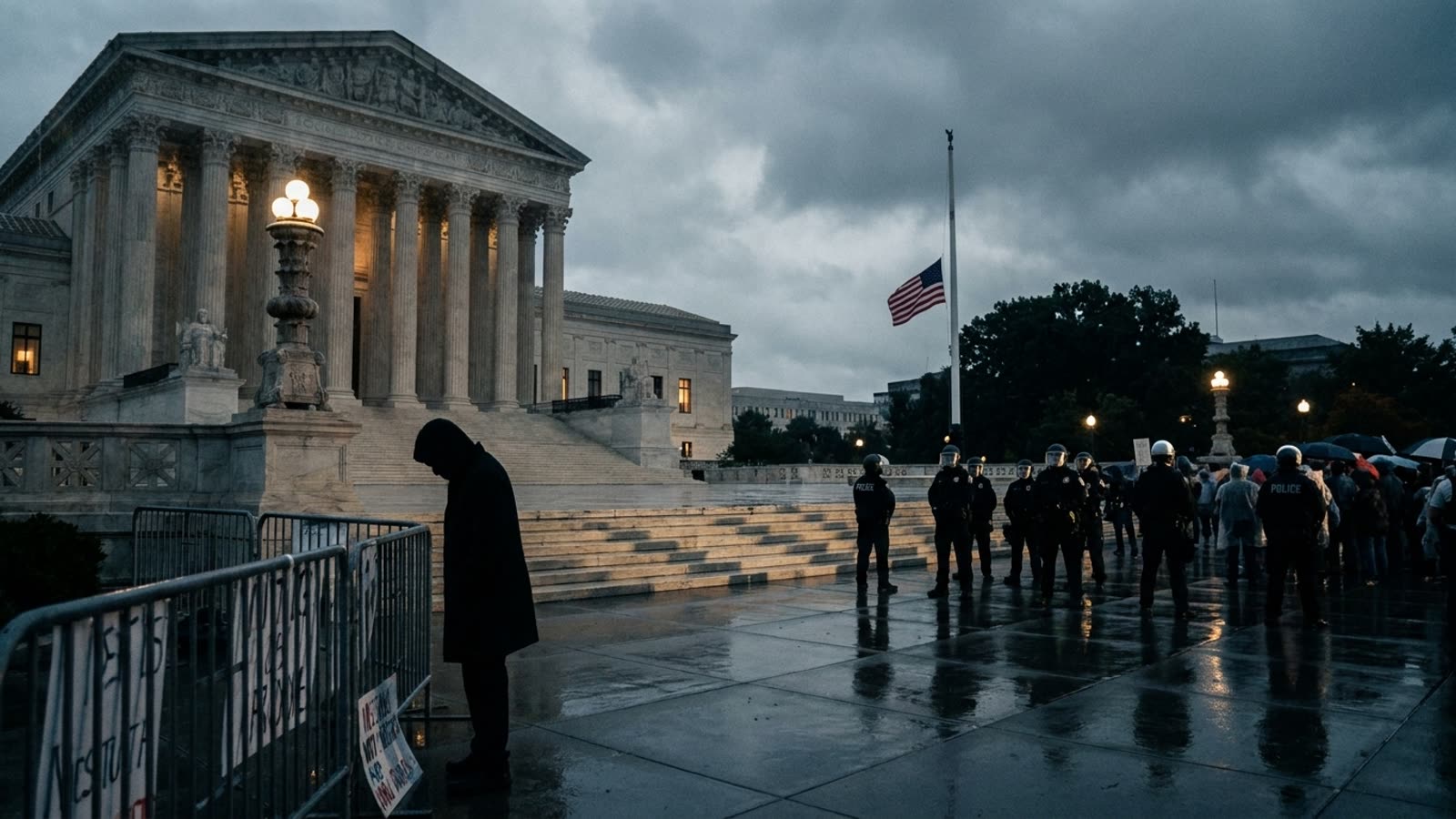
The midterms are still five months away, yet the Supreme Court has already shaped their outcome more decisively than any campaign ad ever will.
Since January, the Roberts Court has issued emergency orders or full rulings in redistricting disputes touching Louisiana, Georgia, South Carolina, Ohio, Texas, and—most recently—Alabama. The pattern is consistent: lower courts or state commissions draw maps that create additional majority-minority districts or competitive suburban seats; plaintiffs appeal; the justices freeze the new lines or reinstate old ones, often through the shadow docket with minimal explanation. The net effect, according to election-law scholars at NYU's Brennan Center, is that Republicans enter the cycle with a structural cushion of roughly half a dozen House seats they might otherwise have had to fight for.
The Alabama template
The Court's handling of Alabama's Second Congressional District has become a case study in procedural jujitsu. After the justices themselves ordered the state to redraw its map in 2023 under the Voting Rights Act, Alabama complied—sort of. A three-judge panel deemed the new lines still non-compliant and imposed a remedial map adding a second Black-opportunity district. Last week, the Supreme Court stayed that remedial map pending appeal, meaning the November election will proceed under boundaries that the lower court already ruled unlawful. The stay was unsigned, with no noted dissents—a hallmark of shadow-docket opacity.
Compounding effects in the Sun Belt
Similar maneuvers are unfolding elsewhere. In Georgia, a federal court found the legislature's 2023 map diluted Black voting power around Atlanta; the Supreme Court paused the remedy in March. In Louisiana, a newly drawn second majority-Black district was blocked hours before candidate qualifying closed. In each instance, the practical result is identical: incumbents who drew their own districts get to run on those districts one more time, and any judicial correction is deferred until after voters have spoken.
Critics call it election administration by emergency order. Defenders argue the Court is simply preserving the status quo while complex legal questions are resolved—a posture that, coincidentally, always seems to benefit the party that controlled the last round of line-drawing.
Our take
The Court insists it is not picking winners. But when every procedural coin flip lands the same way, neutrality becomes a polite fiction. The justices have effectively created a two-track system: one where legislatures can gerrymander with impunity so long as litigation outlasts the election cycle, and another where plaintiffs must win the same case repeatedly only to watch their victories evaporate at the stroke of a stay order. That is not jurisprudence; it is calendar management dressed in robes. Voters deserve to know that the most consequential decisions of the 2026 midterms may already be behind them.