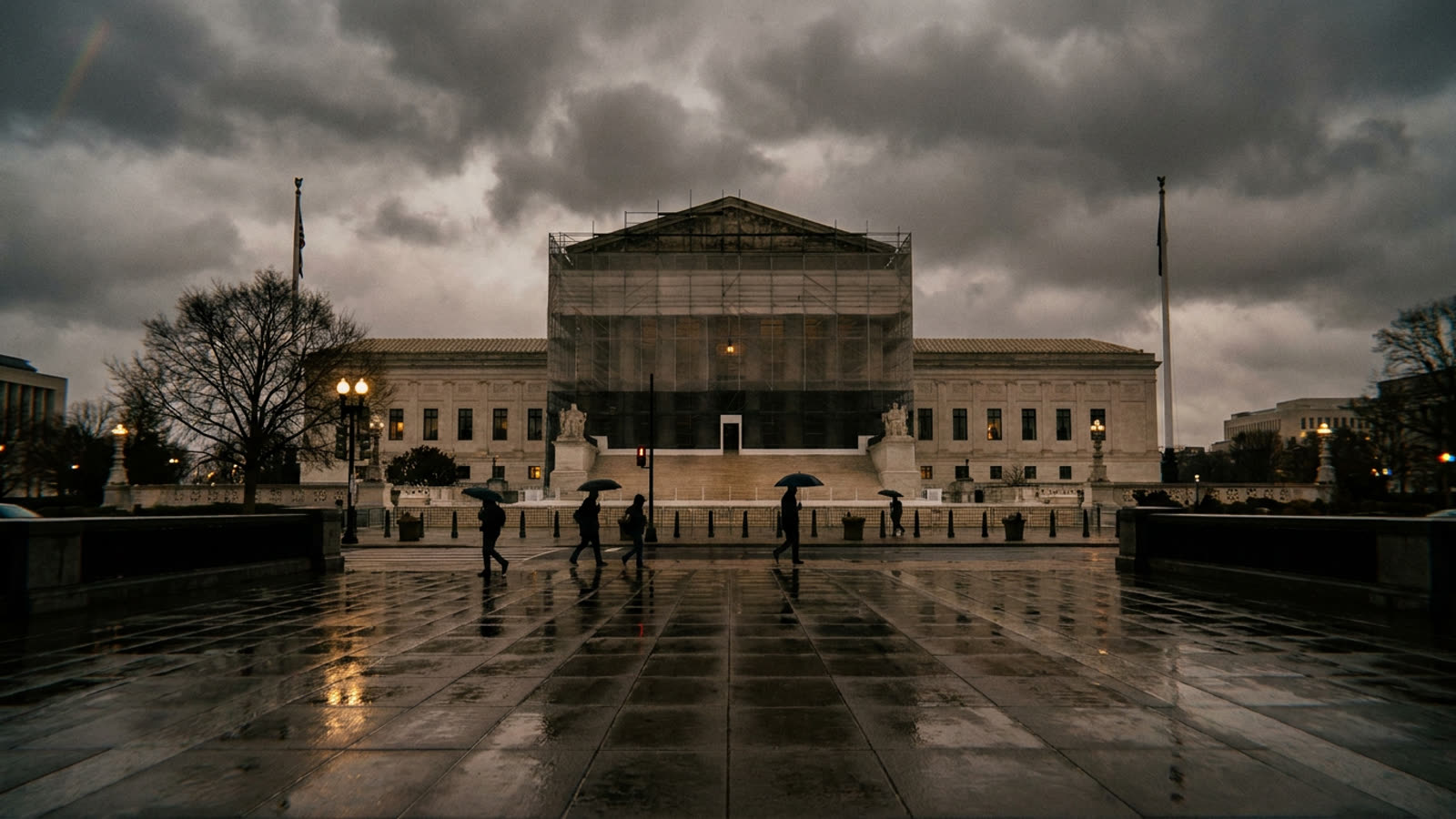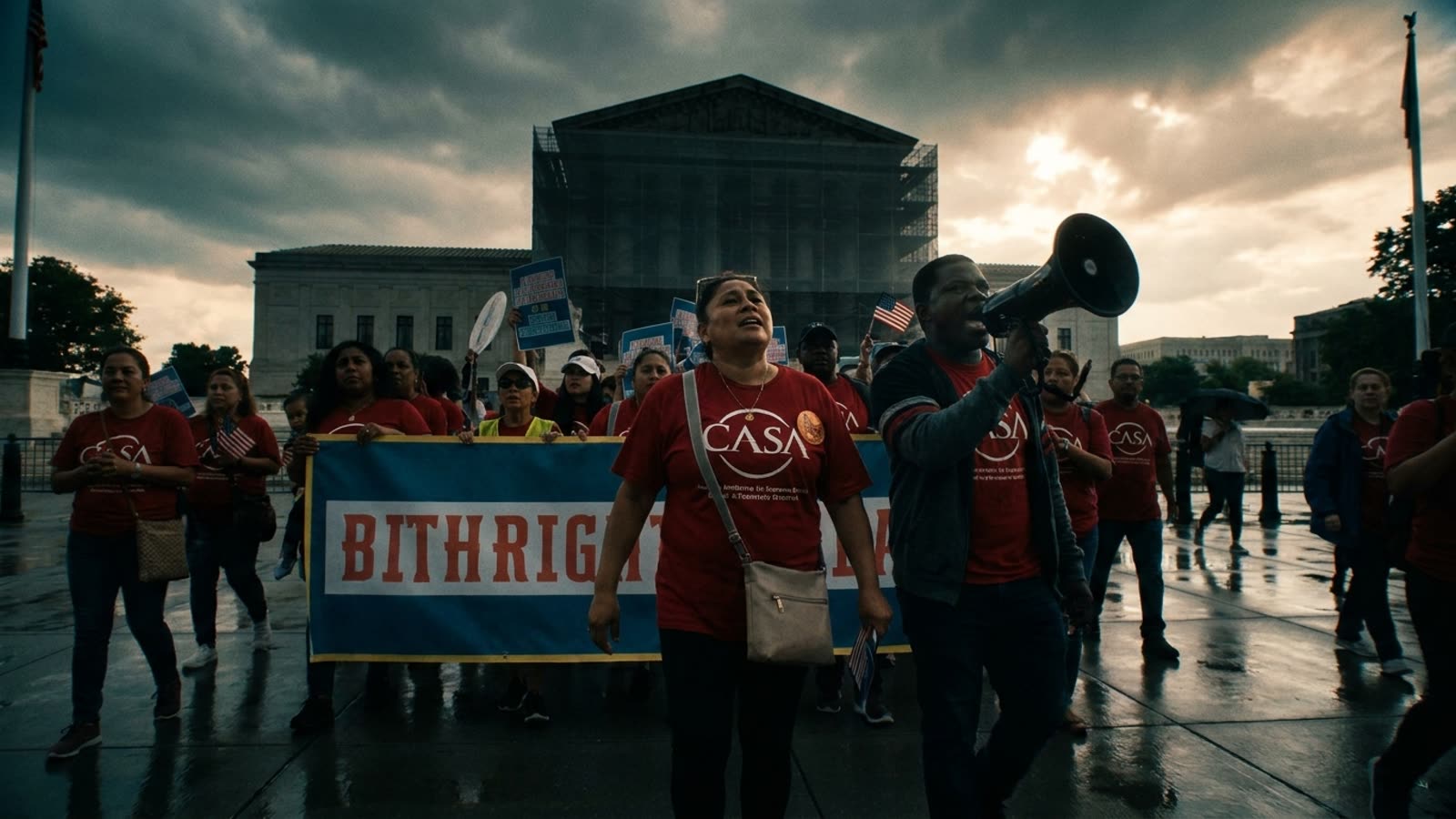
The Supreme Court's current term has been a study in institutional power: who wields it, who loses it, and how quickly the ground can shift beneath settled law. But the case the justices have yet to decide — whether children born in the United States to undocumented parents are automatically citizens — dwarfs everything else on the docket. If the Court sides with the Trump administration's challenge to birthright citizenship, it will not merely adjust immigration policy. It will rewrite the social contract that has defined American identity since 1868.
The Fourteenth Amendment's citizenship clause has seemed unambiguous for over 150 years: "All persons born or naturalized in the United States, and subject to the jurisdiction thereof, are citizens of the United States." The phrase "subject to the jurisdiction thereof" was understood to exclude only diplomats and enemy soldiers — people formally outside American legal authority. Everyone else born here was a citizen, full stop. That consensus held across administrations of both parties.
The administration's argument
The Trump administration's position hinges on a narrow reading of "jurisdiction." Its lawyers argue that children of undocumented immigrants are not fully subject to U.S. jurisdiction because their parents owe allegiance to another sovereign. This interpretation resurrects a theory that legal scholars have long dismissed but that has gained traction in conservative legal circles over the past decade. The administration contends that Congress, not the Constitution, has the final say on who qualifies — and that an executive order restricting birthright citizenship merely enforces the amendment's original meaning.
Critics note that this reading would create a hereditary underclass: children born and raised in America who are citizens of nowhere, since most countries do not grant citizenship based solely on parentage. The practical chaos would be immediate. Hospitals would become immigration checkpoints. Birth certificates would require parental documentation. Millions of Americans whose grandparents or great-grandparents arrived without papers would face questions about their own status.
A Court reshaping America
This term has already demonstrated the current Court's willingness to revisit what seemed settled. The justices handed Trump a partial victory on agency removal power while preserving some independence for the Federal Reserve — a split decision that nonetheless expanded presidential authority. A ruling against birthright citizenship would be of a different magnitude entirely, touching not regulatory architecture but the definition of the American people themselves.
The Court's conservative supermajority has shown appetite for originalist arguments that upend decades of practice. But birthright citizenship is not Roe v. Wade; it is not a mid-twentieth-century judicial invention. It is text ratified in the aftermath of the Civil War, specifically to ensure that no American-born person could be denied membership in the nation. Overturning it would require the justices to argue that the Reconstruction Congress meant something radically different from what every subsequent generation understood.
Our take
The Court may yet decline to reach the merits, sending the case back on procedural grounds and buying time for a political resolution. That would be the institutionally cautious path. But caution has not been this Court's signature. If the justices embrace the administration's theory, they will not merely hand Trump a policy win — they will have decided that American citizenship is not a birthright but a privilege, revocable by whoever controls the levers of power. That is a different country than the one most Americans thought they lived in.