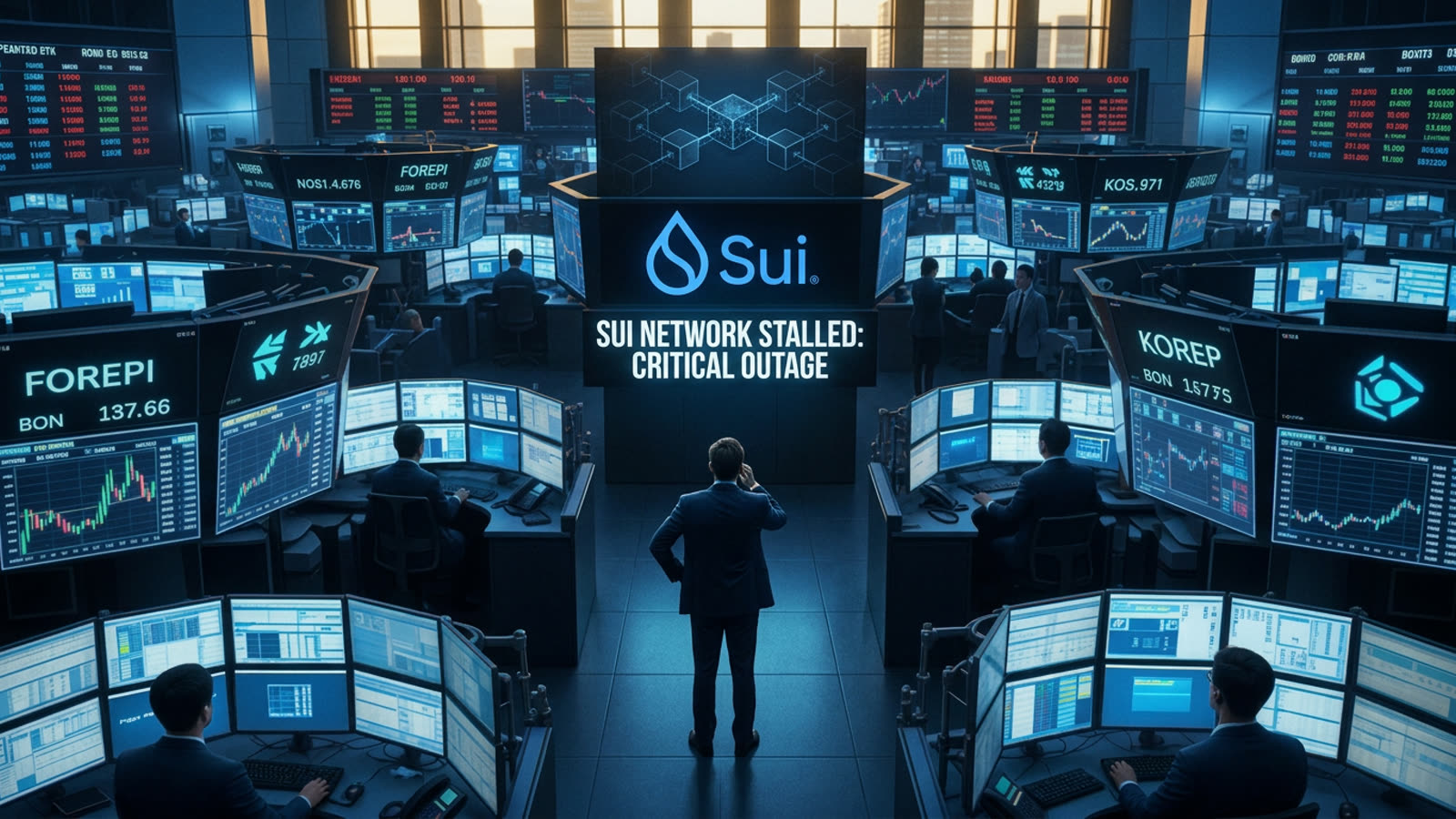
When Sui, the Move-based Layer-1 that raised $336 million promising to outpace Solana, went offline for the second time since January, the crypto community's reaction was less outrage than weary recognition. Network stalls are becoming Sui's signature move—and not the kind of signature that attracts institutional capital.
The latest incident, which occurred this week, follows a similar outage in early 2026 that the Sui Foundation attributed to a validator coordination issue. This time, the network experienced what developers euphemistically call a "stall"—transactions ceased processing, the chain stopped producing blocks, and users were left staring at pending confirmations that would not resolve. The network has since recovered, but the damage to its reliability narrative compounds with each episode.
The high-performance paradox
Sui's pitch has always been speed and throughput. Built by former Meta engineers who worked on the abandoned Diem project, the chain uses a novel consensus mechanism and the Move programming language to promise theoretical transaction speeds that dwarf Ethereum and rival Solana at its best. But theoretical throughput means nothing if the network cannot stay online.
Solana, Sui's most direct competitor, faced similar growing pains in its early years—a string of outages between 2021 and 2023 became a recurring punchline. But Solana eventually stabilized, and its ecosystem flourished. The question for Sui is whether it can follow the same arc or whether these stalls represent something more fundamental about its architecture.
Institutional hesitancy
The timing is particularly unfortunate. Traditional finance is cautiously wading into crypto infrastructure, with tokenized funds appearing on DeFi protocols and major banks exploring blockchain settlement. These institutions have zero tolerance for downtime. A network that cannot guarantee availability will not host the next generation of tokenized treasuries, no matter how elegant its technical design.
Sui's total value locked has grown impressively over the past year, but that growth depends on confidence. Each outage forces protocols building on Sui to explain to their users why funds were temporarily inaccessible—a conversation that erodes trust incrementally but relentlessly.
Our take
Two stalls in five months is not a fluke; it is a pattern. Sui has genuine technical innovations, and its developer ecosystem shows promise, but reliability is table stakes for any blockchain aspiring to serious adoption. The Sui Foundation needs to address this publicly and convincingly, not with vague post-mortems but with concrete architectural changes and transparent incident reporting. Until then, Sui remains a fascinating experiment rather than a production-ready platform—and in crypto's increasingly competitive Layer-1 landscape, experiments do not win.