The most dangerous chokepoint in global energy is getting more dangerous by the week, and the world's response has been a collective shrug.
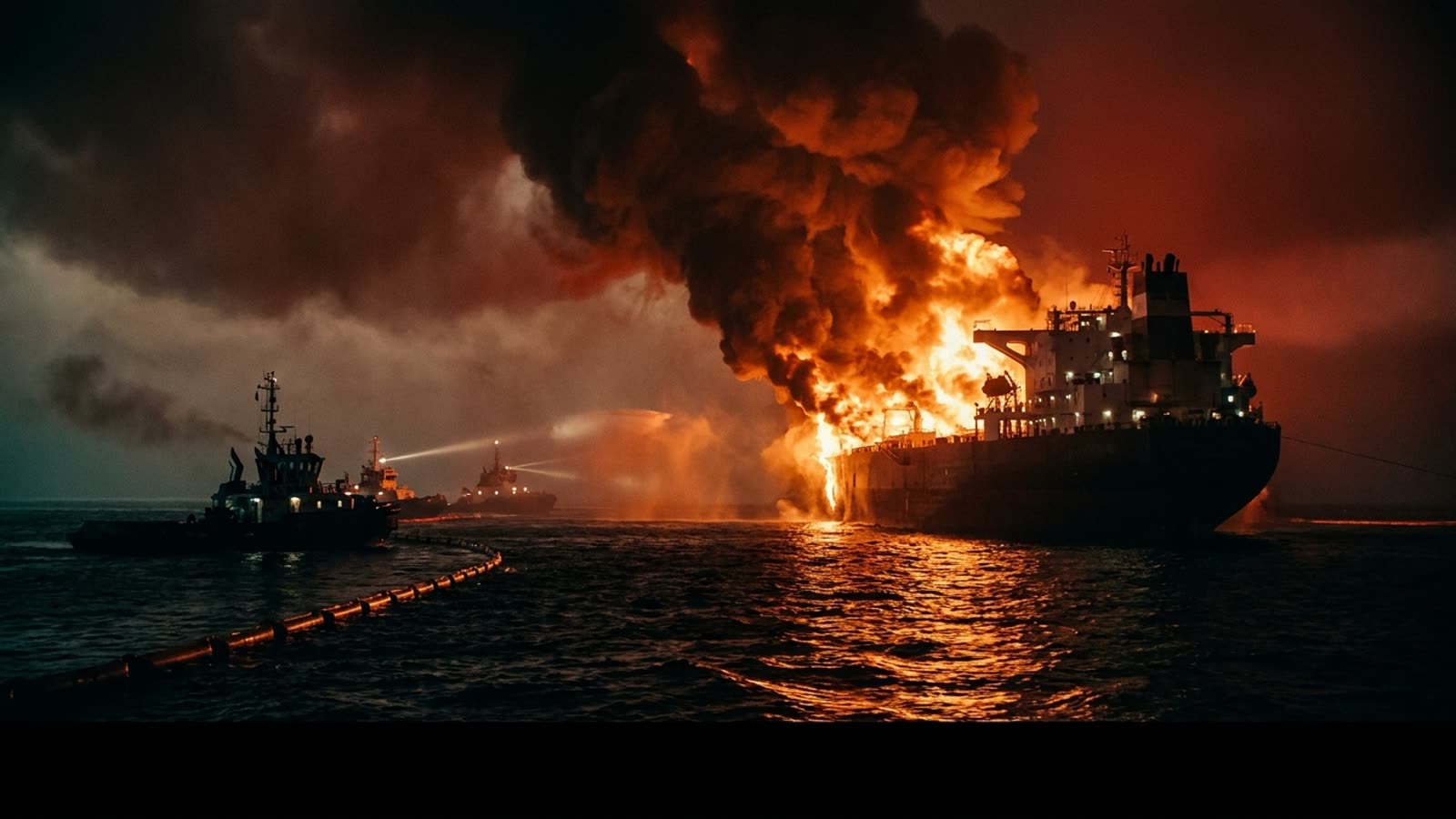
Since early summer, attacks on commercial tankers transiting the Strait of Hormuz — the 21-mile-wide passage through which roughly a fifth of the world's oil supply flows daily — have intensified to levels not seen since the tanker wars of the 1980s. Drone strikes, limpet mines, and missile fire have damaged or destroyed more than a dozen vessels. At least 25 seafarers have been killed. Insurance premiums for Gulf-bound ships have tripled. And yet Brent crude, the global benchmark, has moved less than 4% in either direction since the attacks accelerated.
This is not complacency. It is the market doing exactly what markets do: absorbing risk until it cannot.
The economics of braving the gauntlet
Shipping operators are not ignoring the threat; they are charging for it. War-risk insurance for a single Hormuz transit now runs into seven figures for a laden supertanker, costs that ultimately land on refiners and, eventually, consumers. Freight rates on the benchmark Middle East-to-Asia route have surged more than 60% year-on-year. Yet tankers keep sailing, because the alternative — rerouting around the Cape of Good Hope — adds two weeks and roughly $1 million in fuel costs per voyage.
The arithmetic, grim as it sounds, still favors the strait. As long as the probability of a catastrophic hit remains in the low single digits, owners will run the gauntlet. The insurance market exists precisely to price that calculus.
Why oil prices haven't spiked
Crude traders have watched this movie before. The 2019 attacks on Saudi Aramco's Abqaiq facility briefly sent Brent up 15% — only for prices to retrace within days once it became clear supply would recover. The lesson was absorbed: absent a prolonged, verifiable shutdown of export capacity, markets treat Hormuz violence as noise rather than signal.
There is also a supply cushion. OPEC+ spare capacity, while thinner than a decade ago, still exceeds 3 million barrels per day. U.S. shale producers can ramp incrementally. Strategic reserves in consuming nations remain substantial. The market is betting — correctly, so far — that no actor wants to trigger the kind of full closure that would send crude past $150 and tip the global economy into recession.
The human cost the market ignores
What the price charts do not capture is the toll on the crews. Merchant sailors, many from the Philippines, India, and Bangladesh, transit the strait aboard vessels flying flags of convenience, often with minimal security and scant recourse if things go wrong. Families of the dead are fighting shipping conglomerates and insurers for compensation that, in some cases, amounts to less than a year's wages. The legal frameworks governing maritime liability were not designed for a low-grade war zone, and the gap is being filled by grief.
Our take
The Strait of Hormuz has become a live demonstration of how much violence global commerce can metabolize without breaking stride. That resilience is impressive in a narrow, actuarial sense — and morally disquieting in every other way. The market has decided that a few dozen dead sailors and a few billion dollars in risk premiums are an acceptable carrying cost for keeping the oil flowing. Until a missile finds a supertanker's cargo hold and sends a fireball visible from Dubai, that bet will probably keep paying off. Probably.