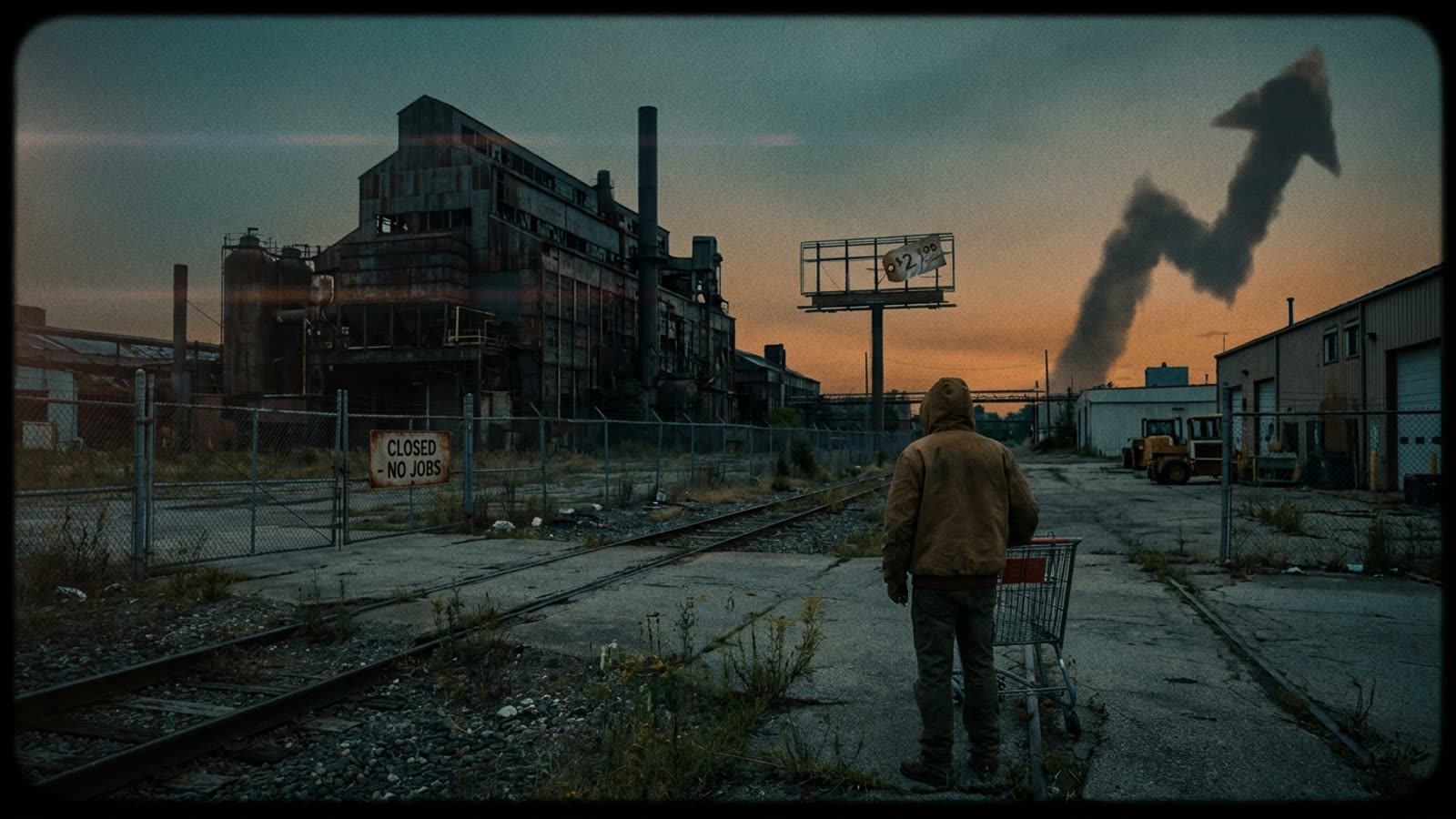
Most economic problems come with obvious solutions. Recession? Cut rates and spend. Inflation? Raise rates and tighten. Stagflation offers no such comfort. It is the economic equivalent of a patient presenting with both a fever and hypothermia—treat one symptom and you worsen the other.
The term itself is a portmanteau of stagnation and inflation, coined in the 1960s by British politician Iain Macleod. But the concept achieved infamy in the 1970s, when the United States and much of the Western world experienced something economists had long considered theoretically impossible: prices rising rapidly even as unemployment climbed and growth collapsed.
Why it breaks the rules
Conventional macroeconomic theory, particularly the Phillips Curve framework that dominated mid-century thinking, assumed an inverse relationship between inflation and unemployment. Policymakers could choose their poison—tolerate higher inflation to achieve lower unemployment, or accept joblessness to tame prices. Stagflation revealed this as a dangerous oversimplification.
The mechanism typically involves a supply shock—an external disruption that simultaneously reduces economic output and raises costs. The oil embargo of 1973 remains the canonical example: petroleum prices quadrupled in months, making everything from manufacturing to transportation more expensive while simultaneously choking economic activity. Businesses faced higher input costs and weaker demand at once.
The policy trap
Central bankers confronting stagflation face an impossible choice. Raising interest rates to combat inflation will deepen the economic slump and push more workers into unemployment. Lowering rates to stimulate growth risks letting inflation spiral further. Fiscal stimulus runs into the same wall—government spending might boost activity but also feeds price pressures.
The eventual solution in the early 1980s was brutal: the Federal Reserve under Paul Volcker raised interest rates to punishing levels, deliberately inducing a severe recession to break inflationary expectations. Unemployment peaked above ten percent. The medicine worked, but the patient nearly died on the table.
The modern relevance
Stagflation remains rare because it requires specific conditions—typically a major supply disruption combined with policy mistakes or structural rigidities. But the ingredients appear periodically: energy price shocks, supply chain breakdowns, geopolitical disruptions to commodity flows. Each time, the question resurfaces: could it happen again?
The honest answer is yes, under the wrong circumstances. Economies remain vulnerable to external shocks that simultaneously constrain supply and raise costs. Climate disruptions affecting agricultural output, conflicts interrupting energy supplies, or pandemic-style breakdowns in global logistics could all, in theory, recreate the conditions.
Our take
Stagflation's real lesson is humility. It exposed the limits of technocratic economic management and the dangers of assuming policymakers always have adequate tools. The 1970s experience permanently complicated the confident Keynesian consensus that governments could fine-tune economies like thermostats. That skepticism, uncomfortable as it may be, remains valuable. Economic systems are complex, external shocks are unpredictable, and sometimes the honest answer to "what should we do?" is that every option is bad.