Most economic ailments have obvious remedies. Recession? Stimulate. Inflation? Tighten. But stagflation—the unholy marriage of stagnant growth, rising unemployment, and persistent inflation—offers no clean escape. Every lever you pull makes something else worse. It is the macroeconomic equivalent of being told to run faster while your legs are tied together.
The term itself was coined in the 1960s by British politician Iain Macleod, who described the UK economy as suffering from the worst of both worlds. But stagflation entered the global vocabulary during the 1970s, when oil shocks, wage-price spirals, and policy confusion combined to create a decade that scarred an entire generation of central bankers. The experience was so traumatic that fighting inflation became the Federal Reserve's near-religious mission for the next half-century.
Why it breaks the textbook
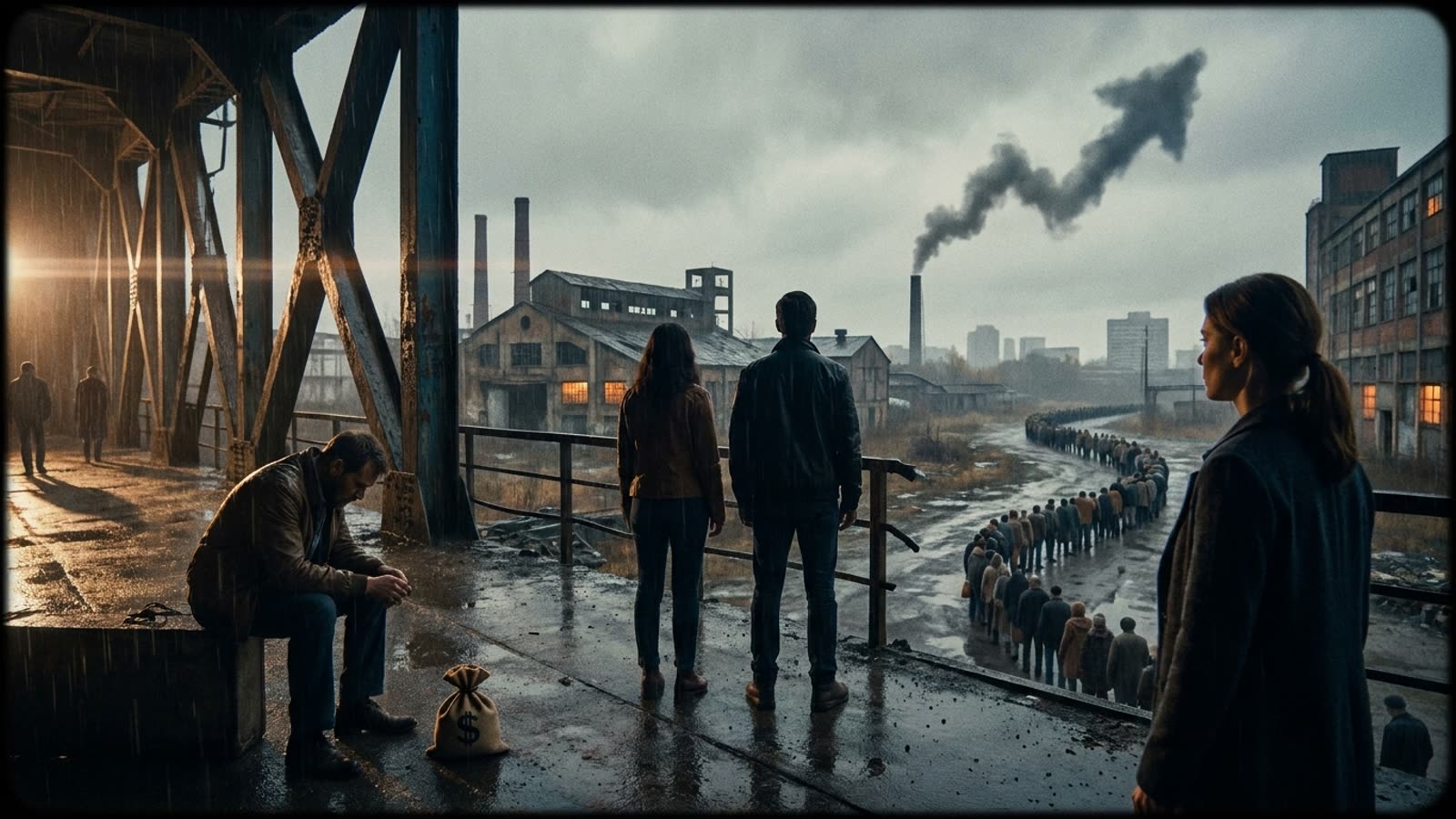
Conventional economics assumed a stable trade-off between inflation and unemployment—the famous Phillips Curve. You could buy lower unemployment with slightly higher prices, or vice versa. Stagflation demolished this comfortable framework. Suddenly, prices rose while factories closed and workers lined up at unemployment offices.
The mechanism is straightforward once you see it: supply shocks. When something essential becomes scarce or expensive—oil in the 1970s, potentially energy or critical goods in any era—businesses face higher costs. They raise prices, but they also cut back production. Demand falls, workers get laid off, but prices keep climbing because the underlying scarcity persists. Monetary policy cannot create more oil, more semiconductors, or more shipping capacity. It can only choose which pain to amplify.
The policy trap
Central banks facing stagflation confront an impossible choice. Raise interest rates to crush inflation, and you deepen the recession, throwing more people out of work. Cut rates to stimulate growth, and you pour fuel on the inflationary fire. Paul Volcker's eventual solution in the early 1980s was to accept a brutal recession as the price of breaking inflation's back—a decision that worked but required political cover that few leaders can reliably provide.
Fiscal policy faces similar contradictions. Stimulus spending risks accelerating inflation. Austerity deepens the economic contraction. The textbook answer—address the supply shock directly—is often easier said than done when the constraint is geopolitical, structural, or simply beyond any government's control.
Why it still matters
Stagflation is not merely historical curiosity. The conditions that enable it—energy dependence, supply chain fragility, geopolitical instability—have not disappeared. Any economy that relies heavily on imported essentials remains vulnerable to the same dynamics that humbled policymakers decades ago. The difference now is that global interconnection means shocks transmit faster and further.
The psychological dimension matters too. Once people expect both rising prices and economic weakness, their behavior changes in ways that entrench the problem. Workers demand higher wages to keep pace with inflation, raising business costs. Businesses raise prices preemptively, validating the inflation fears. Breaking this cycle requires credibility that takes years to build and moments to destroy.
Our take
Stagflation is the economic scenario that punishes overconfidence. It reminds us that central banks are not omnipotent, that supply matters as much as demand, and that the real economy cannot be managed purely through interest rate adjustments. The best preparation is not a clever hedge but a clear-eyed understanding that some problems have no painless solutions—only choices about how to distribute the pain.