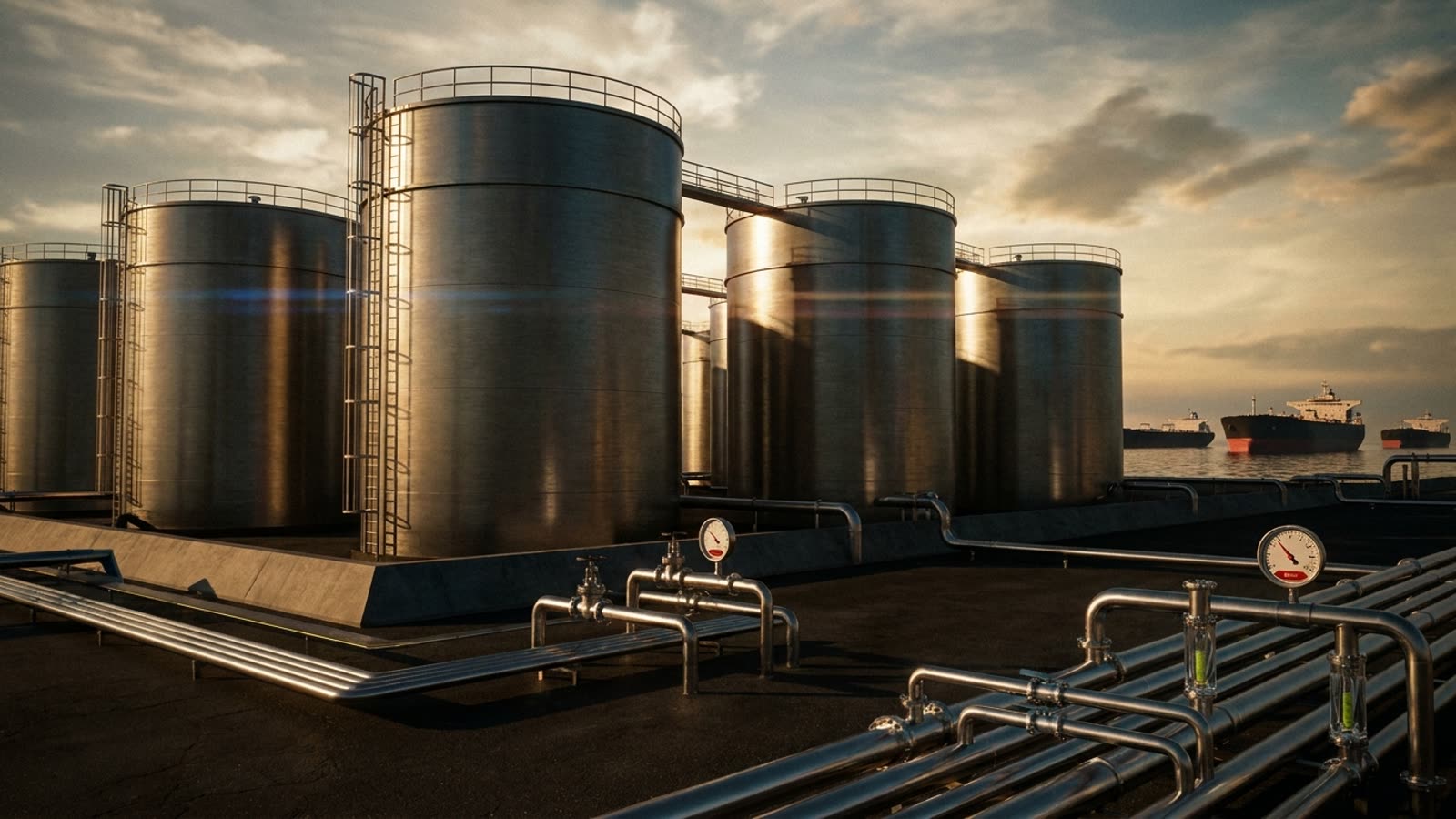
The United States is running its emergency fuel tank toward empty at precisely the moment it might need a full one. The Strategic Petroleum Reserve, that Cold War relic carved into Louisiana and Texas salt caverns, has fallen below 400 million barrels for the first time since 1984—down from a peak of 727 million in 2010. The drawdown, accelerated by releases meant to tame gasoline prices during the 2022 inflation spike, has not been meaningfully reversed. And with Iranian drones and American airstrikes now a recurring feature of Middle East headlines, the timing looks less like fiscal prudence and more like strategic negligence.
The SPR was never designed to prevent price spikes; it was designed to prevent catastrophe. Created after the 1973 Arab oil embargo demonstrated how quickly energy dependence could become a national security crisis, the reserve's logic was simple: stockpile enough crude to give the country breathing room if imports suddenly stopped. At its peak, the SPR held roughly 90 days of import coverage. Today, with domestic production higher but the reserve depleted, that cushion has thinned considerably—even as the scenarios it was built for have become more plausible, not less.
The refill that never came
The Biden administration promised to replenish the reserve after its emergency sales, pledging to buy back crude when prices fell below $70 a barrel. Prices cooperated intermittently, but the repurchases have been modest—roughly 40 million barrels added since late 2023, against more than 180 million released. Budget politics, infrastructure constraints, and a general preference for lower pump prices over strategic stockpiling have all contributed to the inertia. The reserve now sits at levels last seen when Ronald Reagan was negotiating with Mikhail Gorbachev.
Meanwhile, the refill math has gotten harder. Oil prices have climbed back above $80 on renewed Middle East tensions, making large-scale purchases politically unpalatable. The Energy Department has also acknowledged that some SPR caverns require maintenance that limits how quickly they can accept new crude. The result is a reserve that is simultaneously too expensive to fill and too degraded to fill quickly.
The market-will-provide fallacy
The implicit argument for tolerating a depleted SPR is that America no longer needs one—that shale production has made the country energy-independent and that global markets can absorb any disruption. Both claims are half-truths. The U.S. is a net exporter of petroleum products, but it still imports roughly 6 million barrels of crude daily, much of it grades that domestic refineries require. And global markets are only liquid when everyone believes they will remain so. A sustained closure of the Strait of Hormuz, through which 20 percent of the world's oil transits, would test that belief severely.
The SPR exists precisely for scenarios that markets cannot price until they arrive. Its purpose is not to smooth out $5 swings in Brent; it is to prevent rationing, industrial shutdowns, and the economic chaos that follows when a country discovers its energy supply is more fragile than it assumed. Running the reserve down to four-decade lows while tensions escalate in the Persian Gulf is not confidence in American energy security—it is complacency dressed as strategy.
Our take
Strategic reserves are insurance, and insurance is boring until you need it. Washington has spent the SPR's credibility buying marginal relief at the pump, and now faces the prospect of a genuine supply crisis with a depleted buffer. The responsible move—aggressive repurchases during any price dip, accelerated cavern maintenance, and a bipartisan commitment to treating the reserve as untouchable except in true emergencies—requires political will that neither party has shown. The bet, apparently, is that the next oil shock will be someone else's problem. History suggests otherwise.