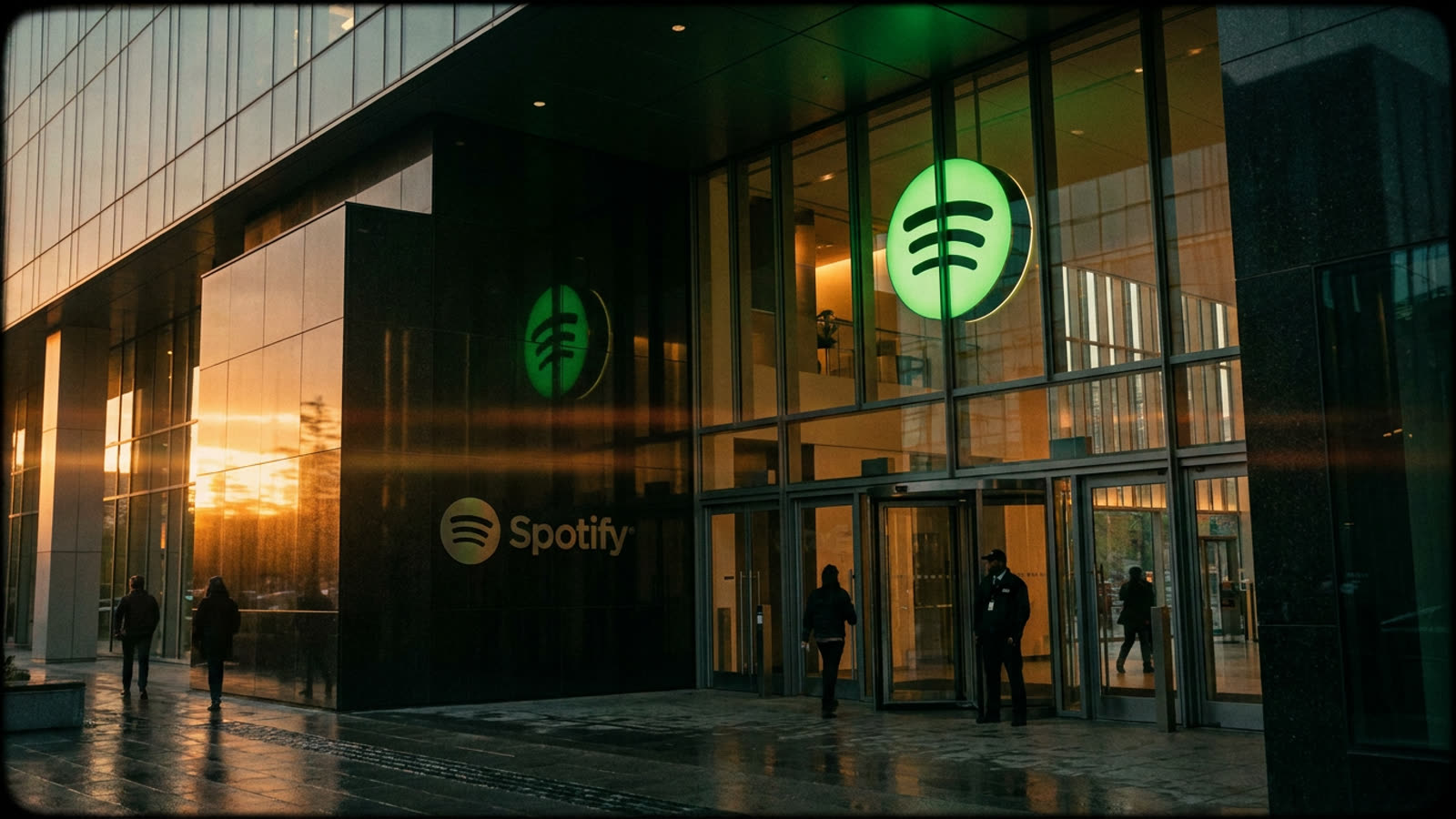
Spotify has spent a decade trying to make music streaming profitable, and the math has never quite worked. Now the company is asking a different question: what if the future of audio isn't music at all?
The Swedish streamer announced this week that it will begin offering narrated versions of magazine articles from major publishers, adding another layer to its expanding spoken-word ambitions. Users can now listen to long-form journalism from their favorite publications, read aloud by professional narrators or, increasingly, by AI voices sophisticated enough to pass casual scrutiny.
The music problem that won't go away
Spotify's core business remains structurally challenged. The company pays out roughly 70 cents of every dollar in royalties to rights holders—labels, publishers, and artists—leaving precious little margin for a platform that has struggled to turn a consistent profit. Music licensing is a commodity game where Spotify competes with Apple, Amazon, and YouTube, all of whom can afford to treat streaming as a loss leader.
Podcasts offered a partial escape. Spotify spent more than a billion dollars acquiring podcast networks and exclusive talent, betting that owned content would deliver better unit economics. The results have been mixed. Joe Rogan remains a draw, but the broader podcast bet has required painful writedowns and layoffs.
Why magazines make sense
Narrated articles occupy an interesting middle ground. They're cheaper to produce than original podcasts, require no celebrity talent deals, and tap into existing editorial infrastructure that publishers have already paid to create. For Spotify, the licensing terms are presumably more favorable than music royalties, and the content serves a different use case: the commute, the treadmill, the moments when screens are inconvenient but attention is available.
The bet is also a hedge against AI disruption. As generative tools make it trivially easy to summarize articles, the value of the original reporting shifts toward the experience of consuming it. A well-narrated feature from The Atlantic or Wired becomes a product in its own right, not just text that can be scraped and regurgitated.
The competition is already crowded
Spotify is not alone in recognizing this opportunity. Apple News+ has offered audio versions of select articles for years. Audible has experimented with periodicals. Startups like Curio have built entire businesses around narrated journalism. The question is whether Spotify's distribution advantage—more than 600 million monthly active users—can overcome its late arrival.
Our take
This is Spotify finally admitting what the numbers have long suggested: music streaming is a beautiful product and a mediocre business. The pivot toward spoken-word content is less a betrayal of the company's roots than an acknowledgment that survival requires diversification. Whether users actually want their magazines read to them remains to be seen, but the strategic logic is sound. Spotify needs content it can actually make money on. Magazines might be it.