Theodore Walter Rollins, who performed under the name Sonny and who spent seven decades proving that the tenor saxophone could think out loud, has died. He was 95.
The news, confirmed by his longtime manager, closes a chapter that began in 1940s Harlem, when a teenage Rollins started sitting in with Thelonious Monk and Bud Powell, and that stretched improbably into the 2020s, when he was still giving interviews about the spiritual dimensions of breath control. Between those points lies one of the most influential catalogs in American music—and one of its strangest career arcs.
The Colossus and the bridge
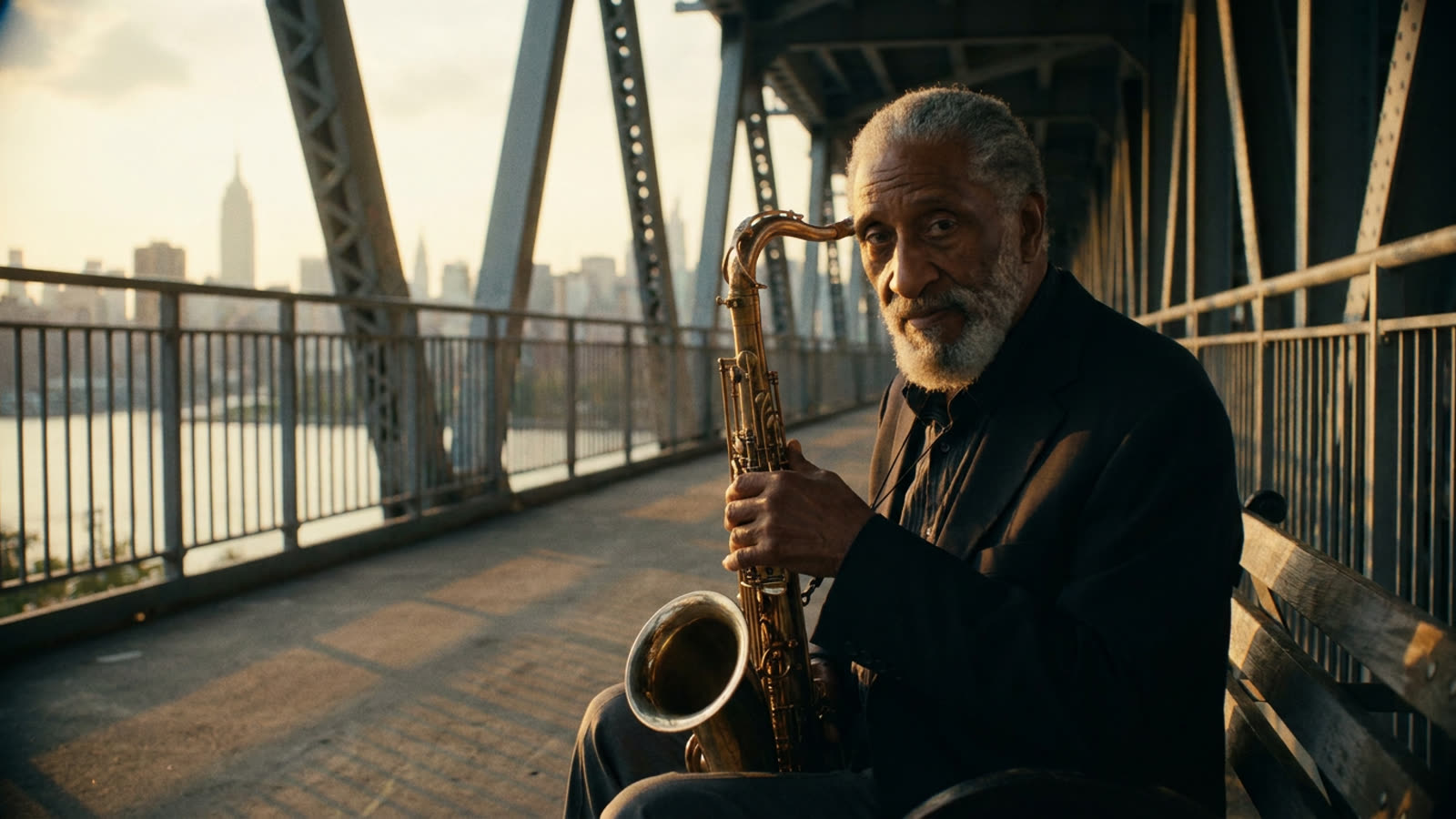
Rollins's 1956 album Saxophone Colossus remains a shorthand for a certain kind of jazz ambition: muscular, harmonically sophisticated, and utterly confident. The opening track, "St. Thomas," borrowed a calypso melody from his mother's Virgin Islands heritage and turned it into a standard that every saxophone student since has been obligated to learn. But Rollins was never comfortable with the acclaim. In 1959, at the peak of his commercial appeal, he stopped performing publicly and retreated to the pedestrian walkway of the Williamsburg Bridge to practice, sometimes for sixteen hours a day, away from audiences and critics and the pressure of being Sonny Rollins.
He returned in 1961 with The Bridge, leaner and stranger. The sabbatical became part of his mythology—proof that he valued the music more than the career. He would take another extended break in the early 1970s, this time to study yoga and meditation in India, returning with albums that incorporated funk and fusion without ever quite surrendering to them.
The long coda
Rollins's final public performance came in 2012, when respiratory problems forced him off the stage for good. But retirement did not mean silence. He continued to practice privately, granted occasional interviews, and watched as younger players—Kamasi Washington, Shabaka Hutchings, Nubya Garcia—cited him as a foundational influence. In 2011, he was awarded the National Medal of Arts. In 2017, he received a Grammy Lifetime Achievement Award. Neither seemed to interest him much.
What did interest him, by his own account, was the problem of improvisation: how to make spontaneous music that was also coherent, how to surprise yourself without losing the thread. His solos were famous for their thematic development, the way he would take a small melodic cell and worry it across chorus after chorus until it revealed new shapes. It was an approach that demanded listeners pay attention—and rewarded those who did.
Our take
Rollins outlived nearly everyone he came up with: Coltrane, Monk, Miles, Max Roach. He became, by default, the keeper of a flame that fewer and fewer people remember seeing lit. His death does not end bebop, which has been a museum piece for decades, but it does remove the last living witness who could tell you what it felt like to invent it. The bridge is empty now.