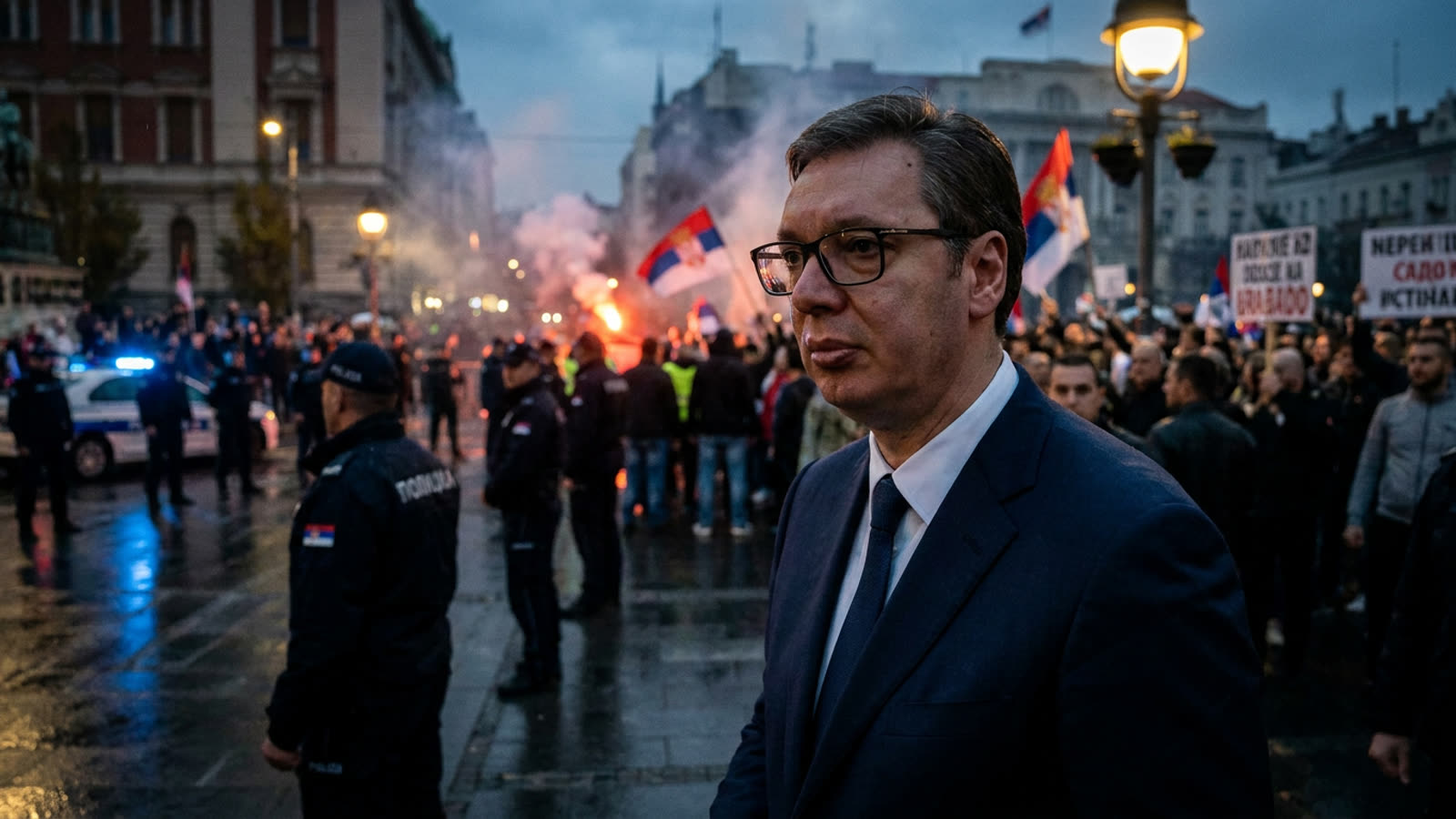
The familiar playbook of Balkan autocracy—control the media, co-opt the opposition, wait out the anger—appears to be failing Aleksandar Vučić. Protests that erupted in Belgrade this week have escalated into direct confrontations between police and crowds demanding the Serbian president's departure, a development that suggests the region's most politically resilient leader since Slobodan Milošević may have finally exhausted public patience.
Vučić has governed Serbia in various capacities for over a decade, consolidating power through a combination of EU accession theater, studied ambiguity toward Russia, and relentless domination of domestic media. His Serbian Progressive Party has won every election it has contested, though international observers have consistently noted an uneven playing field. The question was never whether Serbians were dissatisfied—polling has long shown frustration with corruption, stagnant wages, and democratic backsliding—but whether that dissatisfaction could translate into sustained street pressure.
Why now
The proximate triggers vary depending on whom you ask: accumulated anger over environmental degradation from lithium mining projects, fury at perceived government negligence following infrastructure failures, and a broader sense that Serbia's European aspirations have become a convenient fiction while Vučić maintains warm relations with Moscow and Beijing. What distinguishes the current moment is the willingness of protesters to directly confront security forces, and the apparent inability of the government's usual deflection tactics to dissipate the crowds.
Serbia's geographic and strategic position gives these events significance beyond the Balkans. The country remains a candidate for EU membership while simultaneously hosting Chinese infrastructure investments and declining to join Western sanctions against Russia. A genuine political transition in Belgrade would reshape calculations in Brussels, Moscow, and Washington alike.
The strongman's dilemma
Vučić faces the classic autocrat's bind: concessions invite further demands, while crackdowns risk international isolation and potential violence that could spiral beyond control. His previous strategy of calling snap elections to reset the political calendar has diminishing returns when the opposition's complaint is precisely that elections are not conducted fairly. The protesters are not asking for policy changes; they are asking him to leave.
Whether this moment represents Vučić's terminal crisis or merely another stress test he will survive remains genuinely uncertain. Serbian civil society has mounted impressive protests before—notably in 2018-2019—only to see momentum dissipate without political change. The difference now may be cumulative exhaustion with a leader who has been the dominant figure in Serbian politics since 2012.
Our take
The West's tolerance for Vučić has always been transactional: he was the strongman who kept Serbia stable and nominally EU-oriented, which was preferable to alternatives. That calculation looks increasingly untenable. If Serbian citizens are willing to face police batons to demand democratic accountability, European capitals will eventually have to decide whether they support that aspiration or merely the stability of whoever happens to hold power. The Balkans have a way of forcing such choices at inconvenient moments.