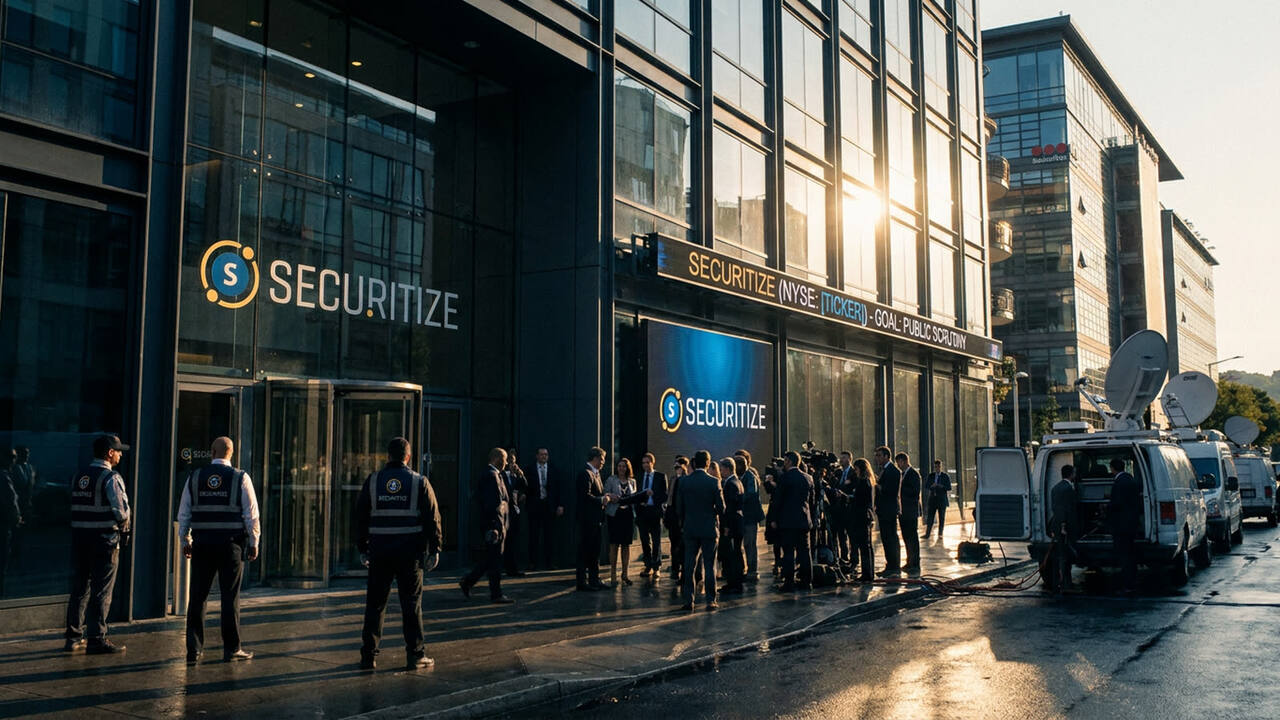
For years, the promise of tokenized securities has lived in pitch decks and pilot programs — a future perpetually arriving but never quite here. That changes when Securitize, the platform that powers BlackRock's $500 million tokenized Treasury fund, begins trading on the New York Stock Exchange following shareholder approval of its SPAC merger.
The listing represents the first publicly traded pure-play in real-world asset tokenization, a sector that has attracted serious institutional capital but never faced the discipline of quarterly earnings calls and public filings. If Securitize thrives, it validates a decade of blockchain infrastructure building. If it stumbles, the skeptics who dismissed tokenization as a solution in search of a problem will feel vindicated.
The BlackRock imprimatur
Securitize's credibility rests substantially on its relationship with the world's largest asset manager. BlackRock's BUIDL fund, which tokenizes U.S. Treasuries on the Ethereum blockchain, chose Securitize as its transfer agent and technology provider — a stamp of approval that no competitor can match. The fund has attracted institutional allocations from crypto-native firms seeking yield on stablecoin reserves, but the real prize is traditional asset managers who might tokenize everything from private equity stakes to municipal bonds.
The SPAC route, however, carries baggage. The blank-check boom of 2020-2021 produced spectacular failures, and investors have grown wary of companies that chose SPACs over traditional IPOs. Securitize must now demonstrate that its revenue trajectory justifies the valuation implied by the merger terms.
Regulatory tailwinds, execution headwinds
The timing is not accidental. The SEC under the current administration has signaled openness to tokenized securities operating within existing frameworks, a marked shift from the enforcement-first posture of recent years. Europe's MiCA regulations have created a clearer path for digital asset securities. Japan and Singapore have established sandbox regimes that Securitize already operates within.
Yet going public imposes new constraints. Securitize must now disclose customer concentration risk (how much revenue comes from BlackRock alone?), explain its path to profitability, and justify technology spending to shareholders who may not understand the difference between a blockchain and a database. The opacity that served it well as a private company becomes a liability.
Our take
Securitize's NYSE debut is less about one company's stock price than about whether tokenization can graduate from crypto's fever dreams into financial infrastructure. The technology works; the question is whether the business model does. If Securitize can demonstrate sustainable unit economics while expanding beyond its anchor client, it opens the door for competitors and validates the billions that traditional finance has quietly poured into blockchain rails. If it cannot, tokenization remains what it has been for a decade: perpetually promising, perpetually premature.