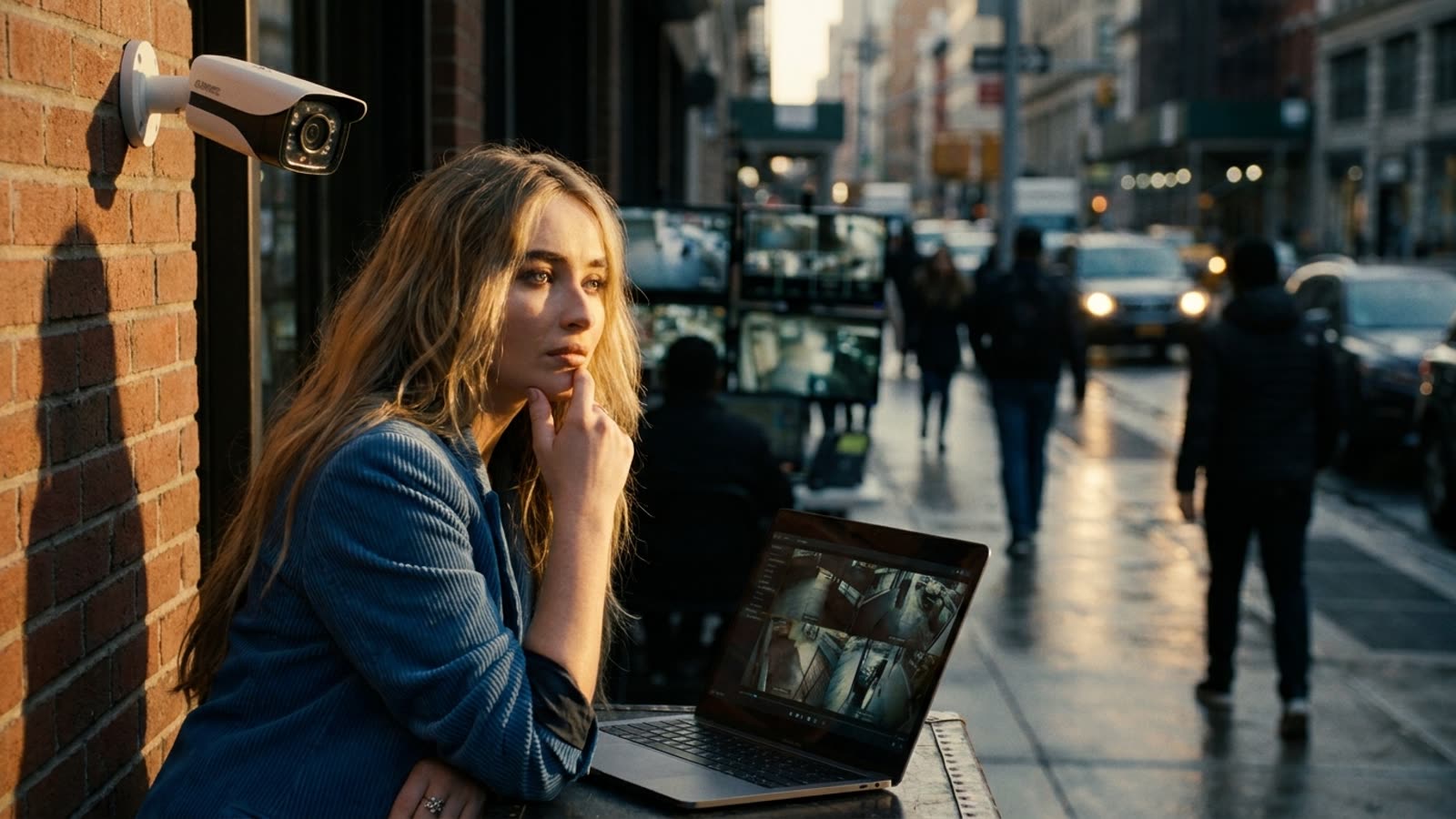
When Sabrina Carpenter filed for a restraining order this week, the most compelling evidence in her petition wasn't testimony from security professionals or police reports—it was footage from her Ring doorbell camera. The pop star, whose "Espresso" dominated last summer and whose arena tour continues to sell out, submitted video showing an alleged stalker repeatedly appearing at her residence, documentation that would have required a private investigator's surveillance operation a decade ago but now costs $99.99 at Best Buy.
The filing marks another entry in what has become a quietly significant legal trend: celebrities using consumer-grade smart home technology to build cases against obsessive fans. What Ring marketed to suburban homeowners worried about package theft has become, for a certain tier of famous person, essential legal infrastructure.
The democratization of surveillance cuts both ways
Carpenter's situation reflects a broader shift in how public figures manage the darker aspects of fame. The parasocial relationships that streaming and social media encourage—fans who feel genuine intimacy with artists they've never met—occasionally curdle into something more dangerous. TikTok and Instagram create the illusion of access; some viewers lose track of where the illusion ends.
The traditional celebrity response involved layers of human intermediaries: security teams, gated communities, publicists who managed the boundary between public persona and private person. These still exist, but they've been supplemented by an ecosystem of cameras, motion sensors, and cloud storage that documents everything. When Carpenter's alleged stalker appeared at her home, the encounter wasn't a he-said-she-said dispute requiring witness testimony—it was time-stamped, high-definition, and automatically uploaded to Amazon's servers.
The legal system adapts, slowly
Courts have grown increasingly comfortable with smart home footage as evidence in restraining order cases, though the legal framework remains somewhat ad hoc. Privacy law hasn't fully caught up with a world where a celebrity's front porch is continuously recorded, nor with the implications of that footage being stored by a third-party tech company. Carpenter's Ring footage is, technically, also Amazon's Ring footage.
For artists at Carpenter's level—famous enough to attract obsessive attention, not quite famous enough to maintain the security apparatus of a Taylor Swift or Beyoncé—this consumer technology fills a genuine gap. The alternative would be either accepting greater personal risk or spending tour profits on round-the-clock professional surveillance.
Our take
There's something grimly efficient about Sabrina Carpenter submitting her own doorbell footage to protect herself from a stalker, and something faintly dystopian too. The same surveillance infrastructure that privacy advocates have spent years warning about has become, for a specific class of person, a safety net. Ring cameras don't prevent stalking—they document it, creating the paper trail that makes legal intervention possible. That Carpenter had to become her own surveillance state to feel safe in her home says less about her choices than about the parasocial economy that made those choices necessary. The pop star's restraining order filing is routine celebrity news; the evidentiary method is a quiet signal of how thoroughly we've all become amateur security operators.