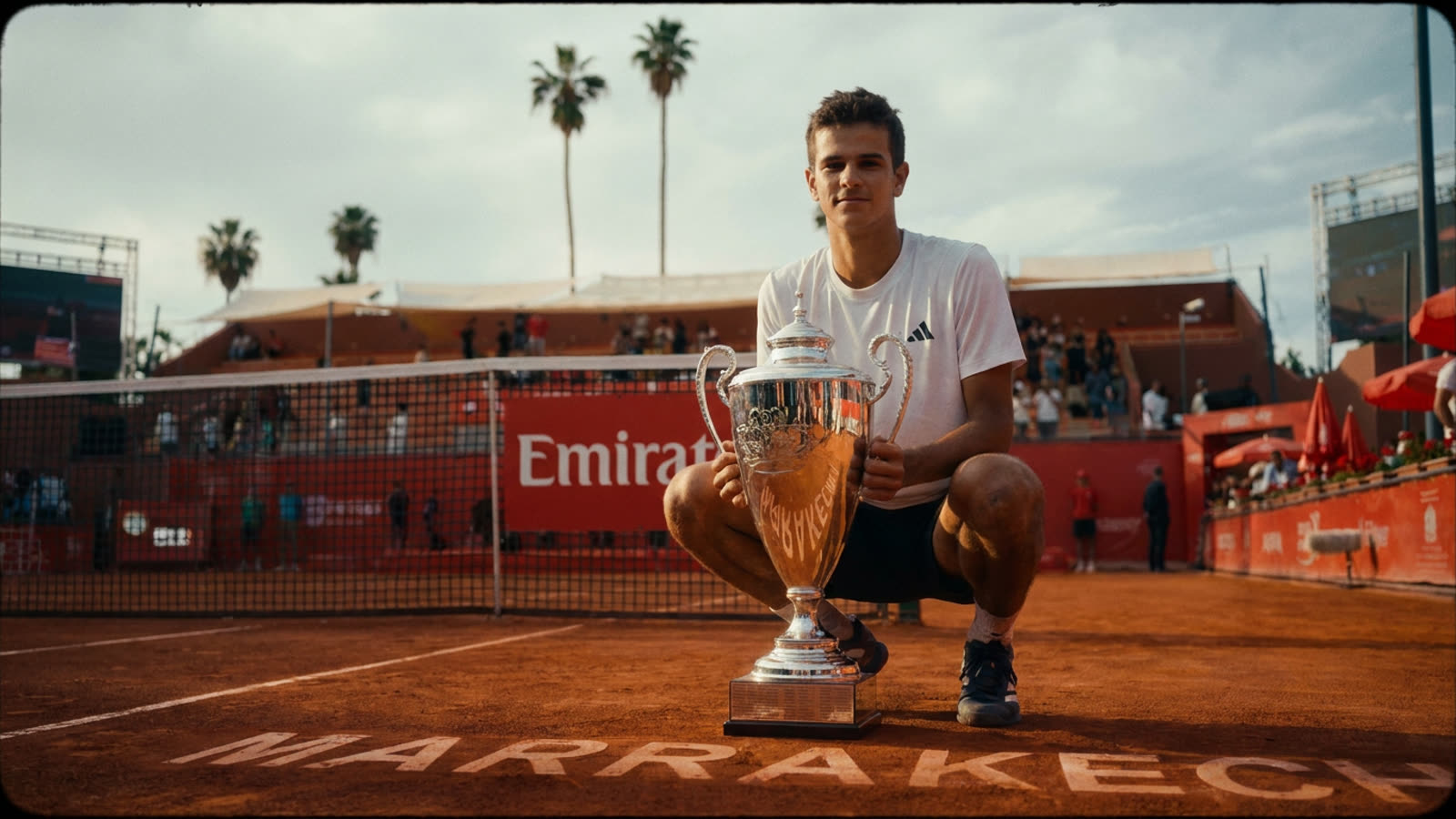
The tennis world has a tiresome habit of anointing every promising Spanish teenager as the heir to Rafael Nadal, as if greatness were a title deed to be transferred rather than earned. Rafael Jodar, currently making noise on the European clay circuit, has endured the comparison since he first picked up a racket in Murcia. The surname doesn't help. Neither does the left-handed forehand that occasionally, in certain light, evokes the Mallorcan's famous lasso whip.
But spend any time watching Jodar play and the Nadal template dissolves. Where Nadal was relentless physicality and topspin artillery, Jodar is geometry and patience—a player who constructs points like a chess problem, content to wait fifteen shots for the angle he wants.
A different kind of Spanish tennis
Spain's tennis federation has quietly shifted its development philosophy over the past decade. The post-Nadal generation—Alcaraz chief among them—brought more variety and net play to a baseline-dominated tradition. Jodar represents something further still: a player comfortable absorbing pace rather than generating it, whose best weapon is making opponents feel they're hitting into wet sand.
His results this spring have been modest by ATP standards but significant for a teenager still navigating Challenger events. More telling is how he wins: extended rallies that end not with winners but with errors from frustrated opponents. It's not highlight-reel tennis. It's effective tennis.
The burden of a first name
Jodar has handled the Nadal questions with the weary grace of someone who's answered them since adolescence. "I was named for my grandfather," he told Spanish media recently, a line he's clearly rehearsed. The grandfather detail is probably true and definitely irrelevant—no journalist believes it, and Jodar knows they don't.
What matters more is whether he can convert potential into ranking points during the summer hard-court swing, where his defensive style will face sterner tests. Clay forgives patience; cement rewards aggression.
Our take
The tennis establishment's obsession with finding "the next" anyone misses what makes Jodar genuinely compelling: he's not trying to be Nadal, Federer, or even Alcaraz. He's building a game that looks almost anachronistic in an era of power baseline tennis, and that's precisely why he's worth watching. Whether it translates to major titles is unknowable. Whether it makes for fascinating tennis is already evident.