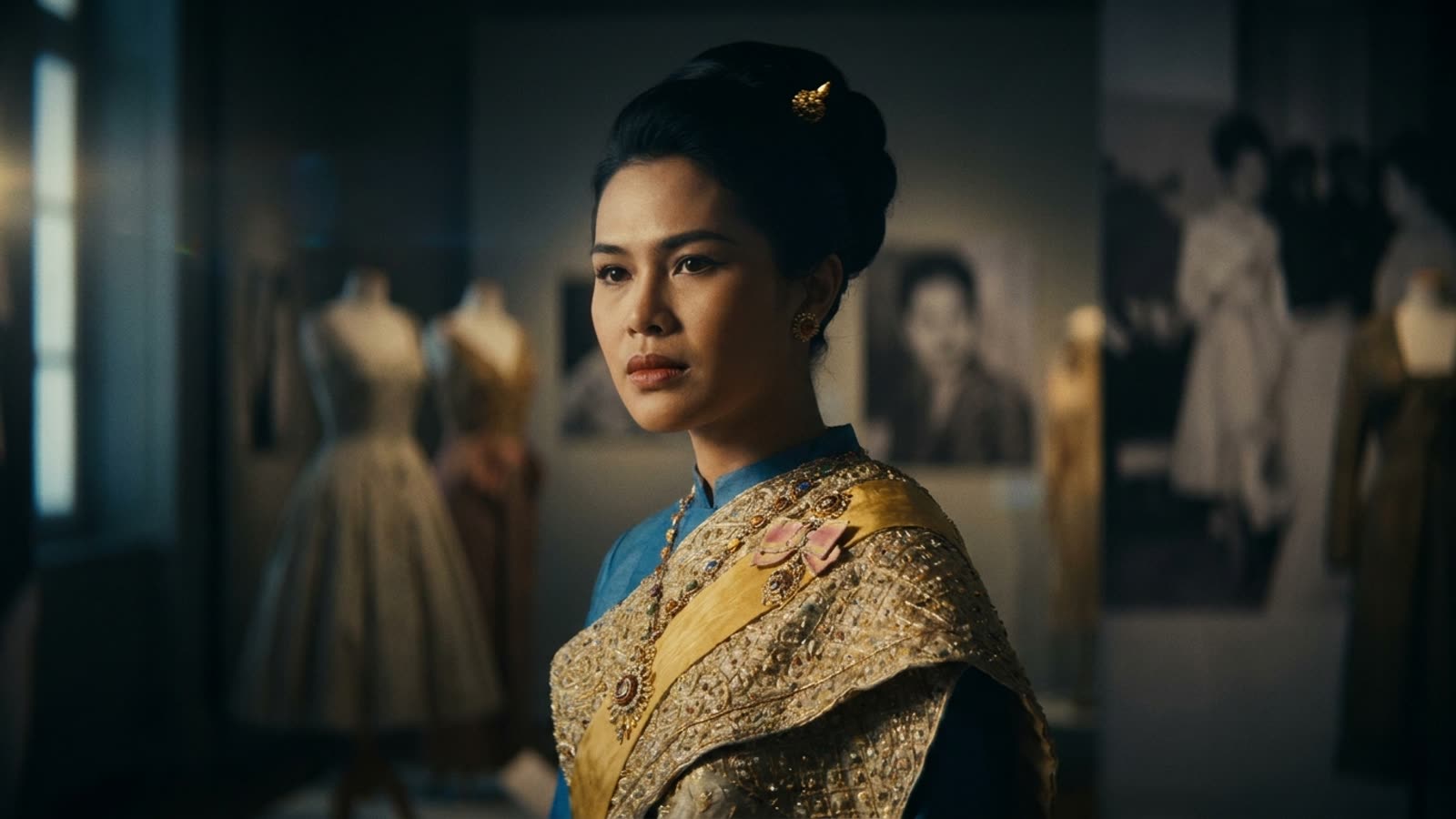
Long before fashion weeks became diplomatic stages and first ladies' outfits sparked geopolitical conversations, Queen Sirikit of Thailand quietly revolutionized how nations could wield influence through impeccable taste. A new Paris exhibition exploring the connection between royal Thai dress and Parisian couture reveals just how sophisticated this early experiment in fashion diplomacy was.
The Balmain files
The exhibition, opening this week in Paris, centers on Queen Sirikit's extraordinary collaboration with French couture houses during the 1960s. Working closely with Pierre Balmain and later Christian Dior, the queen didn't simply order Western dresses. Instead, she orchestrated a careful fusion of Thai textile traditions with Parisian craftsmanship, creating a hybrid aesthetic that commanded attention in both Bangkok and Paris.
The timing was deliberate. As Thailand navigated Cold War neutrality and sought to modernize without losing cultural identity, the queen's wardrobe became a visual argument for a third way. Each appearance at state dinners or international summits presented Thailand as sophisticated yet distinct, modern yet rooted in tradition.
Beyond the silk road
What emerges from the archival materials is a strategic mind at work. Queen Sirikit didn't just wear beautiful clothes; she used them to support Thailand's silk industry, elevate traditional crafts to luxury status, and create jobs for local artisans. Her insistence that Balmain incorporate Thai silks into his designs helped transform the material from exotic curiosity to haute couture staple.
The exhibition reveals sketches, photographs, and correspondence showing how actively the queen participated in the design process. She wasn't a passive client but a creative collaborator who understood that every pleat and pattern carried diplomatic weight. Her evening gowns featuring traditional Thai motifs rendered in French techniques became a form of cultural translation that spoke fluently to international elites.
Our take
In an era when fashion and politics are increasingly intertwined, Queen Sirikit's approach feels remarkably prescient. She understood that soft power could be literally soft—that silk and diplomacy might achieve what treaties and trade agreements could not. As nations today grapple with projecting cultural influence in a fractured world, her elegant fusion of East and West offers a masterclass in how style can transcend borders while honoring them. The Paris exhibition reminds us that sometimes the most effective diplomacy happens not in conference rooms but on red carpets.