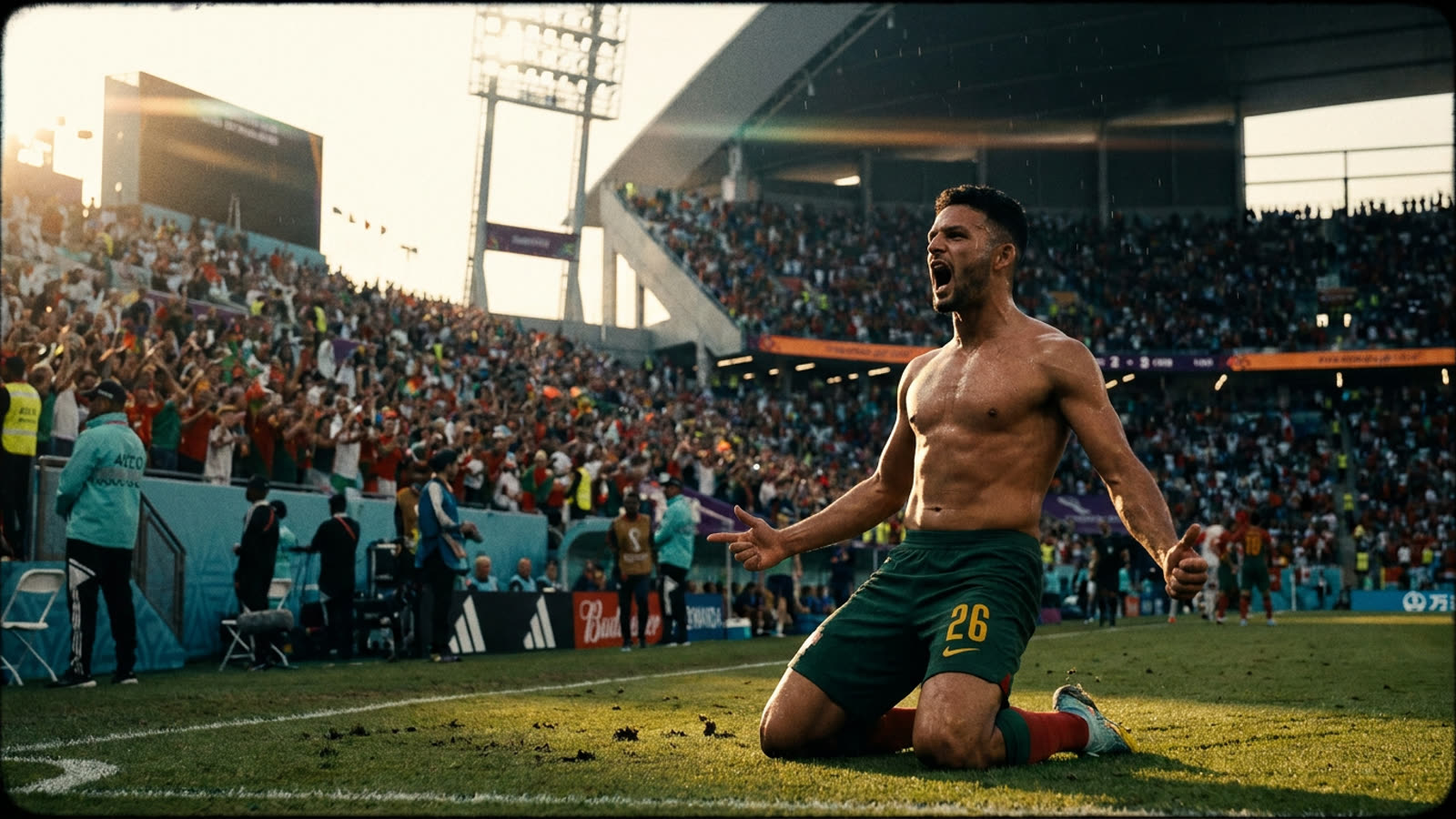
For roughly eighty minutes in Miami, Portugal's World Cup campaign was dying the death of a thousand cautious passes. Croatia, supposedly the aging midfield artists running on fumes, had turned the knockout round into a masterclass of controlled possession and surgical counter-pressing. Then Gonçalo Ramos rose unmarked at the back post, met a whipped cross with his forehead, and reminded everyone why tournament football remains gloriously, maddeningly unpredictable.
The 2-1 victory sends Portugal through to the quarterfinals, but the scoreline flatters a performance that should concern Roberto Martínez deeply. This was not a team executing a plan; this was a collection of talented individuals waiting for something to happen.
The Ronaldo question grows louder
Cristiano Ronaldo started, as he always does for Portugal, and worked hard, as he always does. But the 41-year-old's influence on the match was largely atmospheric—his presence warping Croatia's defensive shape, his reputation demanding attention even when his legs could not. He did not score. He created little. The moments when Portugal looked genuinely threatening came from younger legs: Ramos's movement, Rafael Leão's dribbling bursts, João Félix's occasional flashes of the player everyone hoped he would become.
Martínez faces an impossible political calculus. Ronaldo remains Portugal's captain, its talisman, and its most globally recognized athlete. Benching him would create a media firestorm that could consume the tournament. Yet playing him in his current form means building around a player who can no longer consistently do what made him great.
Croatia's beautiful decline
For Luka Modrić and the golden generation that reached the 2018 final and claimed third place in 2022, this was likely the final act. They did not go quietly. Croatia's first-half performance was technically exquisite—Modrić still capable of finding passes that seem to exist in a different dimension from everyone else's, Mateo Kovačić still covering ground like a player seven years younger.
But tournaments are won by teams that can impose themselves when possession fails, and Croatia simply lacked the physical tools to sustain pressure against Portugal's superior athletes. When Ramos scored, there was no response left in the tank. The generation that redefined what a small nation could achieve at World Cups has finally run out of road.
Our take
Portugal will take the win and the quarterfinal berth, but this performance was a warning dressed as a celebration. They are one bad Ronaldo game away from an early exit, one defensive lapse away from exposure. Ramos's header bought time; it did not solve problems. If Martínez cannot find a way to integrate Ronaldo's presence without building the entire system around his declining capabilities, Portugal's talented squad will join the long list of teams that looked better on paper than on the pitch. The quarterfinal opponent will have watched this match closely. They will have seen a team that can be pressed, that can be frustrated, that can be beaten—if you can survive long enough for the magic to fail.