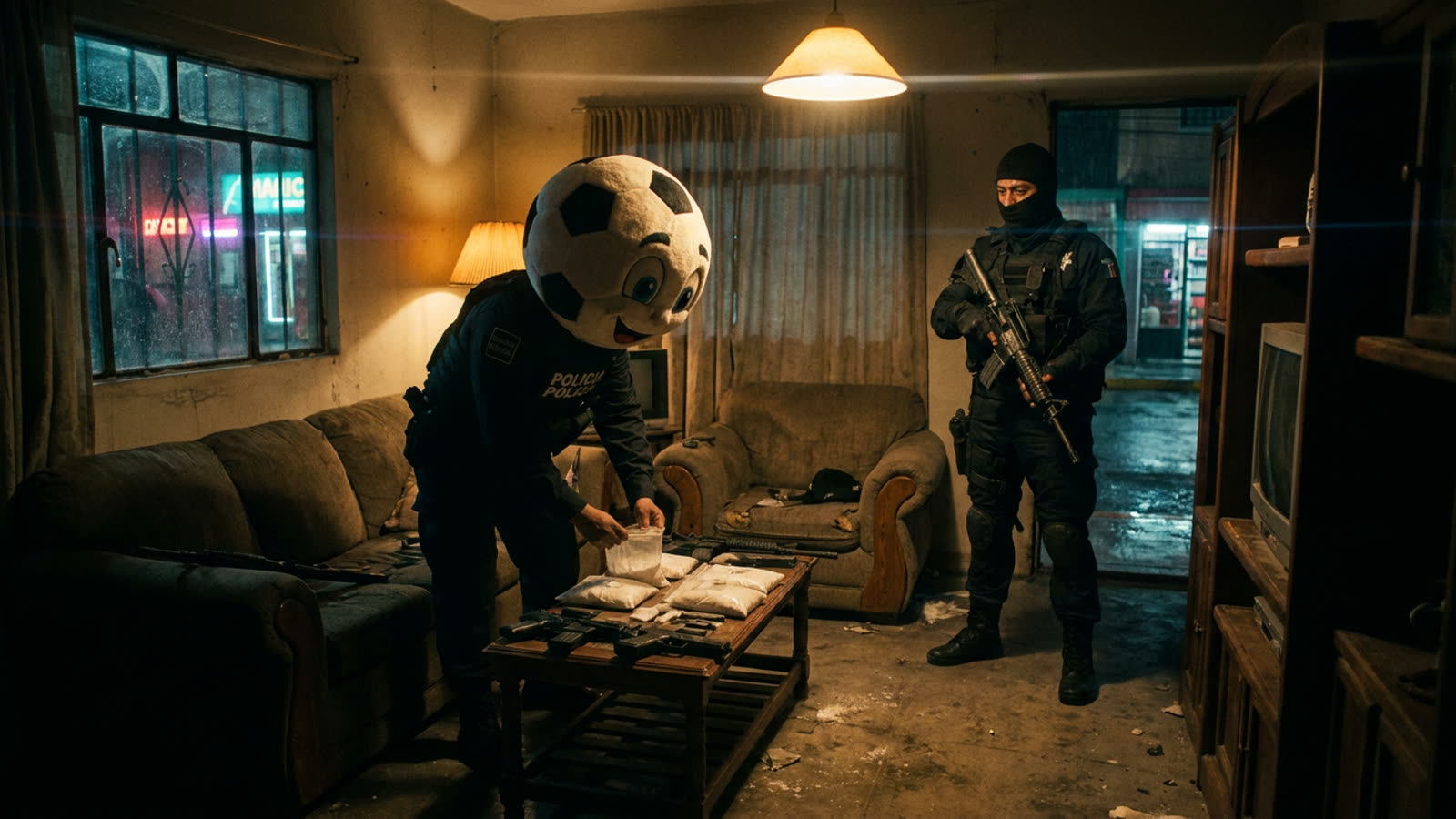
When Mexican federal police officers donned the oversized foam heads of FIFA's official World Cup mascots to infiltrate a suspected drug distribution network this week, they produced the tournament's most surreal image—and perhaps its most revealing one. The operation, which resulted in multiple arrests in a Mexico City suburb, has gone viral for obvious reasons. But beneath the absurdist surface lies a more serious story about how host nations weaponize major sporting events for domestic law enforcement purposes.
The raid, conducted in Ecatepec on Tuesday, saw officers dressed as the tournament's cartoon mascots approach a residential property before revealing their true identities and executing arrest warrants. Video footage shows suspects' visible confusion as the cheerful figures suddenly produced weapons and identification. Mexican authorities confirmed the arrests but declined to elaborate on why the mascot disguises were deemed tactically necessary.
The security theater of mega-events
Mexico, co-hosting the World Cup alongside the United States and Canada, has faced persistent questions about its ability to guarantee security during the tournament. The country's ongoing struggles with cartel violence have made international headlines, and FIFA's decision to award matches to Mexican venues was not without controversy. Operations like the mascot raid serve a dual purpose: they demonstrate law enforcement capability while generating the kind of shareable content that reframes the security narrative.
This is not unprecedented. Brazil's 2014 World Cup saw authorities conduct high-profile favela operations timed to coincide with media coverage. Qatar's 2022 tournament featured conspicuous security presences designed as much for cameras as for actual threat mitigation. The mascot gambit takes this logic to its cartoonish extreme.
Why it works—and why it matters
The viral success of the operation is itself the point. By Tuesday evening, footage had accumulated tens of millions of views across platforms, with coverage spanning from Mexican tabloids to European broadsheets. For a government seeking to project competence during a moment of intense international scrutiny, the raid achieved something no press release could: it made Mexican law enforcement look simultaneously capable and whimsical, serious about crime but not grimly authoritarian.
Critics, however, note the uncomfortable optics of using children's entertainment iconography for armed police operations. FIFA has not commented on whether the use of its licensed mascot imagery for law enforcement purposes violates any agreements, though the organization's historically permissive stance toward host nation activities suggests no rebuke is forthcoming.
Our take
The mascot raid is funny, and it is meant to be. But it also reveals how thoroughly mega-events like the World Cup become instruments of domestic political messaging. Mexico needed a security win it could share on TikTok, and it got one. Whether the operation represents effective policing or elaborate performance art is almost beside the point—in the attention economy of 2026, the distinction has collapsed entirely. The suspects are in custody, the videos are everywhere, and somewhere a foam mascot head is being logged into evidence.