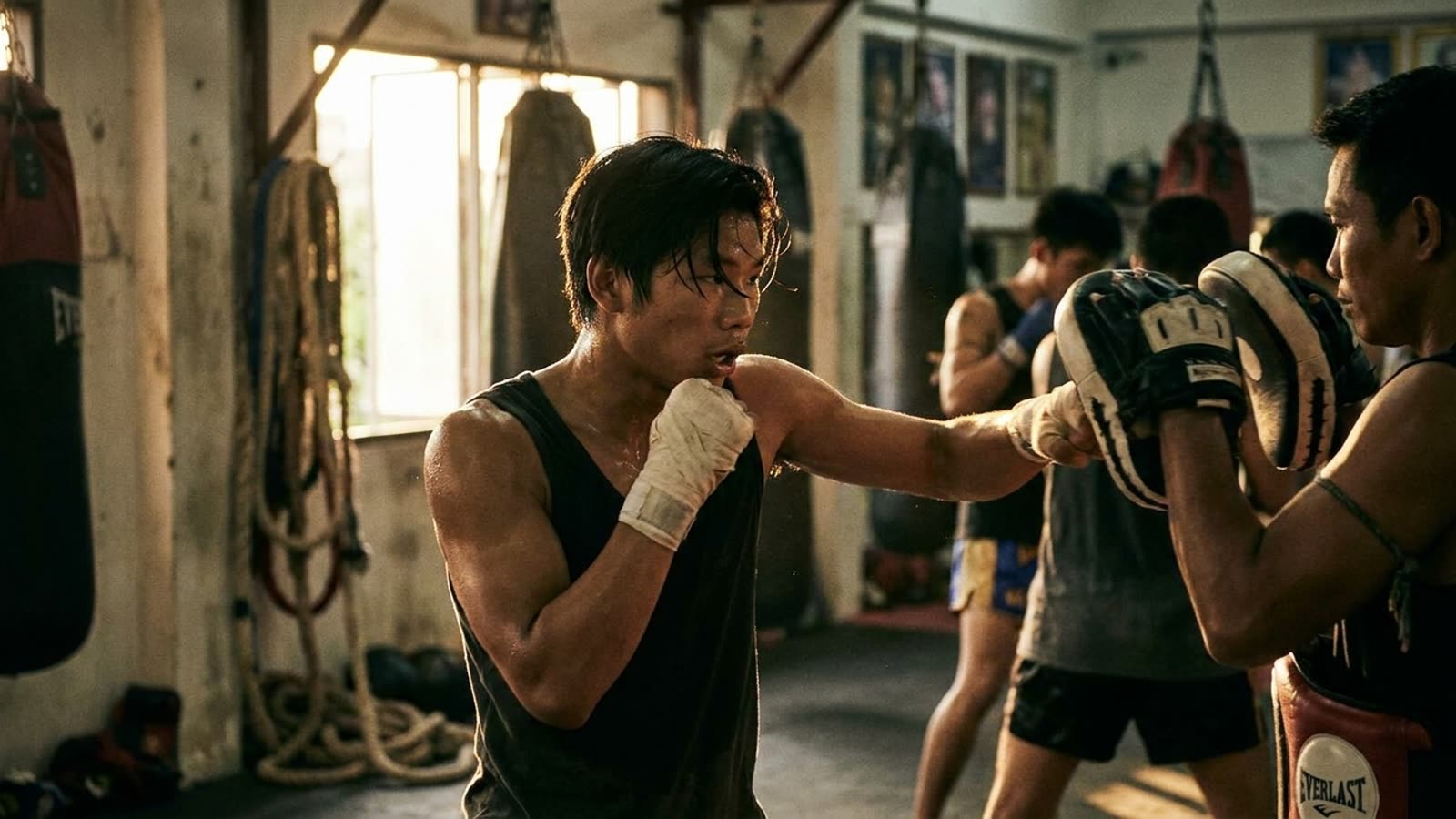
The Jolie-Pitt children have, by now, established their respective lanes: Maddox the scholar, Zahara the activist, Shiloh the dancer, and Vivienne the nascent Broadway producer. Knox and Vivienne, the twins, have remained relatively camera-shy. But it is Pax, the 22-year-old adopted from Vietnam, who has cultivated the deepest anonymity—until this week, when footage surfaced of him training in Muay Thai with a discipline and physicality that immediately drew comparisons to his father's legendary turn in Fight Club.
The resemblance is not merely thematic. In the clips circulating on social media, Pax—lean, focused, throwing elbows with technical precision—carries himself with a coiled intensity that recalls the young Brad Pitt of the late 1990s. The jawline, the economy of movement, the way he absorbs a strike and resets: it is genetic inheritance made visible through violence.
The quiet one speaks through combat
Pax has rarely spoken publicly and has never pursued the entertainment industry in any formal capacity. He was seriously injured in a motorcycle accident in Los Angeles in 2024, an incident that reportedly brought the fractured family together, however briefly. His recovery has been private, conducted away from the paparazzi that have stalked his parents' divorce proceedings for the better part of a decade.
Muay Thai, with its emphasis on discipline and controlled aggression, is an interesting choice for someone navigating that particular inheritance. The sport demands presence—you cannot be anywhere but in your body when someone is trying to kick you in the ribs. For a young man who has spent his entire life being photographed without consent, the ring may offer a rare space of agency.
The Fight Club of it all
The comparisons are inevitable and, frankly, a little on the nose. Brad Pitt's Tyler Durden remains one of the defining performances of late-twentieth-century American cinema—a film about masculinity, violence, and the search for authenticity in a consumer culture. Pitt was 35 when he made it, sculpted into a physical ideal that launched a thousand gym memberships.
Pax is not making a film. He is not performing. But the visual rhyme is potent enough that it has dominated entertainment coverage for two days running. Whether he welcomes the comparison or finds it suffocating is, of course, unknowable. The Jolie-Pitt children have learned, through hard experience, that their interior lives are public property whether they like it or not.
Our take
There is something poignant about a young man finding himself through martial arts while the world insists on seeing his father. Pax Jolie-Pitt did not ask to be a symbol of anything, and yet here he is, throwing punches in a Bangkok gym while the internet projects a quarter-century of cultural baggage onto his shoulders. The Fight Club comparisons will fade; the skill he is building will not. If he wants to remain invisible, he has chosen an odd way to do it—but perhaps that is the point. Sometimes the only way to disappear is to become so present in your own body that no one else's gaze can reach you.