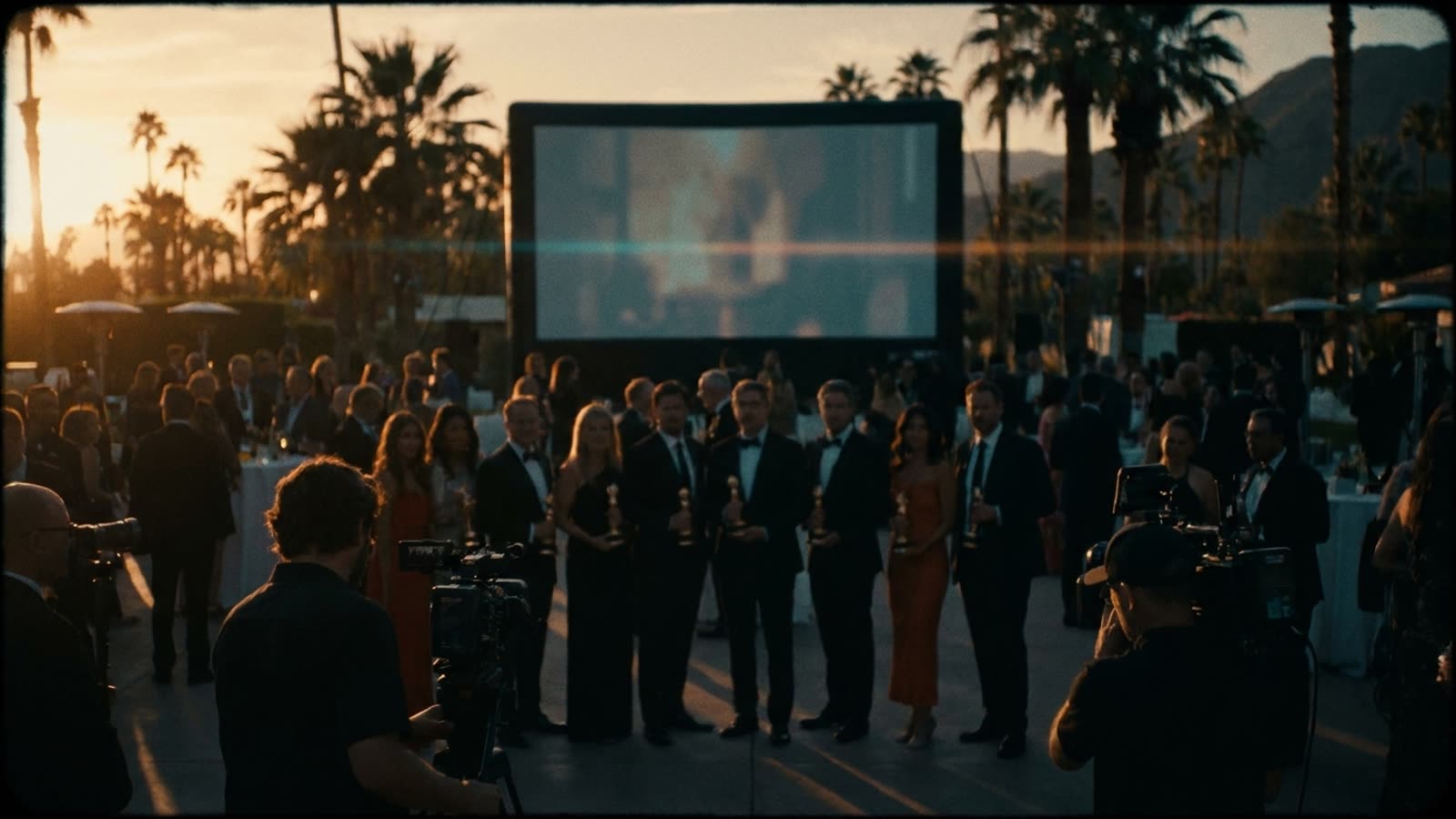
The Palm Springs International Film Festival has always fancied itself a tastemaker, but its Vanguard Award—reserved for casts that elevate the medium through collective chemistry—rarely generates this much wattage. Olivia Wilde, Seth Rogen, Edward Norton, and Penélope Cruz will share the stage in January to accept the honor for The Invite, a black comedy about a disastrous destination wedding that has quietly become one of the fall's most buzzed-about limited releases. The quartet's willingness to show up together, rather than dispatch a single representative, tells you something about the film's internal politics: there are no billing wars here, only mutual investment.
The ensemble comedy's second act
For most of the streaming era, the adult ensemble comedy was pronounced dead, a casualty of algorithmic caution and the theatrical collapse of mid-budget originals. Studios chased IP; comedies migrated to television or died on arrival. The Invite represents a counter-thesis: that audiences will still gather for a film built on dialogue, timing, and the frisson of watching famous people humiliate themselves in formal wear. Director Emerald Fennell, fresh off her Oscar-winning Saltburn, reportedly shot the film in five weeks on a Greek island with a skeleton crew, leaning on improvisation and natural light. The result is a claustrophobic farce that has drawn comparisons to early Mike Nichols.
Why Palm Springs matters now
The festival has spent years positioning itself as the unofficial launchpad for Oscar campaigns, particularly in the acting categories. Its Vanguard Award, however, is less predictable—previous recipients include the casts of Moonlight, Little Miss Sunshine, and The Big Short. Bestowing it on a comedy rather than a prestige drama is a deliberate statement. Festival chairman Harold Matzner has been vocal about expanding the definition of cinematic achievement beyond suffering and period costumes. Recognizing The Invite aligns with that mission and, not incidentally, guarantees a red carpet that will dominate entertainment coverage in early January.
Four careers, four inflection points
Wilde, who has spent the past two years rebuilding her directorial reputation after the chaotic Don't Worry Darling press cycle, finally gets to be celebrated purely as a performer. Rogen, often pigeonholed as the amiable stoner, plays against type as a passive-aggressive groomsman with a secret. Norton, ever the chameleon, reportedly rewrote much of his own dialogue—classic Norton—while Cruz, the only non-American in the principal cast, brings a continental gravity that anchors the film's wilder swings. Together, they form a foursome that no streaming algorithm would have greenlit, which may be precisely why it works.
Our take
Hollywood has spent a decade convincing itself that movie stars no longer open films, that only franchises and nostalgia sell tickets. The Invite and its Palm Springs coronation suggest the opposite: audiences remain hungry for charisma, wit, and the simple pleasure of watching talented people share a frame. The Vanguard Award is a trophy, but it is also a permission slip—proof that the industry can still bet on adults behaving badly without a cape in sight.