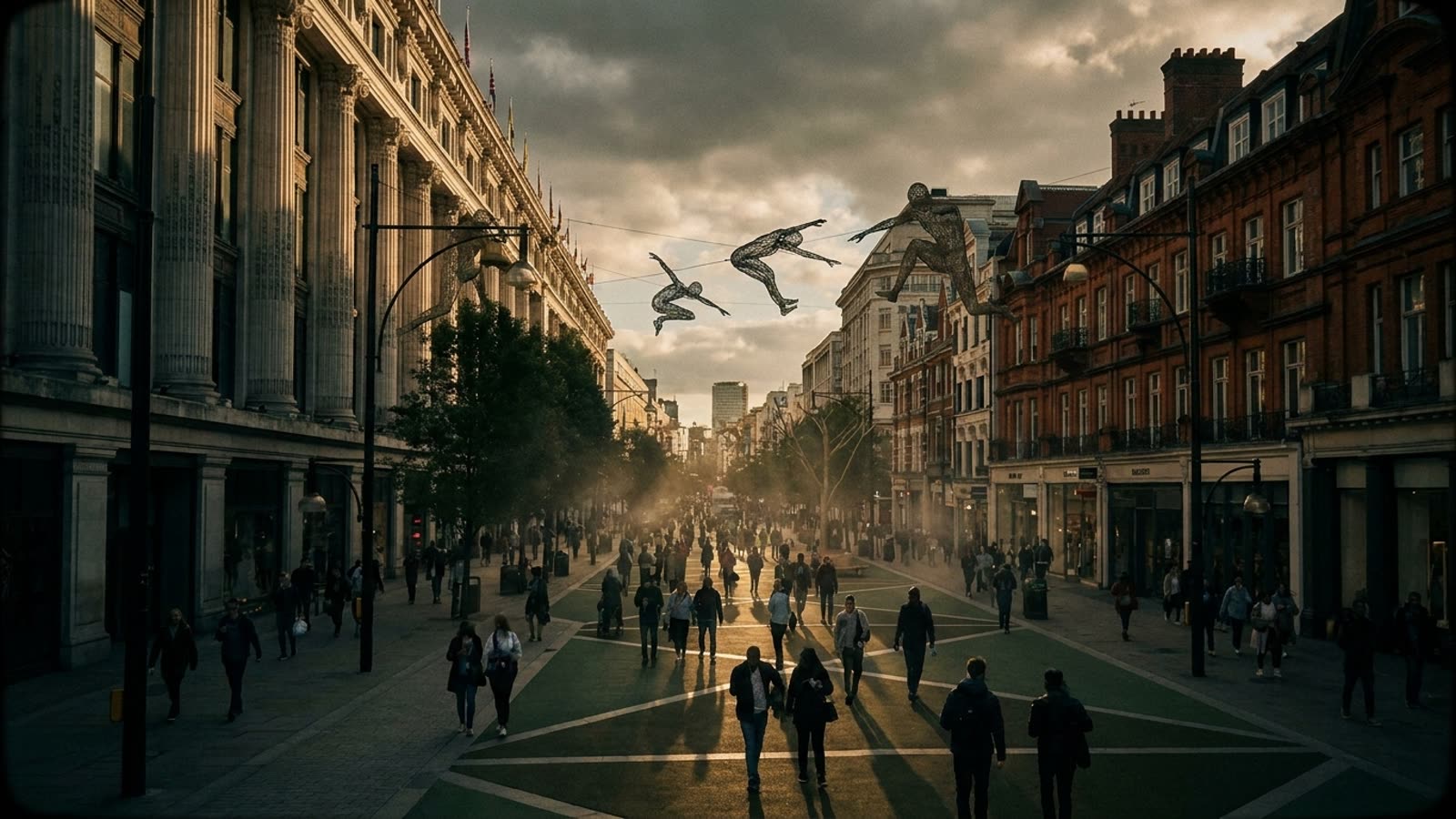
After decades of false starts, political feuds, and shopkeeper rebellions, Oxford Street has finally gone car-free. The transformation of London's flagship retail artery into a pedestrianised promenade is not merely a traffic intervention — it is a high-stakes wager that physical retail can survive the Amazon age if you make the experience pleasant enough to leave your house.
The timing is either impeccable or catastrophic, depending on whom you ask. British high streets have shed more than 50,000 shops since the pandemic began, and footfall on Oxford Street itself had never fully recovered to 2019 levels. Landlords were growing desperate; the street's eastern stretch had become a patchwork of American candy stores and vape shops, the retail equivalent of a fever dream. Something had to change.
The investment thesis
Major brands are treating the pedestrianisation as a green light to pour money into flagship experiences. Zara's parent company Inditex is reportedly planning a four-storey concept store. Nike has committed to expanding its existing presence. The logic is simple: if people can actually stroll without dodging buses, they might linger, and lingering is where margins live.
Westminster Council projects the scheme will generate an additional £3 billion in economic activity over the next decade. That figure is, of course, a political confection — nobody can model consumer behaviour with that precision. But the directional bet is clear: experiential retail requires space, air, and time, none of which a six-lane traffic corridor provides.
The sceptics' case
Not everyone is celebrating. Delivery logistics have become a nightmare for the businesses that remain. Side streets are now clogged with vans that once had access to loading bays. Several smaller retailers have warned that the transition period could finish them off before the promised renaissance arrives.
There is also the question of whether pedestrianisation solves the wrong problem. Oxford Street's decline was never primarily about cars; it was about rents that assumed footfall would grow forever, and about an online shift that made the trip unnecessary. Making the street prettier does not make a £200 jumper more appealing than the same jumper delivered to your door.
Our take
Cities that cling to car-centric retail design are fighting the last war. The real competition for Oxford Street is not Westfield or Bicester Village — it is the sofa. Pedestrianisation is a necessary condition for relevance, not a sufficient one. London has bought itself a chance, but the hard work of curating a street worth visiting has only just begun.