The oil cartel's decision to boost output again looks like confidence, but it is really relief.
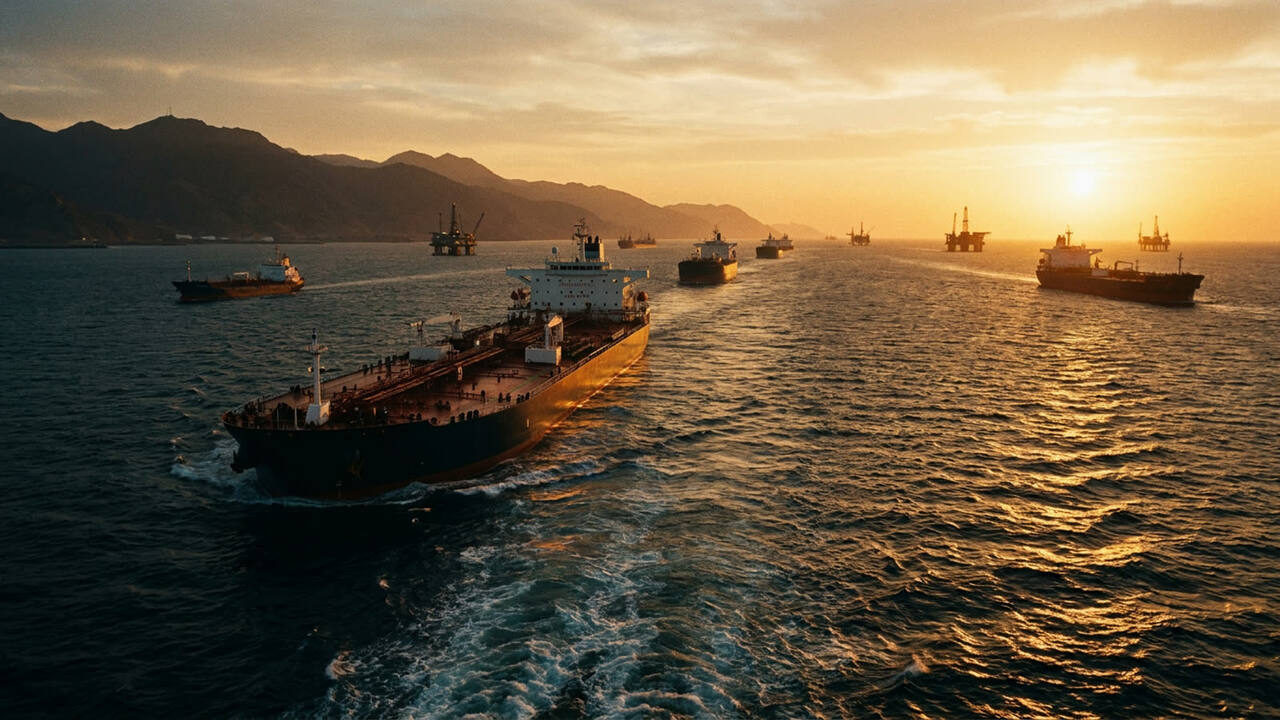
OPEC+ ministers approved another incremental increase to crude production this week, the latest in a series of carefully calibrated supply additions that began earlier this year. The timing is not coincidental: tanker flows through the Strait of Hormuz, the narrow passage between Iran and Oman through which roughly a fifth of global oil consumption passes daily, have finally stabilized after months of disruption-related anxiety. The cartel is not leading the market; it is following the geography.
The Hormuz variable
For energy traders, the Strait of Hormuz functions as a permanent background anxiety. At its narrowest, the passage is just 21 miles wide, with shipping lanes even tighter. Any sustained closure or harassment of tankers would immediately remove millions of barrels per day from global supply, a scenario that has kept risk premiums elevated for much of the past two years. The recent easing—fewer naval incidents, calmer insurance markets, steadier transit times—has allowed Brent crude to settle into a range that OPEC+ finds tolerable but not thrilling.
That stability gave the cartel room to act. Saudi Arabia and its Gulf allies have been sitting on substantial spare capacity, production they voluntarily withheld to support prices during leaner demand periods. With Hormuz risk receding and summer driving season demand holding firm in the Northern Hemisphere, releasing some of that capacity makes strategic sense: it satisfies members eager for revenue while testing whether the market can absorb additional barrels without a price collapse.
The demand question
The supply side is only half the equation. Global oil demand in 2026 remains a contested forecast. China's economic recovery has been uneven, with manufacturing activity showing flickers of strength but consumer spending still subdued. India continues to grow its appetite for crude, but not fast enough to offset weakness elsewhere. Europe's industrial sector remains sluggish, and the United States, while resilient, is not accelerating.
OPEC+ is betting that incremental supply additions will be absorbed without tipping the market into oversupply. It is a calculated gamble. The cartel has been burned before by overestimating demand and flooding a market that promptly punished them with sub-$50 prices. This time, the increases are modest enough to reverse quickly if sentiment sours.
Our take
OPEC+ has learned, painfully, that it cannot control oil prices—only influence them at the margins. The real power sits with chokepoints, central banks, and Chinese factory managers, none of whom take direction from Riyadh. This week's production increase is less a statement of strength than an acknowledgment that, for now, the world's most dangerous shipping lane is behaving itself. Enjoy it while it lasts.