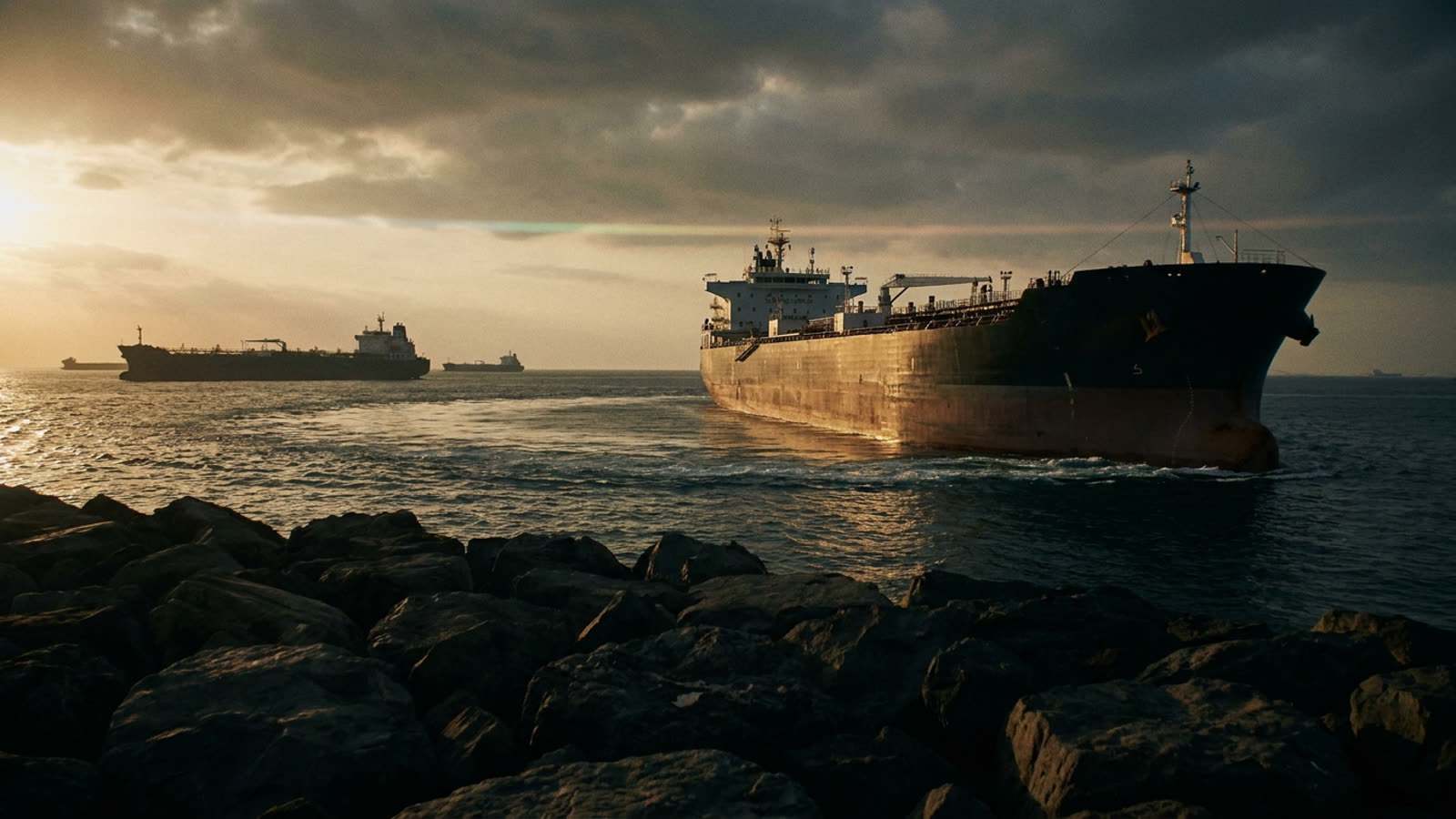
The most telling indicator of the Iran deal's market credibility is not in the bond pits or currency desks but somewhere in the Arabian Sea, where oil tankers are executing mid-voyage U-turns to race toward the Strait of Hormuz before it officially reopens.
Crude fell to fresh three-month lows this week as the combination of imminent Hormuz normalization and the prospect of Iranian barrels returning to global markets created a one-two punch that caught energy traders flat-footed. Brent has shed roughly fifteen percent from its wartime highs, and the forward curve has flipped into contango—a structure that rewards storage and punishes urgency. The market, in other words, is betting that oil will be easier to get tomorrow than it is today.
The logistics scramble
For months, the effective closure of Hormuz forced tankers carrying Gulf crude to take costly detours or sit idle waiting for clarity. Shipping rates for the region spiked; insurance premiums became prohibitive for all but the most risk-tolerant operators. Now, with the fourteen-point US-Iran memorandum circulating and a signing ceremony reportedly imminent, vessel-tracking data shows dozens of tankers altering course toward the strait. Some are laden with crude that has been floating in storage, waiting for this moment. Others are repositioning empty to capture the first cargoes from Iraqi and Kuwaiti terminals that have been operating at reduced capacity.
HSBC's energy analysts note that the physical oil market is moving faster than the diplomatic calendar. "Traders are pricing in reopening before the signatures are on the page," one desk head observed. The risk, of course, is that any last-minute collapse in negotiations would leave those repositioned tankers stranded and crude prices whipsawing back upward.
Broader implications for inflation
Central bankers in Washington, Frankfurt, and beyond have spent months navigating the inflationary shock of elevated energy costs. A sustained decline in oil prices—if the Hormuz reopening holds and Iranian supply gradually returns—would offer meaningful relief to headline inflation figures, even as core measures remain sticky. The Fed and ECB have both signaled confusion about their rate paths in recent communications, and cheaper energy could buy them time to wait for clearer data before committing to further moves.
For consumers, the transmission mechanism is more direct: gasoline prices at the pump tend to follow crude with a lag of a few weeks. If Brent stabilizes at current levels, American drivers could see noticeable relief by midsummer—a politically convenient outcome for an administration that has staked considerable capital on the Iran deal.
Our take
Markets are not sentimental about geopolitics; they are transactional. The tanker U-turns tell us that the smart money believes the Hormuz reopening is real and imminent, whatever the diplomatic theater still to come. For once, the immediate economic signal is unambiguously positive: cheaper oil, lower shipping costs, and a modest tailwind for inflation-weary central banks. The longer-term questions about Iranian reintegration into global energy markets—and the political durability of any deal—remain open. But today, the ships are moving. That counts for something.