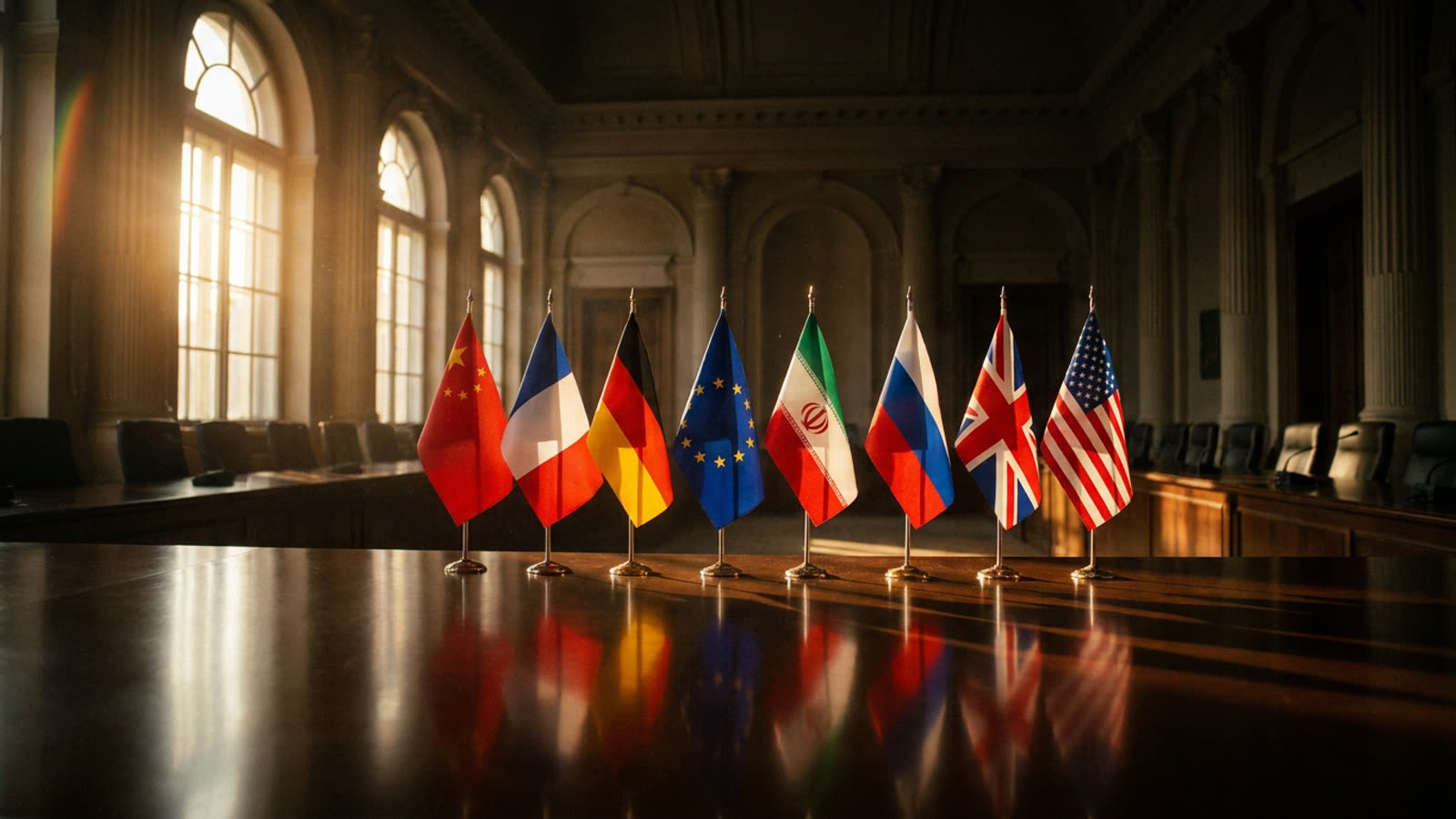
The irony is almost too neat. In 2015, every Republican presidential hopeful vowed to tear up Barack Obama's Iran nuclear agreement on day one. Donald Trump did exactly that in 2018, calling the Joint Comprehensive Plan of Action "the worst deal ever negotiated." Now, in 2026, he is presenting a new framework with Tehran that contains the same core architecture—uranium enrichment caps, international inspections, phased sanctions relief—and demanding applause for statesmanship.
The parallels are not subtle, and they are creating cognitive dissonance across Washington.
The structural echoes
Both deals accept that Iran will retain some enrichment capacity, the provision Republicans once deemed a fatal concession. Both rely on International Atomic Energy Agency inspections rather than the "anytime, anywhere" access hawks demanded. Both offer sanctions relief in tranches tied to compliance milestones. The Trump framework reportedly adds restrictions on ballistic missiles and a longer sunset clause—improvements, certainly, but incremental ones, not the wholesale reimagining the president promised.
Critics within his own party are noticing. Senator Tom Cotton, who organized the infamous 2015 letter warning Iran that any Obama deal could be undone, has been conspicuously silent. Others are less restrained: a faction of GOP hawks is already warning that the framework amounts to "JCPOA 2.0 with a MAGA label."
The political math
Trump's challenge is that he must sell this deal to a base conditioned for a decade to view any accommodation with Tehran as weakness. The White House strategy appears to be emphasizing what is different—the missile provisions, the longer timeline, the fact that Trump personally negotiated it—while hoping voters do not dwell on the structural similarities.
Democrats, meanwhile, face their own awkwardness. Many spent years defending the JCPOA; they can hardly attack a deal that vindicates its logic. The result is a strange bipartisan truce of embarrassed silence, punctuated by procedural skirmishes over whether the agreement requires congressional approval.
Our take
The comparison is unflattering not because Trump's deal is bad, but because it reveals how much of the original opposition was performance. The JCPOA was imperfect; so is this. Both represent the messy reality of nonproliferation diplomacy with a hostile regime. The difference is that one was denounced as treason and the other is being marketed as triumph. Washington's capacity for selective amnesia remains, as ever, its most reliable bipartisan trait.