Sidney Prescott is coming home, and she's getting paid this time.
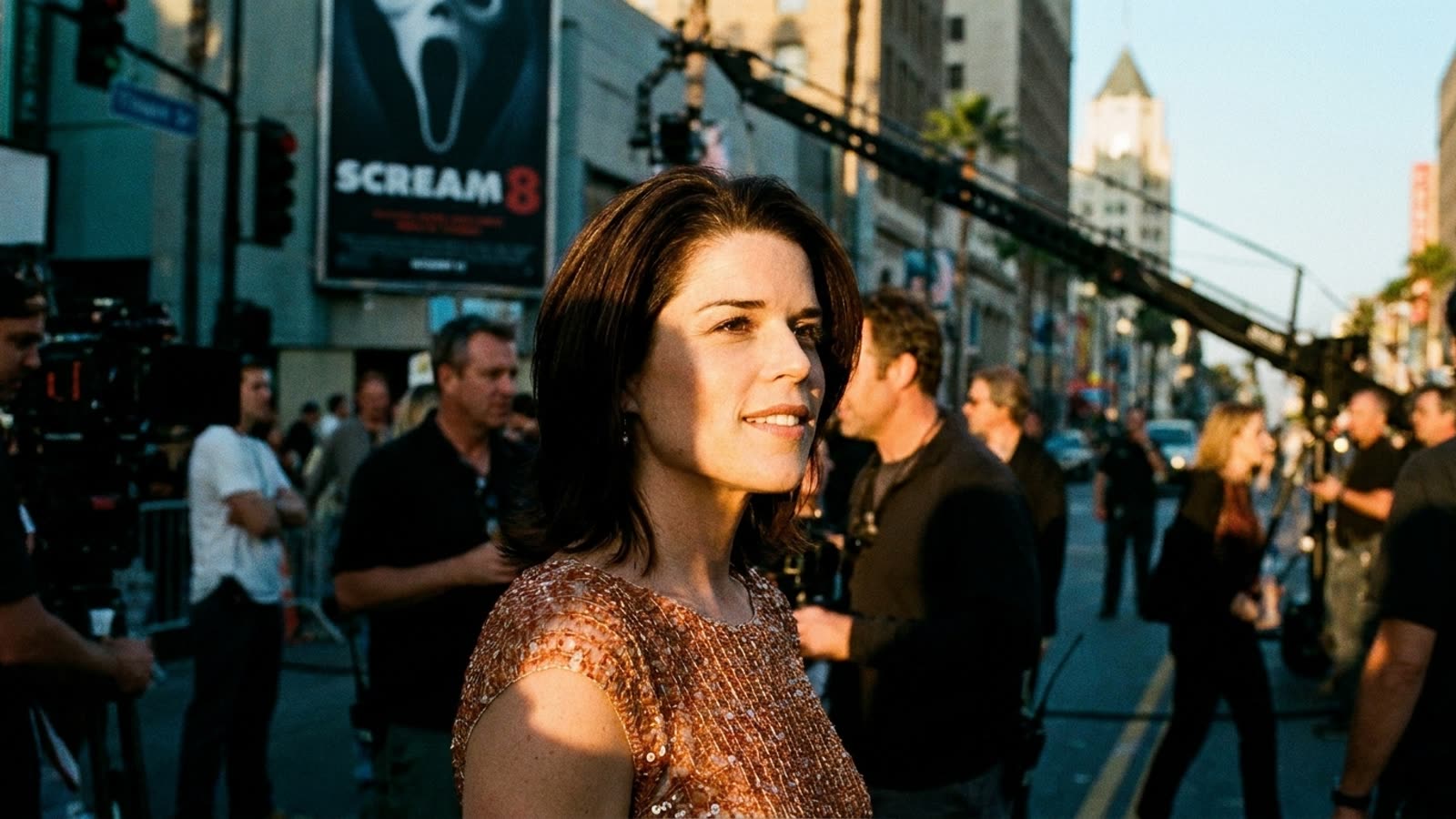
Neve Campbell confirmed Tuesday that she will return for Scream 8, ending a two-film absence that began when she publicly walked away from Scream VI in 2022 over what she called an offer that "did not equate to the value I have brought to the franchise." That rare moment of candor from a mid-career actress—not a superstar with infinite leverage, but a working professional whose face is the brand—sent a quiet tremor through an industry still grappling with what actors are actually worth.
The math of irreplaceability
Campbell has appeared in every Scream film since Wes Craven's 1996 original, which grossed $173 million worldwide and essentially invented the self-aware slasher. Her absence from Scream VI was conspicuous; the film performed well enough ($169 million globally), but critics and fans noted the Sidney-shaped hole at its center. The franchise proved it could survive without her. It also proved it didn't particularly want to.
The terms of Campbell's new deal have not been disclosed, but her return suggests Spyglass Media Group and Paramount met her closer to her number than theirs. In an era when IP is king and actors are increasingly treated as interchangeable content delivery systems, Campbell's gambit—walking away from a legacy role and waiting—is a template worth studying.
A broader pattern
Campbell's negotiation echoes other recent standoffs. Jenna Ortega reportedly leveraged her Wednesday stardom into significant backend participation for future projects. The Scream franchise itself lost director duo Matt Bettinelli-Olpin and Tyler Gillett after Scream VI amid reported creative and financial disagreements. The message filtering through Hollywood's middle class is simple: if you have leverage, use it before the algorithm decides you don't.
What makes Campbell's case instructive is its modesty. She wasn't demanding Robert Downey Jr. money. She was asking for compensation that reflected twenty-five years of brand equity in a franchise that has grossed over $900 million worldwide. The studio's initial refusal, and eventual capitulation, reveals how reflexively Hollywood undervalues performers who aren't currently trending on TikTok.
Our take
Neve Campbell did something genuinely difficult: she called a bluff and waited. Most actors in her position—beloved but not tabloid-famous, essential but not irreplaceable on paper—would have taken the lowball and smiled for the press tour. Instead, she sat out a film, watched the franchise wobble slightly without her, and came back on better terms. It's not a revolution. But in an industry that treats salary transparency as treason and loyalty as leverage to be exploited, it's a small, satisfying victory for the people who actually make the things we watch.